I’ve written from time to time about my challenges in finding a church that felt complete and whole to me. Not surprisingly, a big part (but not the only part!) of that challenge has been my unwillingness to be committed to a church where God’s Creation is not seen as significant to God’s purposes.

Yet I long for community around faith in the God of the whole Bible and in Jesus.

I have asked myself whether I could be wrong and misguided. I know that many Christians find deep satisfaction in their church lives. In The Screwtape Letters, C.S. Lewis portrays a junior devil being advised to encourage his assigned human target to search far and wide for a “suitable” church. This, it is suggested, will make the human a critic when God actually wants humans to be pupils. Is that me? Could I have the wrong expectations for what church is supposed to be? Are my expectations too high? Should I work to be a voice within a church for paying more attention to Creation? I know good and faithful people who are doing that.

Here’s the thing – I’m in my late 50s. I know what resonates and what doesn’t. I have sat in the pews of many churches and found myself feeling empty and even heartsick. Even as I know others find deep meaning in churches, I must listen to myself. My mind, heart, and body are telling me something that I must finally respect.

I am indeed hungry for a Christian community of faith. But faith communities as they are commonly done in churches don’t seem to be the right place for me. That leaves me with several options. One would be continuing to search for the right one. Another is to give up on having a faith community.

A third is coming up with something different.

For more than a year I’ve found myself musing on what something different might look like. From what we know of the early gatherings of believers from the New Testament and from the examples of the Quakers and Amish, it’s clear that the modern, mainstream approach to church is not the only way to do a faith community. (For much more provocative thoughts, check out Pagan Church by Frank Viola).

So here I put myself out on a limb. I will share the unique elements of the faith community I’d like to see that I have come up with to this point. Down the road, I’d like to flesh out each element in greater detail and explain why I believe each is important to have. Here I just want you to see how everything fits together as a whole.

(One last word before you read the unique elements – holding everything together would be worship and discipleship of Jesus and the God of the Bible and of Creation with communion and baptism.)

Focus on personal transformation to whole holiness: The faith community would invest significantly in enabling its members to become more holy in every aspect of their lives. There would be concerted efforts made to provide members with the guidance, support, and spiritual development tools to open themselves to the Spirit, to become more like Jesus, and to live out the fruits of the Spirit that God offers. After several years as a member, a person could literally not be the same person they were when they joined.

Instruction in Kingdom living: God loves us and this world. How we live in it matters deeply. Yet never before have so many people lacked fundamental knowledge about the craft of living. There is an infinite amount of wisdom to be gained from the Bible and from people who approach living with compassion and wisdom. This faith community would invest in helping its members grow in Kingdom living in every aspect of life. Marriage. Money. Growing food. Cooking. Parenting. Prayer. Art. Advocacy. Friendship. Carpentry. Productive conflict. Conversation and the use of words. The fellowship would be a center for just and satisfying living skills that would benefit members and other people in the local community.

Tapping Kingdom gifts: This faith community would collectively help each member identify and use their unique spiritual gifts and their other gifts for God’s kingdom within the faith community and in their lives in God’s world. The community as a whole would honor and celebrate each and every member’s gifts and how they are being used on a regular basis. Spiritual entrepreneurship would be encouraged and fostered. The community would seek to grow each person’s gifts and their use of those gifts. The faith community would be a dynamic place where people become better and fuller versions of themselves.

Rich with art and song: We are made in the image of a creating Creator God. We are meant to be creative in ways that are generous, good, and just. Art can also free and open our hearts.The community I envision would be a vibrant place of diverse music and artistic expression by adults and children. Each member’s voice and creativity would be encouraged, valued and heard. There would, for example, be a wide variety of music – traditional, modern, acoustic, chants, jazz, international, and of all emotions.

Surprise, variety, and diversity of tone: Every month there should be surprise and freshness in the format and tone of the worship. While there should be some consistent elements and themes, there should also be great variation and creativity. Members should arrive in expectation of surprise and engagement with an infinite, surprising God. There should be services of lament as well as services of celebration and everything in between. Our lives, our relationship with God, and the books of the Bible itself are all complex and nuanced. Consider the emotions of Job, the Psalms, the prophets, and even Jesus. Worship should reflect that complexity and diversity.

Fellowship commitment to certain ways of living: I’ve been very struck by the concept of ordnung from the Amish. The ordnung is an unwritten set of guiding rules among a particular group of local Amish on how they will live. I am not suggesting that the community of faith I write of be like the Amish in terms of prohibiting electricity and the use of cars, for example. There should be freedom in many things. However, the community’s members should have a common commitment to living patterns that are consistent with the fellowship’s convictions. This doesn’t seem so far removed from the early house churches of the New Testament. One good example would be Sabbath – honoring the Sabbath should be something people of faith do because it honors God and it brings so many blessings. But there could be latitude for how exactly each family would actually carry that out. Does this all sounds cult-like or Puritanical? That’s not my intention, although I know what I suggest is radical. But imagine if a community of faith did their best to live out similar convictions outside in the world  that were not only good for each person but also good for how the community as a whole functioned?

To build or not to build: There is value in having a building that is the center of a faith community’s gatherings. It puts the community on the physical and mental map of a community. But maintaining the building can draw away resources from actually living out God’s Kingdom. The Amish, for instance, don’t have church buildings but meet at each other’s homes. That might be one option. Another might be using a building as both community center and place of worship. Or perhaps a barn could function as meeting space, worship space, farm building, restoration hub, learning space, art space, and dance hall. In any case, there should be careful thought given to whether and how the community invests in a building.

Community common life reflect a 100% commitment to Kingdom living: As an example of this, common meals, like the Lord’s Supper and potlucks, should come from farms where God’s earth has been respectfully treated. If there is a church building, then it and its landscaping should be as Creation friendly as possible. Green burial would be the standard burial method.

Communal, interactive, creative worship: Worship should not be a passive, spectator experience. Members should be as involved as possible. There should be interaction along with singing by all attending and insights into the Bible. Hands-on activities, like foot-washing, should be used as much as possible. People should share insights from their own lives. In this community, the sacredness of the God of the universe would intersect with the real people the community brings together.

Membership means something: I envision people needing to acquire a base level of Bible and faith knowledge and committing to certain patterns of life before they would become members. To become a member, a person should first be given a thoughtful understanding of how the Bible works and what a whole faith looks like. There would be classes and mentorships. And, as per Hebrews 10:24-25, members would, like fitness buddies, goad and push each other towards good deeds and faithfulness while also encouraging and consoling each other when difficulties come. In a loving and engaging way, members should give and receive feedback on how they are living and contributing to the faith community. Yes, I know this sounds restrictive and perhaps exclusionary. It’s not intended to be that way. But it is intended for membership to mean something. The Christian faith is hurt deeply by card-carrying church members who act in ways that reflect badly on the faith. (Read more about lessons in membership from the history of a church in my previous post.)

A place of seeking, open discussion, and whole Bible inquiry: This would be a community where people could ask questions and seek God. Because Jesus’ Bible was the Old Testament, understanding how the whole Bible fits together and what wisdom we can gain from the whole Bible would be a fundamental and engaging part of the life of this faith community. I’ve been tremendously inspired by Tim Mackie and The Bible Project in this regard.

Creation as fundamental part of the whole faith-life: Creation would not be ignored nor denigrated in this faith community. It would be celebrated, savored, and cherished. As part of the whole range of member commitments would be a commitment to being as holy as possible in our interactions with God’s Creation. Members called to devote their lives to protecting and restoring Creation in the world as a ministry would be celebrated and supported just as much as anyone else called to live their life for mission.

Thoughtful, intentional planning for how the faith-life is shared: Sharing Jesus and the eternal life Jesus offers would be a key element of this faith community. Life skill classes and art demonstrations would be ways of attracting people just as would creative sharing of the Bible’s messages. Members gifted with teaching and explaining would be empowered to provide classes and other venues for engagement. There would be a system for how seekers would be welcomed and taught about the faith-life of this faith community.

A different kind of leader: Because this faith community would be worshipping and living out the Christian faith differently, the skill set and character of its leader or leaders would need to be different. Ideally, the leader or leaders would be deeply rooted in a whole understanding of the Bible and would help build the right “architecture” of the community while coaching and encouraging members to grow in their gifts and faith-lives. The leader or leaders would have little ego but would get the most joy out of seeing the community and its members having success as a community that learns and lives the faith together.


What to Call This Community?

For a while, I thought about calling this faith community a “whole faith church.” But now that seems needlessly provocative and limiting. “Church” also conveys expectations of what will and won’t be done. Rather than struggle against those expectations, I believe its better to use a fresh word that suggests something distinct.

The phrase “fellowship” seems better to me. “Fellowship” has strong Christian roots and a sense of common labor and work. But it does not carry with it long engrained assumptions about how it will be organized. There’s a freshness and unboundedness to it.

Here is a quote from a blog post of Grace Theological Summary that resonates with me. The post describes the origins of the Greek word we translate as “fellowship” and what Christian fellowship entails:

The word fellowship is derived from the Greek word koinonia. Koinonia can be defined as “holding something in common” and is specifically used 20 times in the New Testament (e.g. Phil. 2:1-2, Acts 2:42, 1 John 1:6-7). Koinonia describes the unity of the Spirit that comes from Christians’ shared beliefs, convictions, and behaviors. When those shared values are in place, genuine koinonia (biblical fellowship) occurs. This fellowship produces our mutual cooperation in God’s worship, God’s work, and God’s will being done in the world.

I love that phrase – “mutual cooperation in God’s worship, God’s work, and God’s will being done in the world.” Even the term “cooperation” suggests an interlocking of efforts and resources for a common goal. “Work” and “God’s will being done” are even stronger in conveying the focus of the fellowship – a common commitment to down-to-earth action springing out of faith.

The faith-life of early Christians was known as the Way. We need to again convey being a believer as being a way of understanding God and the world and a way of loving God and God’s world in our everyday lives.

Fellowship, it seems to me, suggests a group of people committed to some task or way, like the diverse fellowship we see in Tolkien’s The Lord of the Rings. The word carries with it notes of engagement with life with a larger purpose. It also suggests mutual dependence in very practical, real ways.

That feels right. That’s the kind of faith community I am looking for.

How about you?

In this episode of the podcast How to Save a Planet, you hear of native peoples protesting against oil pipelines because the pipelines break their tribes’ treaty rights, threaten the water and land they rely on, and continue actvities that are propelling our planet towards climate change.

I encourage you to listen to it.

In addition to the sheer bravery and commtiment of the native peoples involved in the protests, two small details of the podcast were particularly striking me.

One was hearing a speaker share that not only did native peoples from around North America rally together at the protests, but there were even indigenous peoples from Ecuador and northern Scandinavia (the Sami) who had traveled to stand with the protesters.

The other was hearing of a group of Quakers from New England who blocked a fuel pumping station at a point along the Line 3 pipeline project route in Minnesota.

Tara Houska, a Native American who is a leader in the protests seeking to stop that pipeline, describes how the Quakers used a piano to block the station and to play beautiful songs together as well. “One of those moments you’ll never forget as long as you live,” she said.

So here’s my question.

What would it take for it to be part and parcel of being a follower of Jesus to defend God’s earth and to help others, whether they are Christians or not, who are doing the same thing?

In other words, what would it take for followers of Jesus to love God, to love people, and to love God’s earth that is full of God’s glory with all of their heart and strength? What would it take to give our highest allegiance to God and what is God’s?

I honestly would like to hear your answers and ideas.

I need to know because seeing that happen is my dream and my prayer.

One of the challenges of writing a blog is feeling at times like one is writing in a void. I write words. Are they read? If they are read, do they catch? Do they find traction? Do they add anything to the reader’s life? I am forced to ask sometime, “Why do I write?”

When I started writing this blog all the way back in 2014, I literally could not not write.

I had to get my thoughts and perceptions out there. There was a fire in my belly. I had, perhaps like many introverts, many things I had thought but had not expressed. But I found I needed to express them. And I needed to examine and explore why I thought keeping God’s Creation was somehow essential to the Christian faith-life. Was it essential? My heart said yes.

I have since had the opportunity to meet remarkable Christians through this blog and to understand at a deeper level how Creation is interwoven through the Bible. I have seen how keeping Creation in an attentive, focused way grows one’s “faith muscles” and one’s love of God. This has been a blessing. I hope it has been a blessing for you in some way as well.

I still have the fire in the belly about Creation. It is, I am convinced, full of the glory of God. I am still amazed by the things I learn about how Creation works. Its mysteries and patterns will fascinate me to the end of my life and, I pray, beyond that. I still find my heart broken and angered by how Christendom as a whole accepts violence and diminishment of the life of God’s earth and even condones it at times. I am grateful for my wife Mayumi and her insistent voice that Creation matters.

Is this a calling? I don’t know. I do know I seek a more specific, rooted calling, a way to do the most I can for God’s will for Creation and people to flourish in a particular place. I sense I am at a transition point which I cannot name.

Below I will share some thoughts and impressions from this moment of my life. For someone raised as a Midwestern Lutheran, it feels a little too self-focused. But I hope it may resonate in some way with you. I would certainly welcome any wisdom you might have to offer.

1. A spiritual challenge I face is that I do not belong to a community of believers. Yet, I find more truth and beauty and conviction in the Bible and the words of some saints of our tradition than I ever have before. Tim Mackie and The Bible Project are great blessings right now in seeing consistent and beautiful patterns throughout the Bible. Priya Parker’s book The Art of Gathering actually gives me some ideas about the kind of worship gathering that might resonate for me and others. I’d highly recommend the book.

2. A blog post coming in the next month or two will be transcription of an interview I did with John Kempf. John Kempf is one of the leading voices and practitioners of regenerative agriculture. He also happens to be a brilliant Amish Christian. I’d highly recommend his podcast (start with this episode). The way he combines a deeply spiritual understanding of how God’s earth works with a comprehensive, scientific, practical mindset amazes and inspires me.

3. I continue to work on a novel that incorporates themes that I have written about here and that I see in the Bible. Are there parallels between writing a novel and being a Christian? One I’ve found is that writing a novel is completely different than trying to outline it and plan it in theory. Just like there’s a difference between reading about following Jesus and actually trying to do it. I’ve had to learn to not try to control the narrative. I’ve had to be OK with starting writing sessions not knowing where things would go. And I’ve found I’ve had to face my own weaknesses, even my weaknesses in understanding how people actually think and feel and how the world works. It’s humbling, very humbling. One needs grace. God works through our weaknesses as we read in 2 Corinthians 2:19. Maybe when life is easy and smooth, we’re not actually putting ourselves out there enough for what God wants us to do?

I’ve also been struck by how hard it is to write of faith and life and the significance of Creation without making the narrative chock full of theology. And it’s occurred to me that perhaps Christendom has devoted way too much energy to theological disputes. It’s actually a mindset, this dwelling on doctrinal borders seems to be a cultural way we often do the faith. What if the Amish concept of ordnung (a collection of unwritten guidelines for all parts of life) was applied in some hybrid way to Christians of a particular community so that how we lived was as valued as what we believe?

4. Want to read to a challenging novel? Check out Kim Stanley Robinson’s The Ministry for the Future. It has all kinds of insights about climate change and what people will be like when facing the consequences of a world made more chaotic and dangerous by forces that could have been prevented. A question that is often asked by characters in the book in different ways is, “If we looked at our situation from the future, what we should do is so obvious. So why don’t we do it?” What is the answer for Christians and churches? Maybe this is a world-wide version of the situation the good Samaritan faced. Maybe doing life and church as usual is the wrong thing. Maybe acting like this is an emergency and stepping out of our comfort zones is the right thing.

5. Today, I saw the biggest toad I have ever seen. I had gone out to just check in with the high school youth who are participating in the farming program the non-profit I work for offers each summer. I joined in for a bit in the weeding among the cabbages. There are weeds to pull because it is an organic farm, which means insects can live there. And when there are insects and cover, toads can live as happily as toads can, although their expressions don’t necessarily convey happiness very intensely. The toad was in the midst of the cabbages and weeds. Its back was dark, its eyes large. It didn’t seem very alarmed, perhaps because its dark skin made it blend in with the dark, rich soil of the fields? The youth around me seemed to take it all in stride. I’m glad they associate farming with wildlife.

My thought – Christian farming should be measured by productivity, quality of life, and how much the life that farm supports.

6. Finally, I need to say that Mayumi, our younger son, and I all visited a farm of a friend in southern Illinois a few weeks back. Like the Riemers, the farmer is grazing cattle in a way that mimicks how ruminants and the land can productively benefit each other. The land was absolutely beautiful. We saw an eastern meadowlark, a great blue heron, lush pastures that hold water and provide habitat, and healthy cattle. The farmer patiently shared with us the planning and effort that goes into stewarding the land so attentively. All of the fruits of the spirit are at work in his heart and mind as he farms. In his way, in his deeply rooted and deeply focused way, he is serving God with love and devotion. I am still moved at the memory of that tour and the life he and his wife have built.

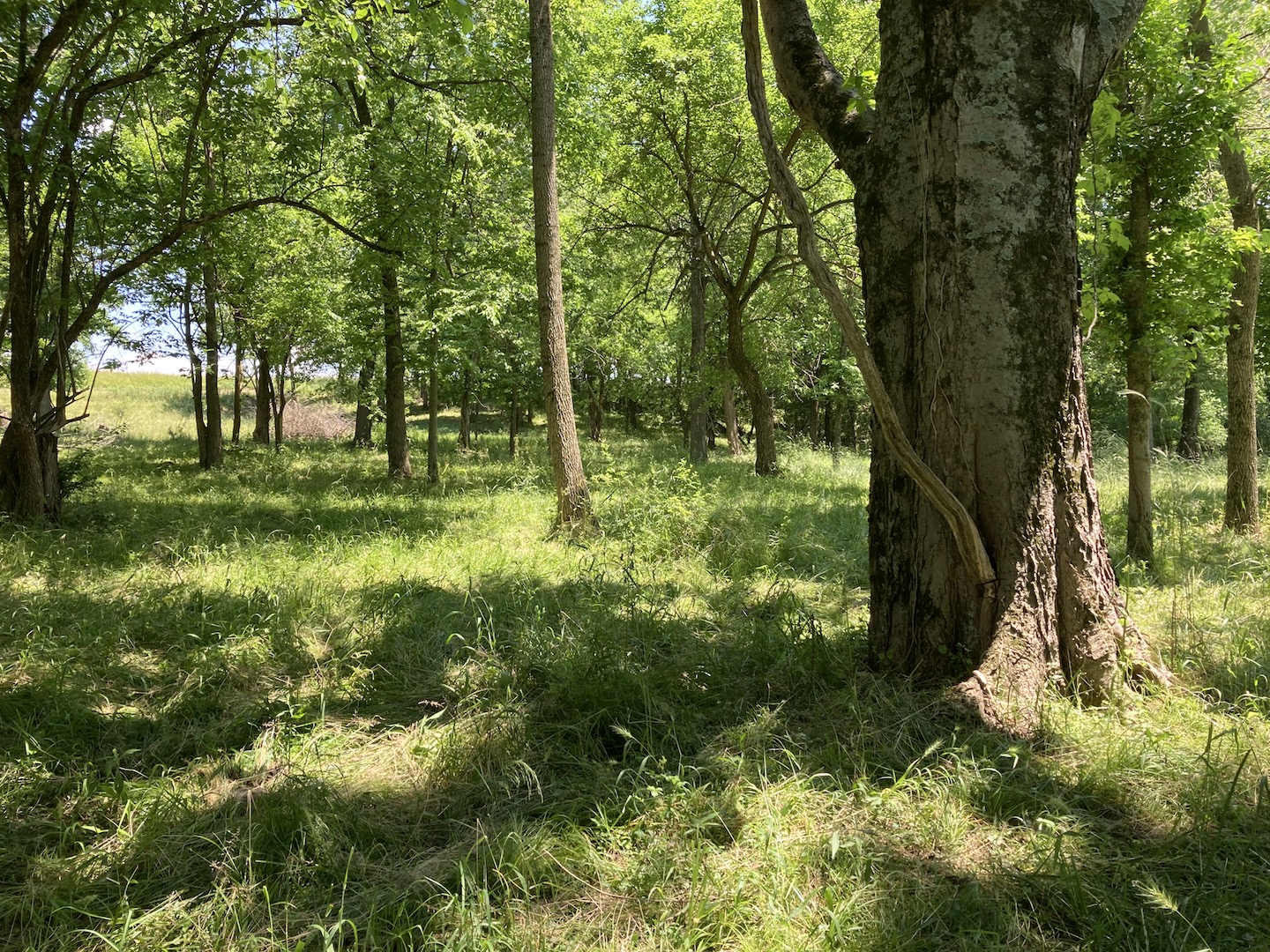
Careful grazing can benefit woods like these. A great blue heron flew up out of the pond in these same woods about 30 yards away.

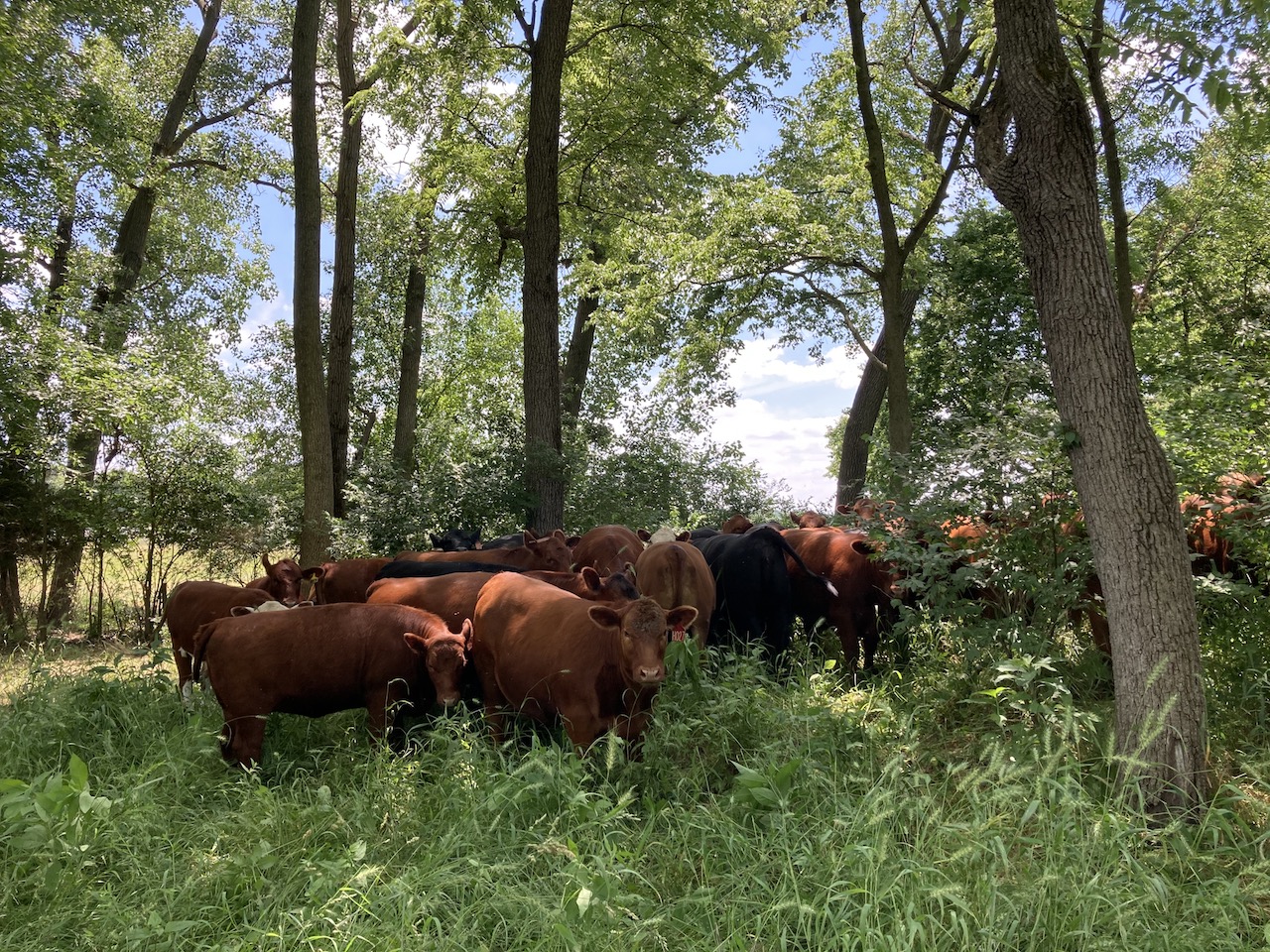
A herd will appreciate the shade of woods on hot summer days. This was a very curious herd, by the way.

7. I find myself praying for the love, strength, and wisdom of Jesus in all of my life.

I hope this finds you convinced of God’s love, filled with love and strength and wisdom, and living consciously and fully for God’s purposes. I’d love to hear what you are doing and what you are finding to be your purpose and focus, especially as they relate to God’s Creation.

There was much that surprised me in N.T. Wright’s book Surprised by Hope.

In the book, the New Testament Scholar and Anglican bishop explains what, in his view, the ultimate future of life will be from a Christian understanding. This includes what our futures will be after we each die. It also includes what God’s ultimate intentions are for this world. And, counterintuitively, he details what response that understanding should prompt in us in our daily lives and in our churches.

I was surprised by, among other things, how strong of a case Wright made for a literal bodily resurrection as our future destiny. This comes from Wright close reading of the Bible. Here, as in other cases, he finds threads that are both conservative and radical at the same time.

But nothing surprised me more than several paragraphs at the end of the chapter that concludes Part II (“Future Plan”). In these paragraphs, Wright forcefully questions our traditional understanding of what salvation is all about.

These paragraphs are so significant that I have shared them below and urge you to read them.

But the most important thing to say at the end of this discussion, and of this section of the book, is that heaven and hell are not, so to speak, what the whole game is about. This is one of the central surprises in the Christian hope. The whole point of my argument so far is that the question of what happens to me after death is not the major, central, framing questions that centuries of theological traditions have supposed. The New Testament, true to its Old Testament roots, regularly insists that the major, central, framing question is that of God’s purpose of rescue and recreation for the whole world, the entire cosmos. The destiny of individual human beings must be understood within that context – not simply in the sense that we are only part of a much larger picture but also in the sense that part of the whole point of being saved in the present is so that we can play a vital role (Paul speaks of this role in the shocking terms of being “fellow workers with God”) within that larger picture and purpose.

The paragraph does not actually end here but, in my humble opinion, it should have. So I encourage you to read that first section again before going on to the second half of the paragraph below.

And that in turn makes us realize that the question of our own destiny, in terms of the alterantives of joy or woe, is probably the wrong way of looking at the whole question. The question ought to be, How will God’s new creation come? and then, How will we humans contribute to that renewal of creation and to the fresh projects that the creator God will launch in his new world? The choice before humans would then be framed differently: are you going to worship the creator God and discover whereby what it means to become fully and gloriously human, reflecting his powerful, healing, transformative love into the world? Or are you going to worship the world as it is, boosting your corruptible humanness by gaining power or pleasure from forces within the world but merely contributing thereby to your own dehumanization and the further corruption of the world?

Below you will find most of the next paragraph. I end my quoting of the paragraph at a natural stopping point.

This reflection leads to a further, and sobering, thought. If what I have suggested is anywhere near the mark, then to insist on heaven and hell as the ultimate question – to insist, in other words, that what happens eventually to individual humans is the most important thing in the world – may be to make a mistake similar to the one made by Jewish people in the first century, the mistake that both Jesus and Paul addressed. Israel believed (so Paul tells us, and he should know) that the purposes of the creator God all came down to this question: how is God going to rescure Israel? What the gospel of Jesus revealed, however, was that the purposes of God were reaching out to a different question: how is God going to rescue the world through Israel and thereby rescue Israel itself as part of the process but not as the point of it all? Maybe what we are faced with in our own day is a similar challenge: to focus not on the question of which human beings God is going to take to heaven and how he is going to do it but on the question of how God is going to redeem and renew his creation through human beings and how he is going to rescue those humans themselves as part of the process but not as the point of it all. 

There is so much power in how we frame things.

If the point of Christianity is understood to be the preservation of our individual souls in a heaven that is beyond a earth that is just a temporary place that does not matter to God, then it’s not surprising that Christians ignore or even willingly deplete God’s earth.

But what if the point is, as Wright expressed it above, to be part of God’s desire and purpose to bring everythig God made into peace and harmony?

How different our treatment of God’s earth would be. How different our evangelism would be.

This also puts human exceptionalism into its proper perspective. As I wrote here, “The point of the God-given exceptional role (of humans) is serving God’s purposes.”

We are uniquely gifted in order to uniquely serve.

I find Wright’s framing to ring true in a compelling way.

How about you?


I consistently find N.T. Wright’s insights to be both affirming of the coherence of the Bible itself in ways that inspire me and challenging to the ways so many Christians have come to understand God and Jesus. I highly recommend that you read his books and listen to lectures by him. 


In February I shared a blog post by my friend Ryan O’Connor that reviewed several climate change documentaries for sharing with your church or other faith community. When Ryan was first working on the post, I asked him to also share insights he’s gained by organizing documentary showings himself. You can find those wise insights below.

I highly recommend that you take to heart the wisdom he offers. Group dynamics, especially around topics that have become politically polarized, can be hard to handle. Combining your good intentions with thoughtful preparation gives you a much better chance of having a successful event. Thanks again, Ryan, for sharing your insights.


On a dark evening in November, I briefly addressed a small crowd gathered in our church’s auditorium. I nervously smiled, realizing I didn’t recognize many of the faces in the crowd. I thanked them for coming.  Then I dimmed the lights.

As the documentary began, I futilely tried to scan my speaking notes in the dark. Had I mentioned my purpose and goals as intended? Was I ready for tough questions? And most importantly, was our planning sufficient, or were there things I glossed over in my eagerness to gather people and hit “play”?

Hosting a movie screening can be an effective, low-barrier way to attract a crowd. It will only be effective, however, to the extent you plan from the big picture to the little details. So, using a Q & A format, I will share what I’ve learned about good planning for these kinds of events.

What are your goals?

If you are planning on screening a movie, or hosting any type of event, I strongly encourage you to work through the following questions oriented around the goals for your event. Be as specific as you can and write you answers down on paper so you can refer back them throughout your planning. Let your goals inform your selection of a film, and be sure to watch the movie yourself prior to settling on it.

What outcome are you trying to achieve in hosting a movie screening?

While a desire to educate others may be the initial goal, the desired outcome is usually something more than deeper knowledge. Be transparent with attendees and state your hopes at the start of your meeting. In addition, recognize that your desired outcome may require more than just a one-time event, and think about how you will follow up.

What actions do you want attendees to take afterwards?

Again, knowledge itself is usually not the goal. In addition, merely giving people knowledge doesn’t necessarily lead to action. What would you like people to do, either corporately or privately, during or after attending your event?

What are barriers to action?

Try to think like a participant, perhaps discouraged by the enormity of the problem and unsure what actions to take, wondering if their actions matter, confused by climate science misinformation, or just busy with life and other important issues. Think through who you’re most trying to reach and how you can reduce barriers for them. Be prepared to address feelings of discouragement or skepticism about pie-in-the-sky solutions.

How can you set up the meeting timing, duration, and physical space to achieve your outcome, desired actions, and reduce barriers?

Think about the things like what day of the week and time of day to host your event, as well as whether you want to provide childcare or perhaps a virtual option so parents of young children can attend. Little things like snacks and room set-up matter too. Rows of long tables are great if you want people to take lots of notes, but if you want to include a small group discussion, round tables or no tables at all might be a better choice.

Who is your intended audience, and how will you advertise your event?

If you want more than your usual attendees to come, you’ll probably have to do more than just put it in the church bulletin. Would the pastor be willing to make an announcement from the pulpit an encourage people to come? Maybe even preach a sermon on the topic? Personal invitations are the best way to get people to come. For my event, my preschool-aged daughter and I handed out small flyers at a different church social event a few weeks prior, and several people came solely from the personal invitation.

How will you respond if there are tough questions?

You don’t have to be a climate expert to start a conversation. In large part, that’s why you’re screening the movie rather than speaking yourself. As a facilitator, it’s not your job convince skeptics in the moment. Resist the temptation to get into debates with people. It is okay if not everyone agrees.

While it is important to refute obvious falsehoods, it is equally or more important to treat others with respect and charity. However, it will give you more confidence if you have a plan for how you will respond to difficult questions. Often, the best answer is to state that you’re not a climate scientist, reiterate that we’re united around common goals like caring for God’s earth and all people, and that you’d be happy to follow up afterwards.

That being said, if you’re looking to moderate a session and want to brush up on climate science, excellent resources are the state-level climate summaries from NOAA, which cover both changes observed to date as well as major impacts expected by mid to end of century, tailored to each state in the U.S.

If you’re concerned about how to respond to specific questions, like the reliability of climate models or “Hasn’t the climate always changed?”, the website SkepticalScience.com, has numerous rebuttal articles that correct misinformation. While an excellent resource, the sheer volume of articles and technical details can be a rabbit hole. I keep it bookmarked to respond to follow-up questions, if needed, rather than to prep myself for hypothetical boogeymen.

If you’re looking a good hard copy resource, a book on climate science specifically written for people of faith is A Climate for Change: Global Warming Facts for Faith-Based Decisions by renowned climate scientist Katherine Hayhoe and her husband and evangelical pastor Andrew Farley. Published in 2009, the book provides an excellent summary of climate science along with discussion of how Christians should respond. The book and its faith-based commentary makes it an excellent companion to the websites above, which are regularly updated with climate impacts observed to date and the latest future projections.

Another good resource is A Catholic Response to Global Warming, by Steven Coleman. While written for a Catholic audience, it contains an excellent summary of both the moral and scientific urgency for people of all faiths and is very accessible at only 24 pages.

A practical example: my story of screening The Human Element

Back to my screening of The Human Element. As the stories on the screen unfolded in the darkened room, my nerves settled down. I went through the mental checklist of my goals, the schedule for the evening, and the big-picture outcomes and actions around which I had planned the event.

My primary goal was to educate others and spur a conversation with church members about observed climate impacts and personal concerns about future changes. Secondary goals included recruiting new members to our care of creation team and getting feedback on other topics attendees would like to learn about in the future.

With those goals in mind, I made sure to have each person sign in as they arrived and included a check box for them to indicate if they were interested in joining the team.  I also provided a handout for each person that included the discussion questions and a list of potential future topics, along with instructions for them to check off their top three.

Because part of my goal was in part to foster discussion and sharing, I had set the room up without tables, and following the movie I had people circle their chairs into small groups of 4-5 and discuss the following questions:

Which stories in the film resonated with you most?

How has climate change impacted you and your community, or those close to you?

What are common values you share with those suffering the impacts of climate change, either in the film or in our local community?

What is the role of us as individuals and collectively as a church in helping to address climate change?

Following the small group discussion, we reconvened for a short large group report-out so that everyone, including myself, could hear a summary of the discussion.

There was a challenging reaction immediately after the film. Before we broke up into small groups, I asked the group for one or two people to share their immediate reactions.

An older gentleman from the back of the room blurted out gruffly, “Depressing!”

As the movie had ended on a positive note, it wasn’t what I was expecting. I didn’t try to argue with him. I just acknowledged that yes, climate change can be a depressing topic, but that there are also reasons to have hope, both from common ground solutions and from our faith.

And then I simply introduced the small group discussion and moved on to the next thing as planned.

I also wanted peopled to commit to an action–one new thing they could do in their personal lives to care for the Earth and for the poor suffering from environmental degradation. Recognizing that one barrier is not knowing what to do, I provided a handout of potential, high impact actions for consideration, such as signing up for a green power program through their utility, eating less meat, buying locally grown food, and changing commuting and driving habits.

At the end of the meeting, I asked everyone to take five minutes to write down their personal action commitment. I suspected that for some people, a secondary barrier might be a feeling that the issue was so big their actions wouldn’t matter and that they might be in the minority in trying to change their habitats. With this in mind, I ended on a hopeful and encouraging note. Quoting St. Paul, I noted that we are mutually encouraged by each other’s faith (Romans 1:12). By sharing our intentions, we can support each other in what we plan to do and be inspired and encouraged at the same time.

In the end our team felt the event was a success.

We had a good turnout, including many people who responded to personal invitations—we weren’t just preaching to the choir. We doubled the membership of our creation care team. We got several ideas for future topics.

But most importantly, we brought members of our community together for a conversation, started breaking down barriers to action, and planted the seeds for bigger personal and collective steps down the road.


Have you hosted an event for your church or other community of faith about climate change? How did it go? What did you learn? Have you found other resources that are especially effective? Feel free to email me at wholefaithlivingearth@gmail.com.