Psalms with Wings

Nathan Aaberg —  October 27, 2015 — Leave a comment

In a recent post I listed seven principles for churches to use in making their landscaping decisions. When I then used those principles to look at the message the typical lawn-dominated church landscape sense, I concluded that churches, whether they mean to or not, are communicating that fitting in with American lawn culture is more important to them than fidelity to a whole faith in God that includes a concern for God’s earth.

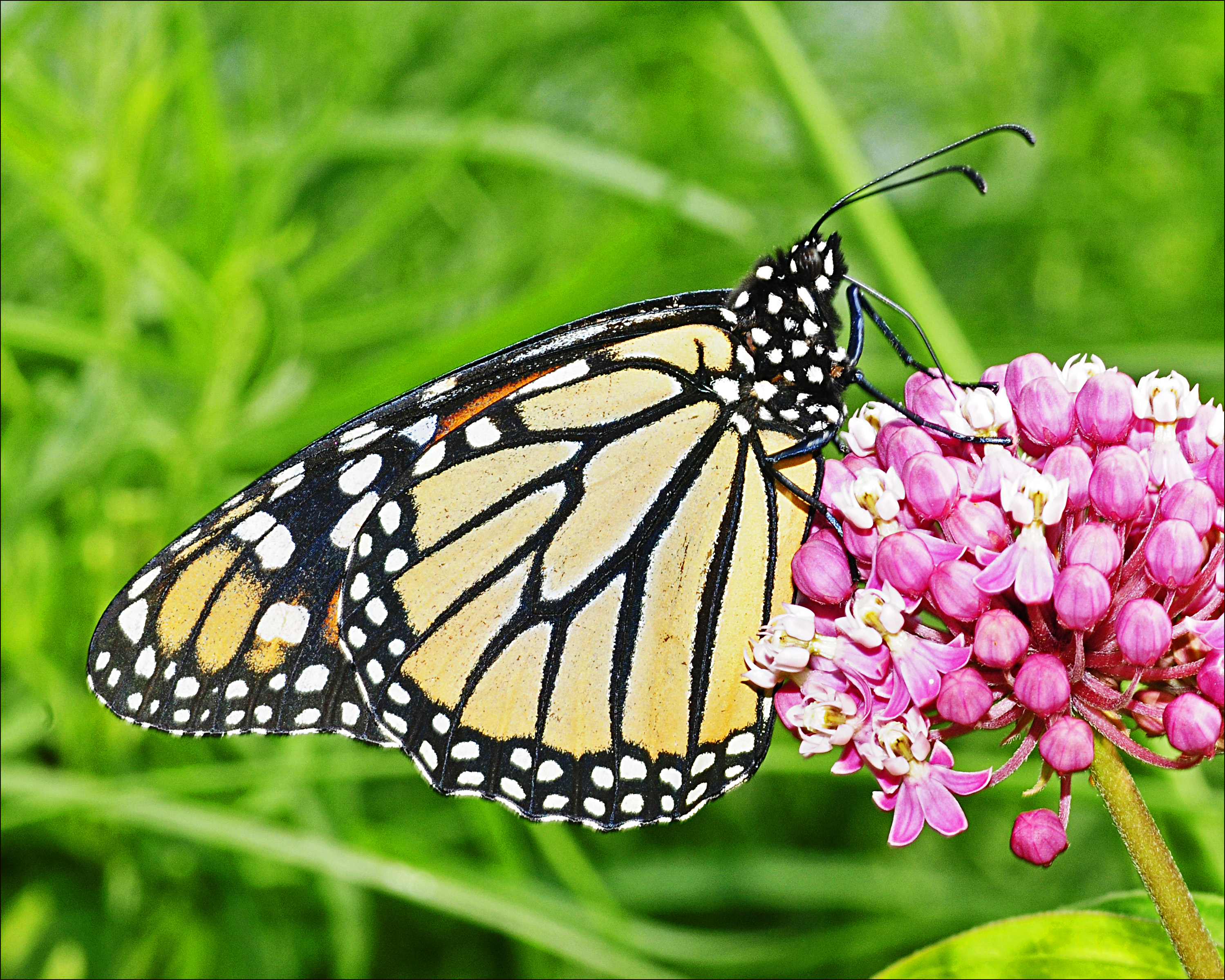
I’m following up on that post here by simply sharing two photographs of butterflies taken by my friend Joan Sayre and providing a bit of commentary.

Monarch butterfly on milkweed (by Joan Sayre)

Monarch butterfly on milkweed (by Joan Sayre)

Monarch butterflies are beautiful creatures with a complex, intergenerational migration cycle. This video tells the story of that migration cycle in a way that I’ve not seen before and that I urge you to watch. As the video mentions in an offhanded way, their long-term survival is in question as their numbers have been declining.

For monarchs to survive, they need milkweed plants for their caterpillars to eat, and they need other plants with nectar (these are primarily native plants) for the adults. People in North America, by displacing habitat and by how they landscape and by how they farm, have created a landscape that is largely void of milkweed and other native plants. Imagine shopping for food and discovering that the only grocery stores available are hundreds of miles apart and each is the size of your bathroom.

I’m happy to say that there are people around the country who are creating butterfly gardens and restoring natural areas. Check out this story about a church that recently created a butterfly garden on its ground that has been certified by the National Wildlife Federation.

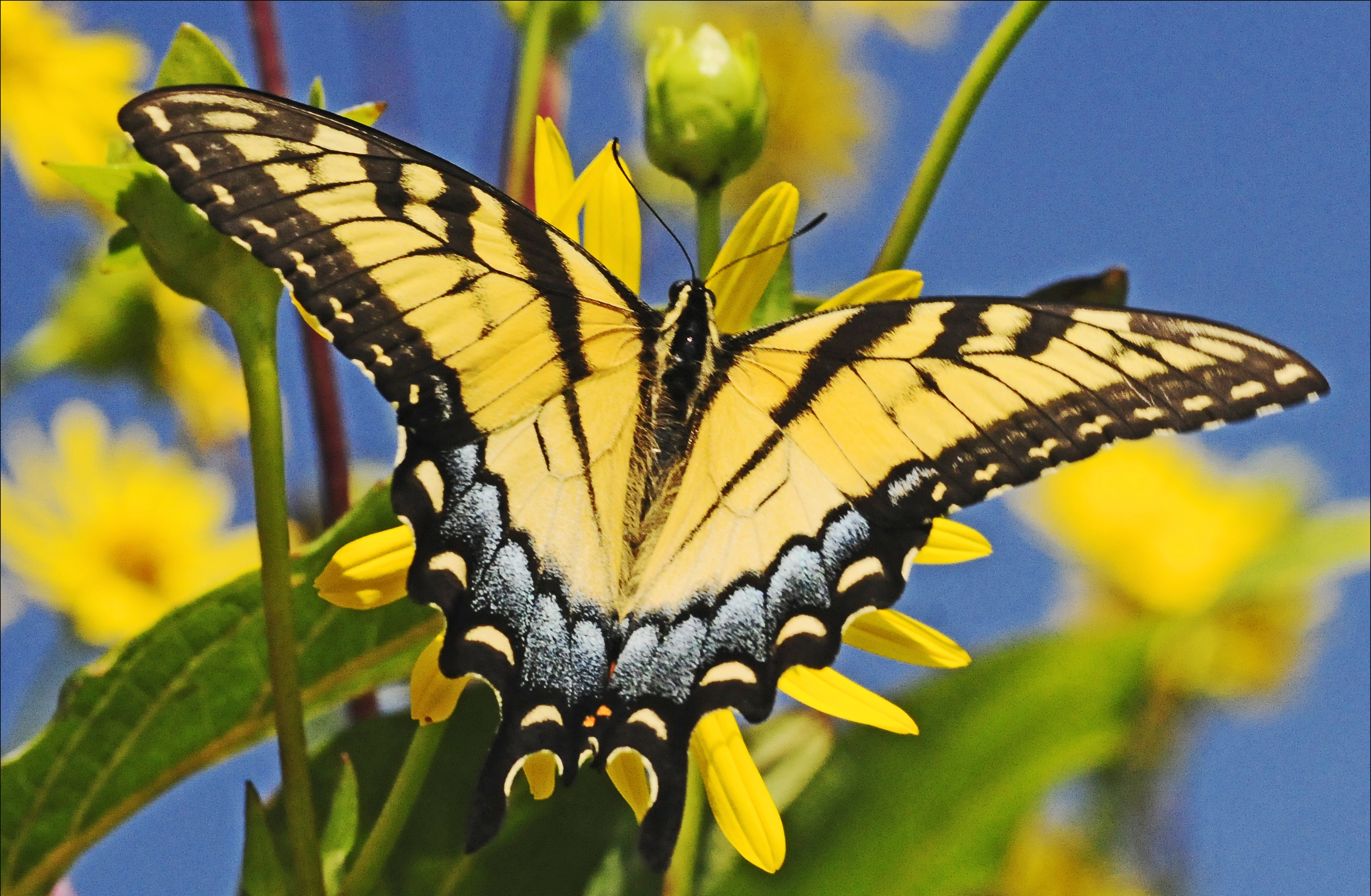
This second photo is of a eastern tiger swallowtail on the yellow flower of a prairie dock, a native wildflower.

Eastern swallowtail (by Joan Sayre)

Eastern swallowtail (by Joan Sayre)

This kind of butterfly is more flexible in terms of the plants on which its caterpillars can feed but the core message is the same – for both the caterpillar and the adult stage, having access to native trees and wildflowers is a necessity. I’ve been delighted to see the eastern tiger swallowtail in our yard on the prairie blazing stars and other native wildflowers we’ve planted.

I share these photos for two reasons. One is simply for you and I to take a moment to be grateful for the sheer, extravagant beauty of life on God’s earth.

The other reason is to remind you and I of what is at stake in our landscaping choices for our churches, our home landscapes, and even our communities. The lawn does not sustain either of these creatures in any way at a time when the world is increasingly hostile to their ability to live. By deciding to give some of our landscapes over to native plants (and by supporting native habitat preservation and restoration in our communities), we can be good stewards for creatures like these and give them at least a better chance of survival.

Which kind of landscape will you and your church choose?

Some time ago I noticed something peculiar in verses eleven and twelve of the first chapter of Genesis. Here’s how they read in the New International Version translation:

“Then God said, “Let the land produce vegetation: seed-bearing plants and trees on the land that bear fruit with seed in it, according to their various kinds.” And it was so. The land produced vegetation: plants bearing seed according to their kinds and trees bearing fruit with seed in it according to their kinds. And God saw that it was good.”

It struck me – God is calling upon the land to use its creative capacities to bring forth plants of many kinds. And later in the first chapter the waters are given that same sort of charge, and the land is asked to produce living creatures. How was it that for so long I had understood the creation narrative to suggest  that God literally and unilaterally shaped and crafted every single detail of our world from inert matter?

As it has many times, the Bible surprised me.

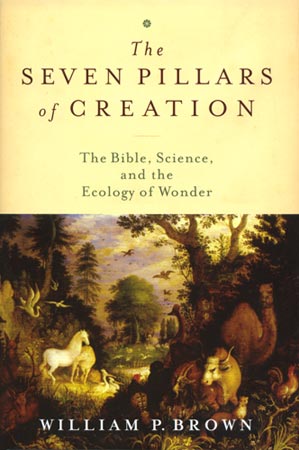
The best analysis I’ve seen on this element of the Genesis story is in William P. Brown’s The Seven Pillars of Creation. I’ve already shared, in a previous post, a small section of Brown’s book, and here I will do so from the third chapter in a section called “Cooperative Process of Creation.”

Book cover

When you read this section with your heart and mind wide open, you’ll find that it captures a number of things about the story of creation in the first chapter of Genesis that are vital and often overlooked:

What is it about God that human beings as God’s “images” are said to reflect? The answer lies in the various ways God goes about creating in Genesis 1. Nowhere does God dominate or conquer. Unlike Marduk, God is no imperious deity. God commands light into being but does not slay the darkness to do so. The sky is created through the commanded separation of the waters, not by their dismemberment. The various cosmic domains are not the bodily remains of cosmic chaos. Neither is humanity fashioned from the blood of conquered deities. God is a differentiator, not a terminator.

Not unlike the Egyptian Ptah of the Memphite cosmogony, God creates by word rather than by sword. God creates by verbal decree that is at once commanding and invitational. For every act of creation, God begins by commanding and then, in certain cases, lets creation happen, as in the case of light (1:3), land (v. 9), and vegetation (v. 12). In other cases, God is directly involved in the act of creating (vv. 7,21, 25, and 27). In several striking cases, God enlists the elemental forces of creation to further the process. In Days 2 and 3, for example, the waters are commanded to separate themselves, and the earth is commanded to produce plants (vv. 9-11). Far from being inert, passive entities, the waters and the earth act at God’s behest. They are bona fide agents of creation, as demonstrated also in the creation of life: the earth is commanded to bring forth land animals, and the waters are beckoned to produce sea life.

And God said, ”Let the waters produce swarms of living creatures, and let birds fly above the earth across the dome of the sky.” (v. 20)

And God said, “Let the earth bring forth living creatures of every kind: cattle and creeping things and wild animals of the earth of every kind.” (v. 24)

In both instances, creation is accomplished by divine agency:

So God created the great sea monsters and every living creature that moves, of which the waters produced swarms. (v. 21)

So God made the wild animals, each according to its kind, and domestic animals, each according to its kind. (v. 25)

Nevertheless, as v. 21 makes clear, divine agency is accompanied by the active participation of the waters and the earth. God works with the elements of creation, not over and against them, much less without them, elements enlisted by God as “empowering environments.” Creation is a cooperative venture exercised not without a degree of freedom.

There it is. In plain sight in the heart of the Genesis creation narrative. The elements of the world have a certain agency, a certain freedom exercised within God’s overall framework and will, a certain life of their own. This gives us a dynamic, interactive, cooperative sense of our world’s origins and of how God relates with the Creation.

I can’t help but be convinced that this understanding should shape how we think of God, our relationship with God, and our proper relationship with God’s earth.

You know you’re dealing with culture when you feel things should be done a certain way and you can’t really explain why.

Some cultural expressions, like the contrast between the American handshake and the Japanese bow or the cheese heads worn by Green Bay Packers fans, are innocuous and simply add flavor to life. Others enshrine fear and perpetuate human brokenness.

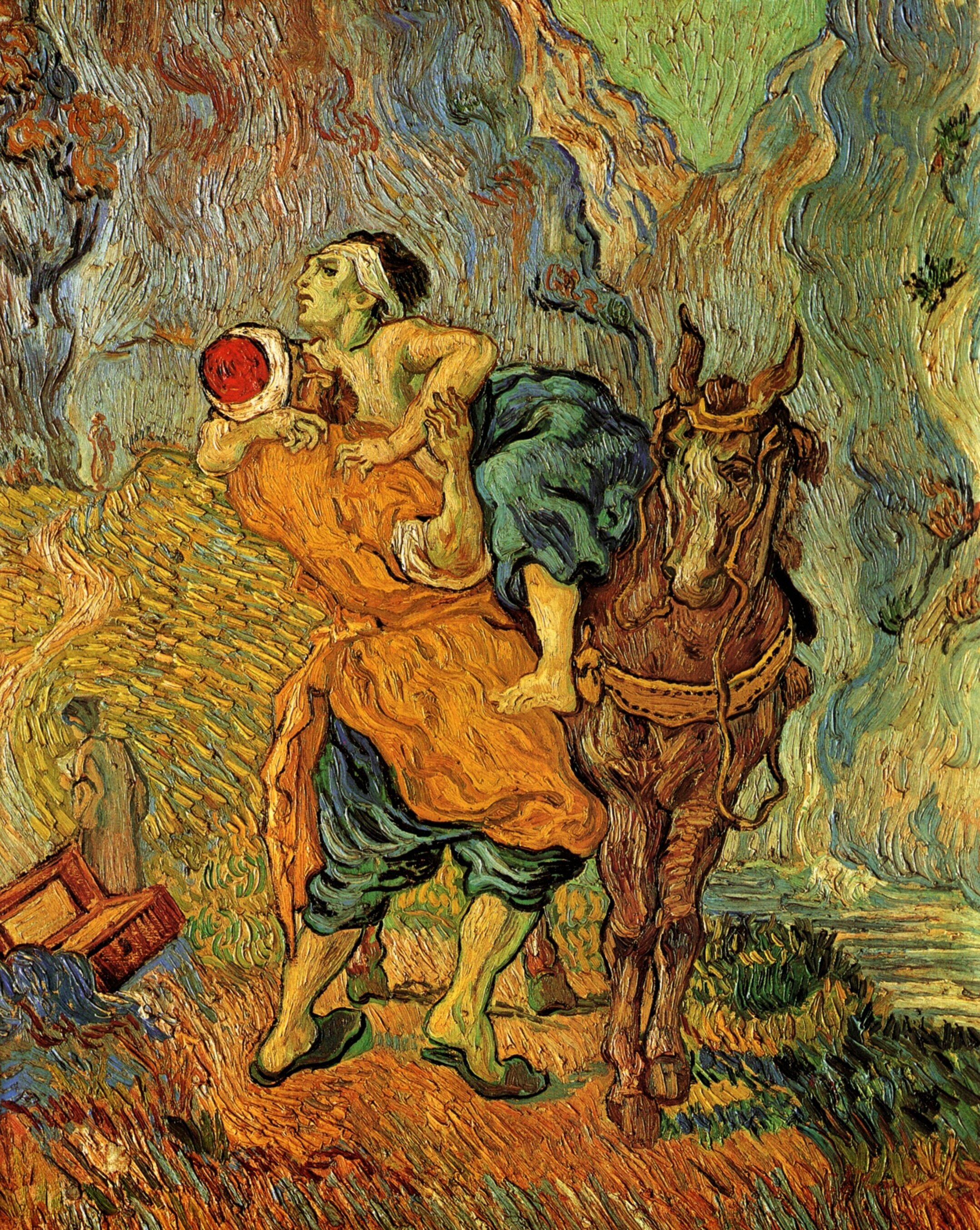
The parable of the Good Samaritan challenged the culture and norms of Jesus’ day. In the parable, love won out over a deep-seated and destructive cultural divide.

The good Samaritan: Love over culture.

The good Samaritan: Love of God over culture.

It is up to Christians to be discerning about culture. And if a cultural element contradicts the loving heart that God desires us to have, that cultural element must go.

But because culture is so powerful and because we breathe it and swim in it everyday, we almost always have blind spots.

That’s true with cultural traditions that shape how we relate with other people. It’s particularly true with cultural traditions that dictate how we relate to God’s earth. The non-human living things of this world are, as a whole, the ultimate “other.” Our survival depends on us consuming nature. What’s more, the greater the scale to which we desire to expand our personal comfort and our civilization’s power, the greater the scale to which we feel compelled to use God’s world in ways that deplete and diminish it. This approach to God’s world becomes rationalized and embedded in our culture. And then we can’t see the reality of what is being done.

The church should be different.

The church should be a place where God and God’s love prevails over any cultural expression that is counter to God’s love and the way God desires us to live.

What would a Christian approach to church landscaping look like if you were starting from scratch? I’d suggest these principles:

Meet the needs of people who work, worship, and play there.

Seek to be efficient in the use of resources and time.

Be a good neighbor in every way.

Express the creativity that God has blessed people with.

Affirm the beauty of God’s earth in all its diversity and life.

Steward God’s earth faithfully in the unique context of that place.  

Achieve all six of the previous principles to the best degree possible.

So how does the typical church’s big, green, weedless lawn match with those landscaping principles?

Devoting areas of the church’s ground to lawn to enable games and social activities does meet the needs of people. And there is a certain simplicity and efficiency to managing a property with just one type of landscape. The neat lawn can also be seen as being a good neighbor in terms of respecting landscaping norms of an area.

So you can make some case for the church lawn in terms of the first three principles.

But you begin to run into trouble as you think more broadly about what it means to be a good neighbor and as you look at the remaining principles.

When the lawn’s maintenance uses up large amounts of locally scarce resources (like water in dry areas like California) and applies herbicides, pesticides, and fertilizers that contribute to broader environmental problems that impact people as well as wildlife, we are not being good neighbors. Nor are we being good neighbors when our lawnmowers emit pollution. We are losing, too, the opportunity to grow food that could feed our neighbors who lack good food to eat.

And is it just me or does a landscape with just a lawn lack any display of artfulness?

Sadly, and especially when there is grass even in places where people will never venture, the lawn-dominated church landscape does not affirm the goodness of God’s Creation. It communicates that the only plant God loves in Creation is Kentucky bluegrass. (Check out, by the way, this imaginary dialogue between St. Francis and God on the oddities of the lawn and how it makes no room for the many other flowers and plants of God’s Creation.)

It’s worse than that. Lawns provide almost no food, habitat, or shelter for wildlife at a time when the world is increasingly hostile to them.

So when our church landscape is a green empire of Kentucky bluegrass and non-native trees and shrubs, we think only of our own needs. We are depriving birds, butterflies, bees, and other members of God’s creation of the food, habitat, and shelter they need to survive, even in places we will not use. In no way can that be called stewardship of God’s earth.

When we come to the principle of optimizing, it’s become clear that we’ve maximized the first two principles and been a good neighbor in terms of cultural expectations. But in the process we’ve missed the broader meaning of being a good neighbor and completely whiffed on the other principles.

In other words, the typical church landscape tells the passing world that the Christian faith and that particular church care about human needs, efficiency, and meeting cultural expectation but don’t care about their neighbors in a broader sense and don’t care about the life of God’s earth. The typical church landscape ultimately communicates that we desire the assurance of life everlasting with God but we don’t want to be any more transformed and distinct from the culture around us than we must be.

But wait a minute, you say. What am I saying about my faith? I have a big, green, weedless lawn.

Well, actually, much of America does. According to this article, the lawn is now the single largest “crop” we grow. The United States has 63,000 square miles of lawn, which is approximately the size of Texas. That is a lot of water, a lot of chemicals and fertilizers, a lot of lawnmower pollution, a lot of unused potential for growing food, and a great deal of land made hostile to wildlife.

That does not square with the loving God of all of life we see in the Bible. The God who declared the whole ecological whole of creation, including humanity, very good. Who knows every bird on the mountains. Who feeds the ravens. Who shows great concern for the poor and weak. Who demonstrated dominion over the world by sending Jesus into the world. Who showers us, despite the fact that we don’t deserve it, with love and grace.

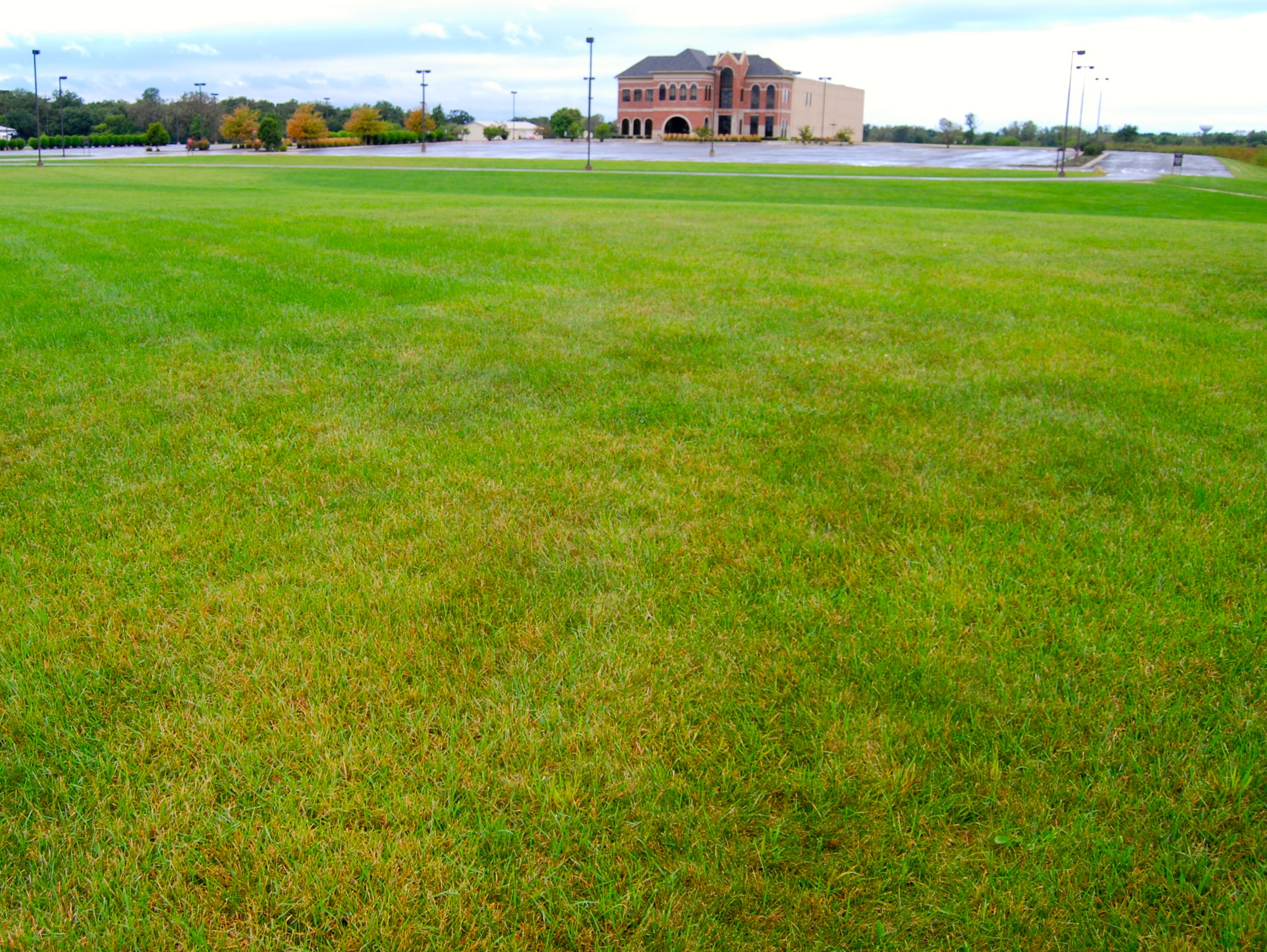
Church Lawn Image

Does typical chuch landscaping communicate fidelity to God or to culture?

But the gravity of human culture is so strong.

We expect lawn. We don’t know why, but we expect it.

Yet, from the very beginning, Christianity in its purest form has been a counter-cultural, self-sacrificing force against dominant cultural norms that were counter to love and compassion. This was because Christians who stood up to those cultural norms had hearts that had been transformed by Jesus.

It’s time to filter our whole culture, including our landscaping culture, through God rather than filtering God through our culture.

It’s time that churches thoughtfully use their website, their church signs, and their landscaping to communicate their values and their ultimate loyalties.

(In a future post, I’ll share helpful ideas and resources on Creation-friendly landscaping. Please share with me examples you know of churches being good stewards of their landscapes by email at wholefaithlivingearth@gmail.com.)

Having and living out a whole faith ultimately depend on our willingness to open our hearts. Are we ready to have our convictions reshaped by God, even those convictions that have grown out of our culture and are deeply rooted in our emotions?

We tend to pick and choose where God’s message applies and where it doesn’t. When it applies to something we intuitively care deeply about, we see things in intense blacks and whites. When it applies to something we don’t care deeply about because of our culture or self-interest, we ignore it or rationalize how we and our community are acting toward it.

Case in point – abortion.

The controversy over the Planned Parenthood videos has again brought abortion into the forefront. It has also again revealed how selective people can be in applying core ethical concerns. Pro-choice supporters, many of whom would rail against the mistreatment of minorities and the polluting of rivers, don’t want to squarely face the horror of the violence done against a baby in a womb. The ability of Planned Parenthood officials and their supporters to use abstract, technical language to talk around this reality is deeply disturbing.

But far too many Christians who are outraged by the Planned Parenthood videos and by abortion in general, ignore and even acquiesce to daily violence against poor, vulnerable communities and against God’s earth. In fact, many of the same people who are speaking against abortion in shrill voices are just as likely to be comfortable with and even to advance ways of using God’s earth that systematically cause suffering to people and vulnerable living beings.

Did you know that a child’s lungs begin to develop in the womb but are not fully developed until they turn eight years old? In what way is it right to desire to protect that child’s life and lungs in the womb but not when they are out of the womb and vulnerable to pollution?

Selectivity in where we advocate for love and compassion and where we don’t is like a tree that bears beautiful fruit on some branches but rotten, worm-filled, poisonous fruit on others.

To make this point, I want to share a list of ten ways in which abortion shares common ground with the violence done against Creation. I am not suggesting they are exactly morally equivalent and I recognize that I am ignoring many nuances. Nevertheless, I believe the extensive common ground should give us pause and compel us to desire to live out whole lives of whole faith.

The actual acts are violent and cruel: The references to the “crunchiness” of abortion and the awful images shown on signs at protests around abortion clinics jerk us out of an anesthetized calm and into the reality of the violence of abortion. What chance do soft skin and tissue have against cold, hard steel? A number of years ago, the culture critic and avowed atheist, Camille Paglia faced that reality directly when she wrote: “Hence I have always frankly admitted that abortion is murder, the extermination of the powerless by the powerful. Liberals for the most part have shrunk from facing the ethical consequences of their embrace of abortion, which results in the annihilation of concrete individuals and not just clumps of insensate tissue.”

For their part, confined animal feed operations sounds reasonable and antiseptic until you think about the experience of the animals and the lagoons of waste outside. And what about slaughterhouses where the speed of the killing line is debilitating to the workers and cruel to the animals? Or the testing of cosmetics and pharmaceuticals on animals or the ripping up of prairies with their rich plant and animal life to be farmed for ethanol and animal feed? Or mountains being leveled and forests cleared in the Appalachians with dire impacts on surrounding communities, forests, and streams?

A variety of abstract, intellectual arguments are often given by elite proponents to justify the violence being done: Here’s what Camille Paglia used for her justification for defending abortion: “The state in my view has no authority whatever to intervene in the biological processes of any woman’s body, which nature has implanted there before birth and hence before that woman’s entrance into society and citizenship.” In other words, nature unfairly failed to give women a say in the fact that they must be ones to bear babies so a woman is justified in having a child killed in her womb. Likewise, the promoters of commodity farming cry out that we must feed the world. This zealous, seemingly selfless mission is used to justify the worst features of commodity farming that result in dead zones in the Gulf of Mexico, nitrates in drinking water, the killing of soil life, and factory farms.

The inherent value of that life is denied either explicitly or implicitly: Isn’t it interesting that people justify abortion and destruction and violence to God’s world because the unborn child and the cedar waxwing and the rare plant do not have the same capabilities as an adult human? Yes, we must make distinctions, but the full value and worth of a living thing do not ultimately come from a living thing’s capabilities. They come from the fact that they are in some mysterious way God’s.

We don’t want to be confronted with the inherent violence and destruction of those acts, and the people carrying out the acts don’t want the world to see the full reality of them: Let’s face it. We avert our gaze from images of aborted babies and don’t want to look at videos of farm animals being abused. And people carrying out the acts typically want to make exposure to those realities and to the truth behind what is being done difficult. A great example has been the passing of “ag gag” laws which prohibit undercover investigations of farming operations (livestock operations, in particular) because undercover operations resulted in disturbing information and videos about how animals were actually being treated. These remind me of Herod imprisoning John because he called Herod to task for divorcing his wife and then marrying his brother’s wife.

Freedom and personal rights trump all other values: The right to do what one wants with what is one’s own (whether it be one’s body or one’s property) is asserted as the ultimate value by abortion rights advocates and by many people on the right side of the political spectrum. They both resent any restriction on what they do with their body, their land, their animals, and even their employees. Assertions of freedom and personal rights are, however, not really a justification of what is done. Instead they are a force field that negates the right of anyone else to make ethical judgments about what is done with those rights or to intervene on behalf of society’s common values.

It’s all too easy to move on as if the violence never happened: We so easily avoid the ghosts. Following violence there is a peace of sorts, and unless you use a moral imagination, the life that was or could have been fades quickly away as if it never was. And making the effort to hold onto the memory of a place that had been full of life or what the unborn child could have become takes moral energy and willingness to go into raw emotions that few of us want to deal with. One of the ways that the cross is so unusual as a symbol of faith is that it forces us to pay attention to the moment of violence and sacrifice in the story of Jesus and God. Perhaps it should even cultivate in us a heart that will not turn away from suffering and violence?

The acceptance of violence by the powerful against powerless life in particular cases contributes to a desensitization to other forms of violence in our world: I have heard the argument that routine abortion desensitizes us to a devaluing of life in general. That rings true. And how animals are raised, transported, and slaughtered in many cases around the country does, in my opinion, the same thing. It is an interesting and disturbing fact that many psychopaths first revealed their dangerous tendencies by torturing and killing animals. A cruel spirit that cannot empathize with the weak and vulnerable will show that cruelty to people and animals alike over time.

Science continues to give us an expanded view of the complexity of life even as applied science grows in its ability to carry out violence against life ever more surgically and effectively: We now know so much more about the life of the unborn child and its rapid development than we used to. Twins in the womb, for example, play with each other. Babies in the womb know when they are being sung to and when there is just background music. We know ever more about the intelligence and emotional life of many animals and other life as well. Did you know that octopi have 130 billion neurons and humans about 100 billion (and the majority of neurons of an octopus are in its arms)? We are also learning more about the complex life of soils and the dynamic interaction between soil life and plant life.

When this expanding world of scientific knowledge collides with our interests and desires, however, we tune it out. And when we learn in the Planned Parenthood video that there are ways to extract the body of a pre-birth baby intact after it has been killed so that its organs can be removed for donation, we are witnessing one of the fruits of applied science in an ever more sophisticated form. Similarly, applied science is offering us ever more sophisticated ways to get what we want out of natural life at tremendous cost. Sixty to 80 percent of pigs (as well as many cattle and turkeys) raised in the U.S. today are given ractopamine, a growth-enhancing drug, that many countries ban. It’s a beautiful thing if all you value is enhancing your profits by getting more poundage of pig for your dollar. But what about the pigs? This article notes that an FDA report has found that the drug can result in “respiratory disorders, hoof disorders, bloat, abnormal lameness and leg disorders, hyperactivity, stiffness, aggression, stress, recumbency (inability to get up) and death.” Human ingenuity combined with deadened hearts magnifies horror in this world.

The law tends to favor the powerful over the powerless. The baby in its womb.  A pig in a factory farm. An endangered species being poached or its habitat gradually cut up. A stream being filled with waste and toxic chemicals. None of them can vote or make political contributions. They cannot file briefs in court. They cannot speak. The law and politics do not serve them as well as they serve the larger forces in society that do vote, do make political contributions, can speak, and directly benefit from the way the system works today. The forces of the powerful have the perpetual advantage in the world of law.

A purely economic way of looking at life decisions and how our world works readily justifies abortion and many abuses of nature. It’s hard to make an economic case for having a child. And it’s even harder to make if you’re just barely getting by and if your family’s life is already hard and even dysfunctional. There’s a parallel there with how we tend to look at a field or a population of fish.  From a purely economic view, it’s hard to justify not transfroming them into things of use to people. Ironically, abortion clinics contribute to our GNP as do industrial agriculture and factory farms and extractive industriesy that deplete places and leave behind toxic legacies. Economic practicality has an inherently tension-filled relationship with Christian values. In other words, faith in the invisible hand inevitably will conflict with faith in our invisible God.


I’ve long been trying to understand what holds all of these commonalities together. A recent sermon I heard helped me do that. Amanda Rosengren, the associate pastor at the Church of the Redeemer we’ve recently begun attending, preached on the story of David and Bathsheba that you can find in 2 Samuel 11-12.

Amanda pointed out that the story of David and Bathsheba that prompts Nathan to confront David and the parable-like story that Nathan tells David to awaken his heart are both ultimately about the powerful abusing the powerless. The victims of the powerful – Bathsheba, Uriah, the poor man’s family in the story Nathan tells, and the lamb in that story – are profoundly vulnerable to the powerful. They are especially vulnerable to the powerful who feel entitled to use that power for their own benefit.

“Power, like money, is not inherently good or bad, it all depends on how it is used,” said Amanda. “In order to use rather than abuse the power we have, we first need to recognize it we need to “know our own strength.” Do we use the power we have to listen to those who lack it, or do we pay attention only to the powerful or those like us? After we listen, do we, like the prophet Nathan, use our power to speak on behalf of those who lack it, and to exert influence for the cause of justice for those who have been trampled upon? Do we have compassion for those who are victims, who are powerless, or do we blame them for their lack of power, or simply ignore them because we can? Do we use what we have been given to build up the community, or only for ourselves and what we want? Do you know your own strength?”

One of the tragedies of living in this broken world is that the complicated contexts people find themselves in can make the use of our power in a bad way seemingly the best option of many bad options. Can we live completely in loving ways without ever causing harm to others and other vulnerable living things? That is very hard. Even as we advocate for compassion and love, we must also have compassion and love for those who feel forced by reality to harm vulnerable life. And, yes, there are nuances.

Yet, we should be strong voices for the compassionate and thoughtful use of our individual and collective power. In all contexts. This means we must accept limits to ourselves and our desires for power and glory and wealth.

It is time for coherent, whole thinking and ethics across all political leanings in how we deal with all life. And whole thinking and whole ethics do not start from intellect and argument. They start from the heart. If we open our hearts to God through Jesus, our hearts will be transformed, every corner of them. Out of those transformed hearts will come a desire to use our strength and creativity for good and to avoid using it in ways that harm the vulnerable.

How can we help but be pro-life for all of life?
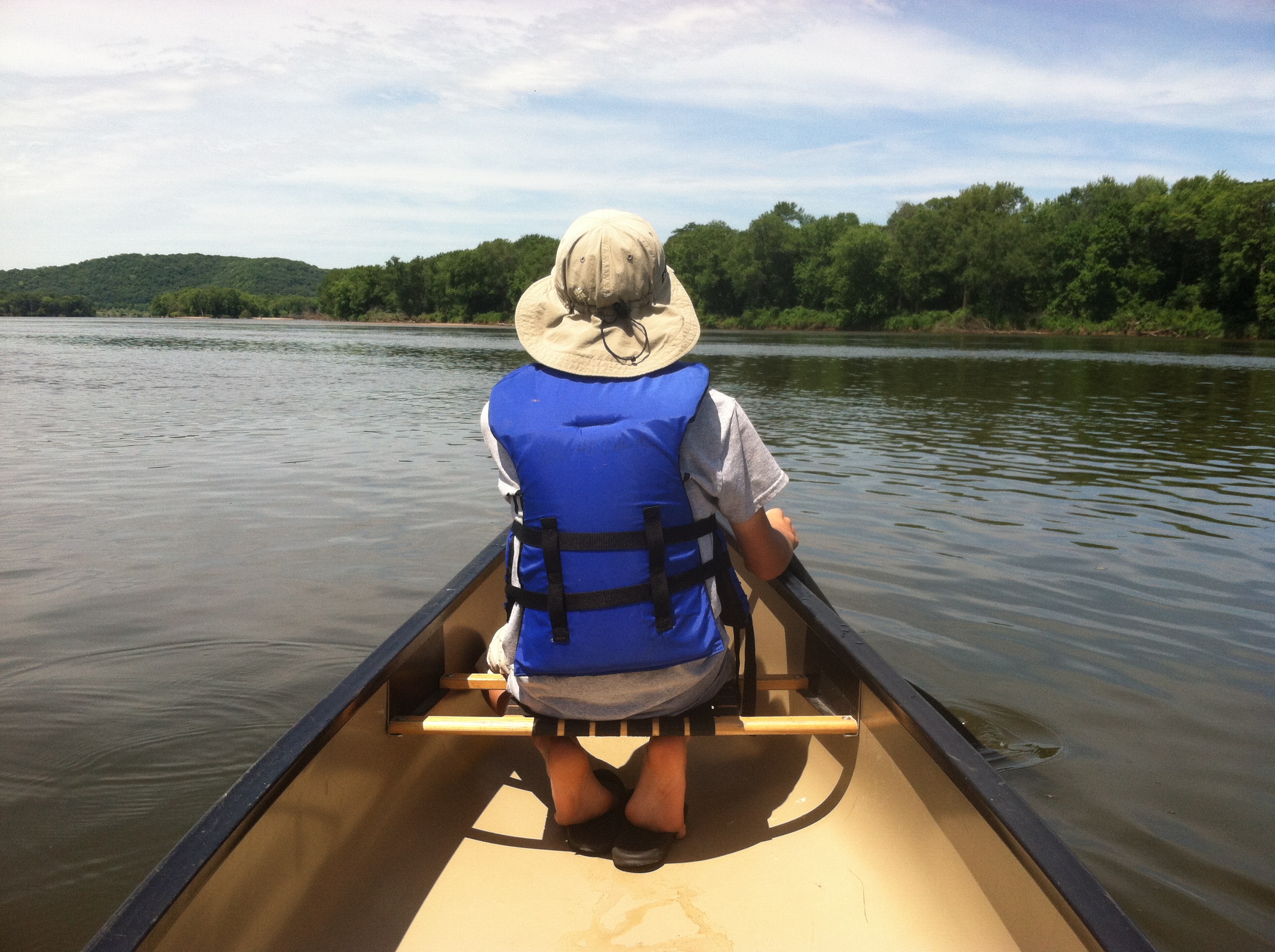
My youngest son and I recently canoed the Wisconsin River on a clear, sunny Sunday as a way to mark his 13th birthday. From streets, buildings, cars, trains, screens, and a man-made world in constant motion, we found ourselves experiencing a radical change in experience and surroundings.

We were on a broad, slow-moving river lined with tall trees and graced with the occasional sand bar and wooded island. Turtles sunning themselves. Kingfishers swooping low over the water. A bald eagle wheeling in the sky far off in the distance. Crows calling. Two sandhill cranes honking at us in indignation as they slowly gained altitude to fly further downstream.

Owen in front of canoe

One of our favorite moments of the trip was when we stopped at one of the islands and wandered about the sandy upstream section. The hot sand burned our feet so we moved quickly to the small, shallow channel that lay between the island and the nearby bank. This channel’s flow was far more clear than the main channel of the river, and in it we found a number of mussels. Several, thick and gnarly and trailing vegetative matter, appeared very old.

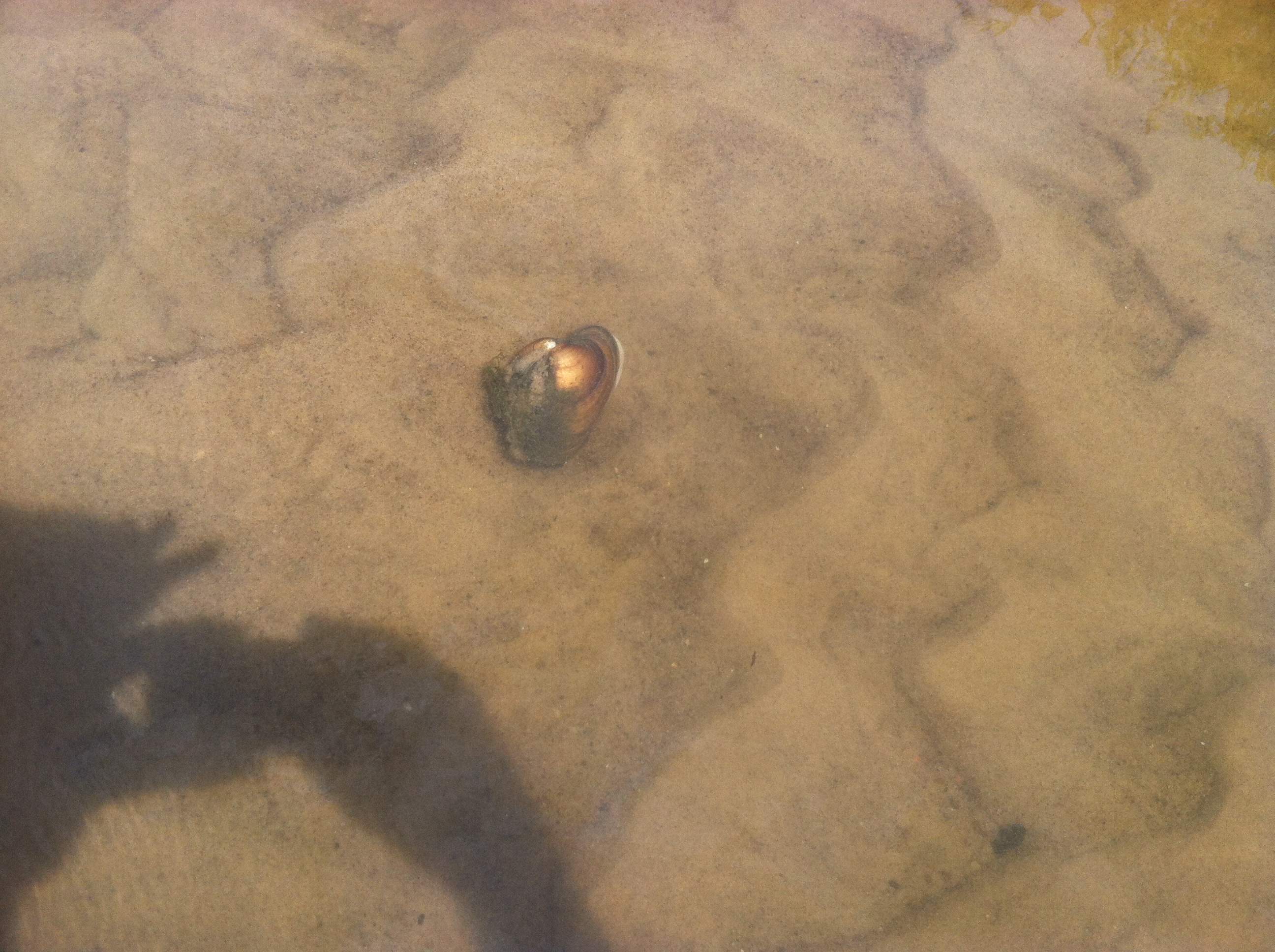
We could actually see a smaller mussel moving along the sandy bed, sometimes even positioned length-wise on end like a quarter on its edge. We could see its underwater trail in the sand, a faint and sinuous line across the sandy channel bed’s curvy lines of low dunes.

“Moving” is actually far too fast a word. Even “inching” is too fast.

You had to look carefully as its progress was so slow. But there it was.

Moving.

It was slowly moving by extending its fleshy “foot” forward and then pulling itself forward.

Photo of mussel from Wisconsin River

The moving mussel.

My son, out of interest or politeness, listened as I told him about the mussel’s natural history. The male mussel releases its sperm into the water, and when a female mussel of the same species pulls in a quantity of stream water for filtering out of its food, the sperm have their opportunity to find the eggs within the female and fertilize them.

But we haven’t even gotten to the interesting part. The fertilized egg grows into a tiny larvae called a glochidia, which must attach itself to a fish if it is to continue its life cycle. So adult mussels often shape bunches of their glochidia into shapes that resemble the normal prey of the fish they need to attract. These shapes can be things like small fish swimming in a current, worms, and even crayfish.

When a fish investigates and then bites into the bunch (cue the Mission Impossible theme music), the individual glochidia have their chance to attach to the fish, usually on the gills. Eventually, the glochydia transitions into a juvenile mussel which drops off of the fish, descends to the stream bottom, and begins its independent life with little or no harm having been done to the fish. The beauty of this system is that the adult mussel’s progeny are able to hitch a ride to a distant location.

Just to reassure you, I should mention that I didn’t lecture him. And I didn’t share nearly the level of detail that you are reading here. I just shared the fundamentals of what I know of mussels and their lives and their value to the life of a river. Above all, I shared my own sense of wonder.

In retrospect, I wish I would have have talked with him in the same way about the Christian faith during the trip. Not in a lecture. Just the fundamentals as I know them in the language that is true to me. And with the mystery and heartfelt conviction of the faith’s underlying truth and values.

One of the fundamentals I would share is the reality that life, even a life of faith, will have struggles just like the westerly wind that made some of our paddling hard work.

Another fundamental would be this – humanity has indeed been given special capacities, and yet, simultaneously, we are in a sacred fellowship with the rest of creation. All of Creation matters to God. All of Creation should matter to us.

I would tell him, too, that beginning to gain an understanding of God and the life that God desires us to live is as complex an undertaking as understanding this world and its workings. But the effort to seek that understanding and to act on what we do know at each moment of our lives is what life is about and is worth the effort.

Ultimately, we should love our neighbors as we love ourselves.  We should renew Gods’ world even as we use it for our survival.

The mussel has something to teach us about that ethic. Mussels feed by sucking in water and filtering out food items like  like algae, bacteria, and detritus. The mussels then expel clear, clean water. When mussels occur in large beds, as they often did decades and centuries ago, the net effect was a purifying of the waters of the stream. Clear water allowed more light to reach algae and aquatic plants which supported more creatures that feed on the algae and plants. The result was a underwater world that was more full of more life

As I write this I am convicted. I must tell him all that. I will.

I hope and pray that he will eventually and of his own free seek out God and live out a God-fearing life all of his days. And as part of that life of faith, I hope and pray that his faith and life will possess a love for God’s world, in both its eye-catching and humble forms.

In other words, I hope and pray that the Gospel he follows will have mussels.

Does yours?