Archives For How Shall We Live?

Faith of an Orchid Seed

Nathan Aaberg —  November 30, 2020 — Leave a comment

In the latest issue of The Nature Conservancy’s member magazine, there is an excellent article on orchids by Jenny Rogers. One paragraph in the piece astounded me. And what it reveals, I believe, is a metaphor for our Christian faith-life.

First, let me share a paragraph that will give some context about orchids:

With an estimate of at least 25,000 species in existence, and new species being discovered regularly, orchids are believed to be the world’s most diverse family of flowering plants. They outnumber all mammals, reptiles and birds combined. And scientists estimate they account for about 10% of all flowering plant life on Earth.

Please read the article to learn more about them and about the efforts being made to understand and protect them.

And here is the eye-widening, heart-opening paragraph:

Orchids begin life as seeds so minute they can only be seen under a microscope. They do not contain any stored food to fuel their growth. Instead, when seeds land in soil or on trees, they rely on a suite of host fungi nearby to supply the nutrients and other resources they require.

In other words, orchid seeds literally cannot begin growing into a plant without another life form – a fungus – being on hand to nourish them.

Blooming flowers of Easter Prairie Fringed Orchid

Eastern prairie white-fringed orchid (courtesy of Forest Preserve District of DuPage County)

We are, of course, accustomed to thinking of small seeds and faith from Matthew 17:20. There Jesus speaks of a person with faith as diminutive in size as a mustard seed being able to move mountains. We also read in Matthew 13:31-32 of a man planting a mustard seed in a garden. Despite the seed’s small size, it grows into a large plant that birds can even find shelter in. Jesus presents the planting of the tiny seed as a parable about the kingdom of heaven.

Thinking of our faith as an orchid seed can inspire us and give us insight in three ways:

Discipleship is like being an orchid seed: In Luke 9:2-3, we read of the disciples being sent out to tell people of the kingdom of God and to heal the sick. Jesus told them: “Take nothing for your journey,” he instructed them. “Don’t take a walking stick, a traveler’s bag, food, money, or even a change of clothes.” How often do we sense a calling from God but feel that we first need some stored resources in place before taking that initiative?

Jesus taught a radical trust in Him. He also taught a radical dependence on the “fungal network” of God’s work in the hearts of others. In fact, presenting need to others can actually move their hearts. Are you and I, individually and collectively, willing to bet our lives on this? And, conversely, are you and I, individually and collectively, part of networks of people responding to people living out their faith in radical, selfless ways?

We should be.

Embrace dependence and assistance: American culture is so full of the drive to be independent through wealth and technology. We want to move beyond ever needing help from others, especially in urban areas. We can even find ourselves looking down on others who need help.

A Christian faith like an orchid seed would help us move past all that. We are most truly in the image of God, a triune God of interdependence and interrelationship, when we are able to be dependent and respond to the dependent needs of others. You will need to be an orchid seed in your creative life of faith at times. You will need to be part of a supporting fungal network in your loving life of faith at other times.

The life of Creation is like an orchid seed: We increasingly dominate every element of how the world functions and what it looks like. When anything from an orchid seed and a baby dolphin to a sandhill crane colt or a piglet enters this world, we determine whether those elements of God’s Creation find sustenance, habitat, and conditions suitable for their ability to live the way they are meant to live.

Or not.

In fact, orchids, like many other species, are struggling to survive in the world we are making.

My friend Kathleen Marie Garness stewards two local natural area and specializes in botanical illustrations of orchids. She writes this: “… our elusive and disappearing native orchids highlight the close and subtle interrelationships within the natural world. Because orchids are so sensitive to their environment they have much to teach us about living in harmony with nature.”

Do we recognize that dependence? Will we recognize that tenousness of life, of God’s life? Will we exercise a faith like an orchid seed to act for life that cannot reward us in tangible ways? Will we trust that others of faith and even those without the faith we hold will respond to our efforts? Are we ready to change the dominant Christian model of dominion into something that reflects a true love of God and a love of our neighbors?

May our faith-lives be as beautiful as orchids and as humbly valuable and sustaining as fungi.

I’m currently working on two blog posts. One is the transcription of a great conversation I had with a Wisconsin farm family about how their faith has led them to a form of livestock raising that rejuvenates the land, produces healthy food, and is good for the animals. The other examines Revelation 5:13 and what that means for our understanding of the whole arc of the Bible and of time itself. I’m also planning to partner on some future posts with Ryan O’Connor to share reviews of documentaries and other environment-focused resources that individuals and churches would find helpful.

I can’t, however, ignore these turbulent times and the election. So I am going to dive in with some observations in the form of a letter to a fictitious cousin. I present him as someone becoming curious about Jesus and the God of the whole Bible but confused and even unsettled by our current times.

Dear Wyatt;

I want to say how much I have enjoyed our renewed relationship. We’ll need to get together sometime some place in the middle with our wives and children. I know we’d have a great time. It’s a heartwarming to not only connect with family but then to find one shares many similar outlooks on the world.

I’ve welcomed the fact that we’ve begun discussing the Bible, Jesus, and how everything all fits together. Our common ancestors had some very deep religious roots, didn’t they? But those have not carried into the modern generation very well. Many of our extended family no longer believe in the God their ancestors did. Why that is the case would make for another good conversation.

But I write because in our last converation you expressed confusion and even cynicism about the veracity of what is in the Bible because of the state of our country and the upcoming election. Specifically, you did not understand how so many people calling themselves Christians can be strong supporters of President Trump and the Republican Party.

I didn’t have good answers, but I felt I should. This letter is my attempt to do that.

When I need to wrestle with hard questions, I turn to writing. Good writing can only come from clear thinking. So forcing myself to write coherrently on an issue forces my mind to think about the issue squarely. When I find a line of insight that hangs together well, I take it, even if it takes me in a surprising and unorthodox direction.

I’ll be honest. I am having a difficult time making sense of our country and the role many Christians are playing in its direction. I feel anger, frustration, fear, and sometimes pure hopelessness. But every morning I pray, and I try to hold on to faith. In Jesus I know that God also understands our suffering even as God also calls for us to live with the love and courage of Jesus.

So I offer my own opinions to the questions that seem to be at the heart of what you are struggling with. These are my opinions based on what I read in the Bible and what I believe I have learned about God and Jesus over the years.

What would a truly Christian approach to politics look like?

Every Single Thing: All of life would be lived out in ways that reflect God’s wishes and God’s ways. And that includes politics.

Even Words: Words are the fundamental foundation of politics. Our use of words is an ethical and spiritual act. The words of Christians must be full of truth and show love of neighbor, even in the world of politics. Politicians, of course, lie and misrepresent so often that we are calloused to it. But God is not. And it’s time for us to stop being calloused about it, too. Christian politicians, and the politicians Christians support, would be at a level of truth and integrity above all others.

Cautious About Power: Politics is largely about how power is used in and outside of a country. Governments have power to make rules, to enforce rules, and to exercise in our international relations. True Christian politics would be cautious about the use of power and would be concerned for the vulnerable and the poor. You cannot escape the concern in the Bible for the vulnerable and those who do not have power. Both oppressive governments and overly dominant business interests run counter to the grain of the Bible. This never means that power is to be avoided. Government can play a wise role in directing society’s common interests. Private entrepreneurial creativity can bring great benefits. But a Christian politics would continually push for the right balance.

God’s Kingdom and Values Above All: The loyalty of the Christian should always be first to God and God’s Kingdom. When the values of God’s Kingdom clash with our country’s interests or our party’s fortunes, God’s Kingdom must come first.

Rules and Laws: Christians and the people they allow to lead them should have the highest character. They should follow laws and rules zealously and be as fair as possible. Corruption and exploiting the system for personal or party gain are, again, grievous sins against God. Christians can’t accept these kinds of actions.

Humility and Openness to Rebuke: Christian politics are inherently humble. True Christians reocgnize that they are fallen and that they need God’s grace just as their neighors have fallen and also need God’s grace. True Christians are open to correction and rebuke and are ready to change their own ways.

How can we make sense of strong Christian support for Donald Trump and the modern day Republican Party?

I agree with everything you have said about the current president. He breaks all of the Christian norms of life and the principles of Christian politics I’ve just listed. That church-going Christians can vote for Trump reflects an approach to Christianity and life untethered from the Bible, Jesus, and the Spirit of God.

A vote for Trump, it appears to me, is part of a reaction among conservative Christians against a growing secular and atheistic culture. That culture appears openly hostile and dismissive of people of faith. This is a real thing. But that is no excuse for voting for Trump and the Republican Party he is making in his image.

How to explain it?

Start with the marriage between the Church and national power. When Chrisitanity first appeared, it was seen as a radical, strange, subversive movement that was antithetical to Roman values and Roman power. When Emperor Constantine made Christianity the Roman Empire’s religion, Roman interests and Christian interests were brought together in ways that resulted in a less pure practice of the Christian faith. When Christianity became married to nation states, the interests of the nation state and its dominant culture then tempted churches to compromise the values of Jesus. Vice President Pence epitomizes the moral compromises conservative Christianity is willing to make for national power to serve its interests.

It is not just American national power that conservative Christianity has become very comfortable with. Conservative Christianity tends to favor the corporate and individual’s freedom to use power almost without limit. It worships freedom without any hint that freedom must be balanced with responsibility and ethical concern for others and other life that God loves. It is also comfortable with the political system today that is lubricated largely by funding from business interests. Republican Christians look the other way when power is cunningly used to suppress voting and gerrymander voting districts.

You must still ask why does this cruel and unbiblical approach to power find a home in the hearts of some Christians? When you feel you are in a spiritual war, then I think it is easier to go along with harsh measures and to look away from the worst things your allies do. The dominant narrative of the End Times, which is not the only interpretation of Revelation possible, gives conservative Christians license to feel that we are in a take-no-prisoners struggle against evil. The ethics of Jesus no longer apply.

Finally, we need to be honest about race. President Trump has made the Republican Party the comfortable home for white power and white racism. Christian Republicans go along with this. Could this reflect the comfort that many churches had with cruel slavery for centuries?

But what about abortion?

Wyatt, I can read your thoughts. I know you and your wife have deep emotions and convictions around abortion, especially because of your experience with having difficultty conceiving. You and wife also know the intricacies of the life and development of a child in the womb.

It is this issue that causes many Christians to vote Republican. The concern of many Republican Christians for unborn babies is sincere, real, and full of true Christian compassion.

But there is something very wrong in how myopic Republicans apply their pro-life principles. I’ve already written about this. Use laws to limit abortions? Of course. The more the better. Use laws to limit polluition and chemicals that cause cancers and harm God’s life? No. That will harm our economy and limit our freedoms. Use laws and government bodies to protect vulnerable consumers? No. Too much government interference. Use laws to protect coverage for existing conditions and offer a public health care option? No. That might nudge us into the orbit of something that smells a little like socialism.

In short, the pro-life position of Republicans is, it seems to me, in direct contradiction to the Repubican Party’s larger fealty to a completely unfettered free market economy and culture that supports commercial interests over people and God’s earth. The cynic in me sees the Republican Party’s pro-life platform as a deal that doesn’t harm business interests but gives the party’s Darwinian approach to the economy a sheen of religious goodness.

Why do I not feel enthusiasm for Democrats?

A second term of president by Donald Trump would be a disaster for many true Christain values and for the ability of the faith to appeal to people like you for decades to come.

But the Democratic Party is also a hard place in which to find a home.

Here are just a few reasons why I say that.

Joe Biden, from all indications, is a fundamentally decent person. Our government under Joe Biden would work again and not be corrupt. His administration would adopt many specific policy measures that are more compassionate.

However, one of his deficiiencies, which is a Democratic deficiency, is an inability to speak of positive values that hold together the Democratic Party and would hold together America. The Democratic Party is too often a loose coalition of interest and identity groups. The Party doesn’t seem to have binding principles that would resonate with most Americans of good will.

What will hold our country together as one? What standards does everyone need to live by? I have not heard anything like that from Democrats. And the fact that the pro-lifers are largely unwelcome in Democratic circles indicates that Democrats are not fully committed to holding people accountable to protecting vulnerable life

It has also been stunning that Joe Biden and Kamala Harris have not been able to speak against China what is doing internally  and externally. This is a ruthless empire within its own borders (see Hong Kong and with the Uighurs for examples) and beyond. Freedom and fairness mean nothing to its leaders. When Democratics go soft on China out of fear of loss of trade, one cannot help but think the Democratic Party’s concerns about justice are very selective.

And, of course, there is a tendency in some progessive circles to dismiss and ridicule people of faith, especially the Christian faith. Is some of it a reaction to the trends we’ve seen in conservative Christianity? Probably. But there is something more there as well. The ideas that there might be a God who holds people accountable for certain standards of life and there might be mysterious power in the universe that does not fit with orthodox science are profoundly threatening to the most progressive Democrats. And the most progressive Democrats tend to be comfortable with shutting down ideas and thoughts that don’t fit their own orthodoxies.

As a whole faith Christian, I’m sad to say I cannot truly be at home in either party. And our two party system freezes out true potlical diversity that could actually give us a party of integrity and coherent values.

If Christians can differ so much about American politics, what does it say about the Christian Faith?

My wife recently received an email from another church member strongly encouraging church members on the email chain to vote Republican. In a follow-up exchange with my wife, the church member called President Trump “a God-fearing man.”

If President Trump is considered a “God-fearing man” then the Scriptures and two thousand years of the Christian faith and thousands more of Jewish traditions are meaningless.

In short, we’ve crossed a line. The term “Christian” no longer means anything.

There is no commonly accepted definition for what the Christian faith-life really looks like.

There are some who will point to confessions and doctrines as giving us those distinctions. But doctrinal correctness matched with consistent patterns of behavior  and philosophy that are the opposite of virtue in the Bible is meaningless. In fact, it is worse than meaningless. It mars the goodness and truth of God and God’s wishes for the world.

A transformed life in communion with God is the point of giving one’s life to God, not an optional amenity.

Is there any reason to continue to look for a church or some other faith gathering?

The Bible is full of people living in communities of God-following people. So it is ideal to be with other people of faith. If you can find a church where God is worshipped and you feel comfortable and challenged, that is a beauiful thing. There are millions of sincere, loving Christians around the world, and many are in churches.

But I’ve concluded that you and I should not feel guilty if we find that our reading of the whole Bible makes us feel comfortable neither with conservative churches nor more liberal ones.

Remember, conventional church is not the only option. Prophets and prophetic communities can be needed when mainline religion is no longer a good fit. The early Christian gatherings were largely in people’s homes. Remember, the first monastic orders were in reaction to the excesses of the Roman Empire. It is also said that every 500 years or so the Judaic-Christian tradition goes through dramatic change and revision. I feel we are due for that.

There are stirrings of people longing for a diferent experience of faith and life in the service of Jesus and in communion with God. We may well be on the path to a new way of following Jesus with others in a whole faith way. They may offer a better way to reach people turned off by conventional Christianity or who have never really encountered a loving relationship around God.

I meet and communicate with many people like this. They are out there.

How does God’s earth fit into all this?

We’ve already had some good conversations about this as both of our families share love of hiking and growing healthy food. So I wanted to end this letter on this topic. The earth is not a disposable trifle. How any body of faith thinks and acts together towards Creation is a pretty good indicator of how whole its approach to faith is. It’s a bad sign when the fruits of a body faith are the ongoing destruction of God’s earth and an unwillingness to even try to deal with growing climate chaos. You are not alone in not understanding how you could follow a faith whose members support what President Trump has done to weaken protections for the health of God’s earth.

What I most want to say to you, Wyatt, is this – don’t give up on engaging with the Jesus and God of the Bible and being open to God’s Spirit in your family’s life. If you cannot find a church where you find a deep reverence for God, a willingness to be accountable to each other, and common commitment to learning together and transforming one’s character together, then be willing to be a spiritual nomad for awhile until new expressions emerge.

This is a world that is holy and full of meaning and that God needs us to engage in. Whatever the new forms of Jesus-centered communities and ministries will be, they will need good and creative and humble people like you and your family.

But be sure to find even one other family, one person, who can take that path with you. We would love to do that with you.

Fondly,

Nathan

P.S. To read a more hopeful and very insightful piece about divisions within Christianity during this election, check out this article in Christianity Today.

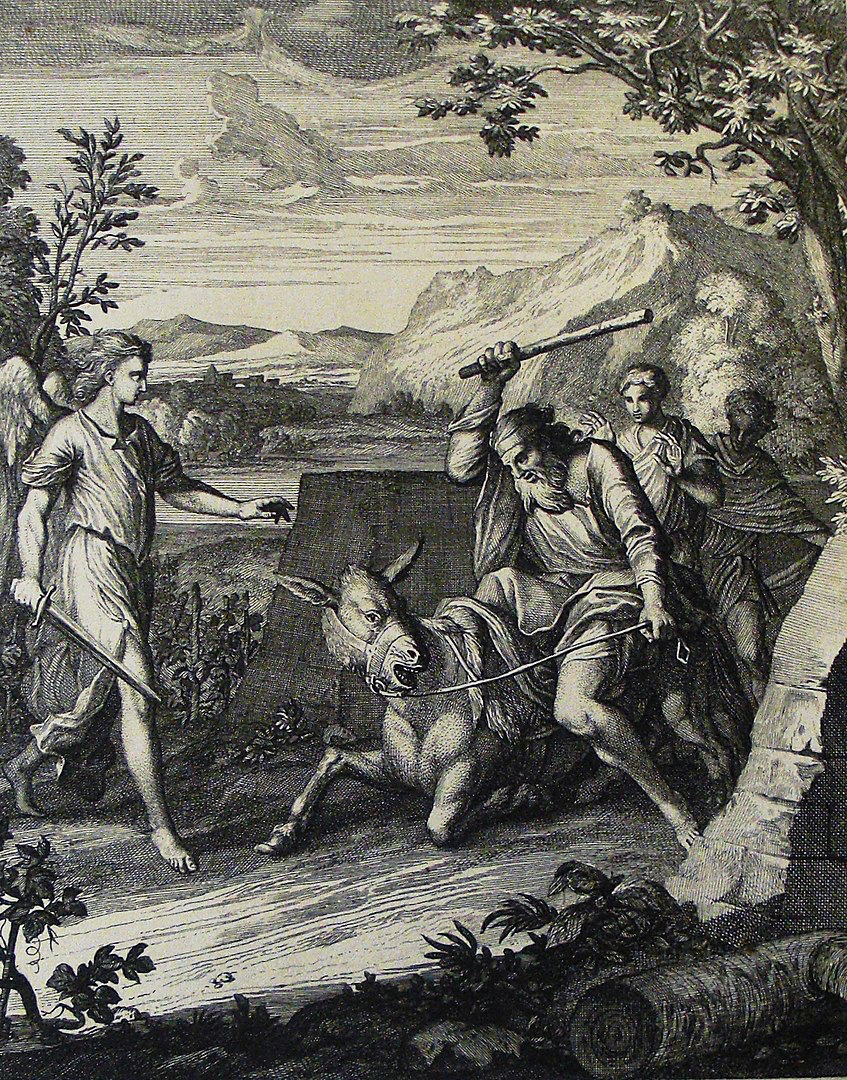
“Balaam smites his ass” by Philip De Vere

The story of Balaam’s donkey in Numbers 22:21-39 has fascinated me for some time. This and the story of the serpent in Genesis are the only places in the Bible where an animal speaks.

There are many Christians who don’t know the story at all. And some Christian thinkers are quick to dismiss the idea that the donkey actually spoke with its own volition. They write that God put words into the donkey’s mouth. Which is, of course, not what the Bible says.

I plan to write a future post that explores a number of overlooked nuances in this story further, like I did about the story of Jesus and the possessed pigs here and here. Today, however, I wanted to share one question my mind has been ruminating over.

Why didn’t the donkey just stop?

What the Donkey Was Trying to Do

If you aren’t familiar with the story, please do take a minute to read it now. The first thing that will surprise you is that the main character Balaam is not an Israelite and yet God speaks to him. You’ll also find that, even before it speaks, Balaam’s long-time donkey can see the angel standing on the road, but Balaam can’t. And the donkey takes evasive action in three different ways to avoid bringing Balaam into contact with the angel.

But the donkey never just stops.

My starting assumption about this story is that it has depth to it. So I’ve been reading books about donkeys and becoming more and more fascinated by them. Pertinent to my question, however, is this section from the book The Wisdom of Donkeys by Andy Merrifield in which Merrifield compares horses to donkeys:

Horses are faster, yet have much less endurance than donkeys, and are nowhere near as agile. They’re edgier, too, especially in tight situations. They bolt whereas a donkey freezes. You can usually cajole an anxious horse to do things against its better interests, frighten them into gallopig along hazardous, unsafe routes. Not so with donkeys who have a highly developed sense of self-preservation. Thus a donkey’s perceived stubbornness.

This theme of donkeys’ stop-in-their-tracks stubbornness is a common theme in what I’ve read. Yet, Balaam’s donkey doesn’t just stop in its tracks. In three different instances, it does something odd. It moves off of the road the first time. It squeezes along the wall to avoid the angel the second time. And it finally lays down.

If a donkey’s default in a dangerous situation is to stop, what do the donkey’s unusual actions tell us?

I believe the donkey was trying to get across to Balaam that there was something unusual going on.

This fits with what I’ve read about donkeys. They have excellent observation skills. They can hear exceptionally well.

And they are intelligent.

If the donkey had just stopped, we could easily assume the donkey was just being stubborn for some odd reason. One of the donkeys I read about, for example, was initially afraid of running water and would just stop dead when the donkey was led near to a stream.

Instead the donkey did three three unusual things in a row. And readers of the time, when agriculture was something almost everyone was involved in, would have understood those to be unusual behaviors.

In other words, the donkey was communicating to Balaam. It was doing so even before the angel revealed itself to Balaam and enabled the donkey to speak.

If Balaam had been someone who paid attention to the life of God’s earth and to his own donkey’s character, he would have quickly picked up that something strange was going on. But that’s not who Balaam was. For some reason, God has chosen to use and communicate with Balaam. The story of his interaction with his own loyal donkey makes clear he’s not been chosen because he is a wise, good, or spiritually perceptive man.

Deeper Meaning

And I believe we can take this situation a step further and say this – God was, in a way, testing both Balaam and the donkey.

Balaam failed his test. He didn’t pay attention to the signals his donkey was sending through its behavior. When asked by the donkey why he had beaten it three times, Balaam responds, “You have made a fool of me! If only I had a sword in my hand, I would kill you right now.” He clearly cares most about how he is perceived by the Moabite officials and perhaps even by his own two servants. And the reader would guess that wealth was a close second.

The donkey, on the other hand, passed his test. But at a cost.

The donkey had to choose what it would do, especially after it was clear that Balaam didn’t see the angel. And not only did Balaam not see the angel, he was going to beat the donkey for not walking straight ahead into danger. Being beaten by Balaam was probably not something new.

In the end, Balaam beat his donkey three times for the sacrificial choices the donkey made to protect Balaam. From the donkey’s plaintive words, we also understand the donkey’s heart suffered as much as its body did.

There is much more to explore in this story. But I will stop here for now and encourage you and I to meditate on these questions going forward:

Are we, like Balaam, ignoring what the living things of God’s earth are telling us about ourselves and God?

If we, for example, have land and water under our care and they are sick and ailing, are we paying attention?

Are we, like Balaam, most concerned about our wealth and how we are regarded in the culture around us?

Do those concerns matter more to us than how closely our hearts are aligned with Jesus?

My son and I are continuing our reading journey through the Bible, and we’re now deep into the words of the prophets. They wrote their words more than two millennia ago. Yet, I’m finding they resonate deeply with what we face in climate change today.

The reading, I must admit, is not easy. These are all books replete with repeated, vivid expressions of anger, desperation, grief, judgment. Calamity was going to come, the prophets declared. And then it came in the form of the Babylonian destruction of Jerusalem and the Temple.

Isn’t climate change, and all that it is bringing, very similar?

Despite many warnings for many decades, climate change is underway. And change is not even the right word. What is happening to the climate of God’s earth change is not at all similar to an oil change or changes to a baseball team’s lineup. What we are really beginning to see unfold is change bringing chaos.

The world, both the people and the earth itself, is already suffering as a result. Much worse is yet to come.

There is a great deal to write about climate chaos and what it means for God’s earth, our lives as Christians, and the future of the Church. But for now, as a way of entering the topic, I want to highlight three points of resonance for me between the prophets and the situation we face today.

The Prophets Were Ignored (and Worse)

The people of their times, as far as I can tell, largely ignored the prophets. Those who didn’t ignore them tended to persecute them. Jeremiah in particular suffered for speaking God’s judgment.
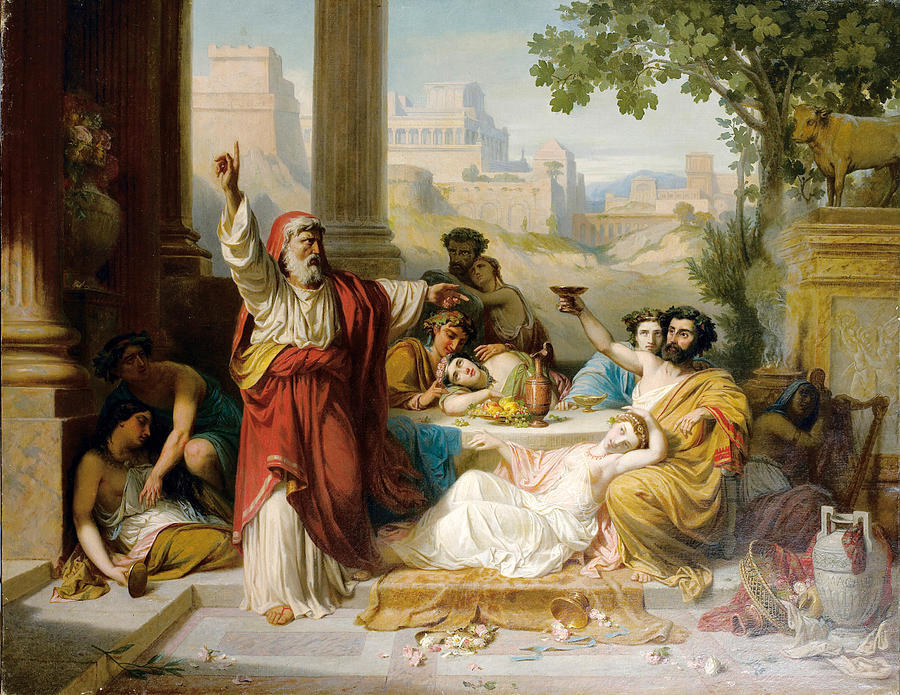
Dominique Antoine Magaud

The book of Jeremiah depicts leaders and officials defying the judgments and warnings God was providing through Jeremiah (depicted in the painting above by Dominique Antoine Magaud) in astoundingly cavalier ways. In chapter 36, for example, we read of King Johiakim calling for Jehudi to get the scroll of Jeremiah’s words and read it to him. Here’s what follows in verses 22 through 24:

The king sent Jehudi to get the scroll, and Jehudi brought it from the room of Elishama the secretary and read it to the king and all the officials standing beside him. It was the ninth month and the king was sitting in the winter apartment, with a fire burning in the firepot in front of him. Whenever Jehudi had read three or four columns of the scroll, the king cut them off with a scribe’s knife and threw them into the firepot, until the entire scroll was burned in the fire. The king and all his attendants who heard all these words showed no fear, nor did they tear their clothes.

Likewise, many people do not want to listen to the prophets of climate change and the chaos it is bringing. Online trolls harass scientists like Dr. Katharine Hayhoe and others. The Trump administration is actively hostile to climate science and to the U.S. government staff who study it and warn about it. The administration and its supporters are, in effect, modern day Johiakims.

What’s even more disturbing is that climate change has become, more than ever, a partisan issue. Republicans, many of whom are Christians, refuse to make common cause with Democrats to address it.

Why the resistance?

The kings and people of Israel, especially the people of power, enjoyed the status quo. They couldn’t imagine having to give things up or admitting they had trespassed against God’s will or had worshipped other gods.

Similarly, we don’t want to give up the many rewards of the way our economy runs today. We don’t want the rules of the game to change. And in the case of climate change, the rules we don’t want to change are, ironically, a lack of rules and restraints. Like the people of Judah, we resent constraints on how we live and do business.

Isaiah highlighted the uselessness of idols in chapter 46:5-7 in a striking way. God asks:

With whom will you compare me or count me equal?

To whom will you liken me that we may be compared?

Some pour out gold from their bags and weigh out silver on the scales;

they hire a goldsmith to make it into a god,

and they bow down and worship it.

They lift it to their shoulders and carry it;

they set it up in its place, and there it stands.

From that spot it cannot move.

Even though someone cries out to it, it cannot answer;

it cannot save them from their troubles.

It occurs to me that the idols that the Judeans worshipped at this time actually, in all probability, had a compellingly tangible appeal. The stone and woods idols were things they could see and touch. There may have even been some artistic flair to them. There was, on the other hand, no tangible representation of the true God in their culture. Worshipping an intangible God and living out a complex set of requirements took persistent faith and commitment that made them, well, weird in the world they lived in. In contrast, the concrete imagery and heft of the idols likely required less faith and were easy on the heart. The idols rewarded the desires of their worshippers.

Likewise, we can see and touch all of the tangible benefits of our current economy and technology. They meet our desires and even create new ones. We have not shown the ability to restrain ourselves from unquestioningly accepting all technologies and systems.

Our desires have become our idols. Resisting our desires out of love and duty to our invisible God is something we don’t want to do. This would require persistent faith, commitment, sacrifice, and tenacity of heart in countercultural ways.

We are, actually, not so different from the people the prophets criticized so harshly.

Face-to-Face with Shattering Realities

I encourage you to read this essay by Leonie Joubert entitled “End-of-life anxiety and finding meaning in a collapsing climate.”

Leonie writes of the similarity between the person who receives the diagnosis of an incurable cancer from their doctor and the person (like herself) who has paid attention to unfolding climate science and recognizes that:

We’ve already dumped so much carbon pollution into the atmosphere that we have a “baked in” temperature increase of 3°C, regardless of whether we shut off all emissions right now or not.

What do you do if you are the person receiving that grim diagnosis of cancer? You may well go for end-of-life therapy, whether that’s through a therapist or through a pastor or other wise person, to process all of the intense feelings that well up.

Where do you go when you come to realize our trajectory is towards ever more dramatic climate change impacts that will bring misery for the people and planet God loves?

Therapists are beginning to realize that they need to know how to respond to people with that recognition and the accompanying despair. But it’s not exactly like helping the person with a cancer diagnosis. Leonie describes how the therapy field is wrestling with these challenges:

How does it respond to people living in an unrepairable situation? Therapy’s function is to heal the individual. How does it respond when the illness is society-wide? It focuses on healing what has happened in the past. What do we do when today’s illness is because of what will unfold in our personal and collective future?

It strikes me that the prophets were also dealing with society-wide illness for which there was both personal and collective responsibility.

This takes me to a fundamental question – why were so many words of the prophets preserved and not, for example, the words of the kings of their times? The prophets were, after all, the ultimate outsider radicals of their time.

I can think of a number of reasons. One was as a warning of God’s anger towards those given a special mission by God who willfully turned away from what that mission required of them.

Another was to forcefully make the point that the natural leanings of human nature – towards comfort and tangible personal and national benefits – are not what God calls us towards. Instead, we need our hearts to be remade by God so that what matters to God matters to us above all else. Even when what God wants forces us to choose the harder path.

Yet another reason was to compel those who read the words to think twice before silencing and persecuting those who question the status quo and see doom at the end of trends unfolding in our time.
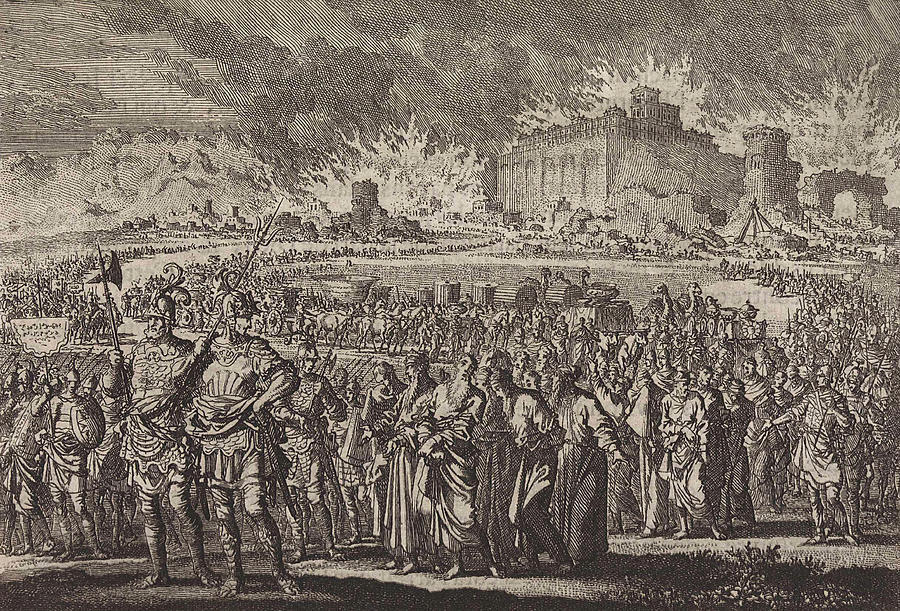
Destruction of Jerusalem by the Babylonia Army by Jan Luyken. What art will be produced of the results of the chaos coming from climate change?

And I wonder if perhaps the vivid, shattering depictions of prophecies and events were meant to explode our hearts  and to resonate with what we would feel as we encounter ever more grim realities in our time. Some of the most shattering images of impending chaos and destruction can be found in the prophets.

Read, for example, Lamentations’ description of the fall of Jerusalem. Here’s just a taste of it from chapter 2:11-12 (I’ve used The Message’s translation):

My eyes are blind with tears, my stomach in a knot. My insides have turned to jelly over my people’s fate.

Babies and children are fainting all over the place, Call to their mothers, “I’m hungry! I’m thirsty!” then fainting like dying soldiers in the streets, breathing their last in their mothers’ laps.

The prophets are records of deep, collective trauma. Perhaps in some mysterious way they will be therapeutic for the deep, collective trauma that is to come.

Messages of Future Hope

Even Lamentations has words of hope for the future. Isaiah’s words of hope are incredibly beautiful and include God’s earth. The hope is generated not by expectations that people would suddenly become good and just. What generates the hope is the love and commitment of God.

I struggle with this. Is it possible to have hope for future joy and restoration when the world God loves and I love faces destruction?

It is all too easy for Christians to set up camp in the happy place of faith and hope in God. This leads to ignoring of the plight of the oppressed and the continued crushing of the vitality of the life of God’s earth. There is no sense in the Bible that future hope for tomorrow excuses us from acting out of devotion, compassion, and active love today.

Yet, the prophets and the Gospels, without question, also give us hope. We cannot camp out exclusively in the place of despair, hopelessness, and desperate urgency either.

The prophets remind us that our faith and faith-lives rest on paradoxes. They require us to have the ability to hold two different concepts in tension at the same time.

And paradox is where climate change and the prophets leave us.

Are we alarmed and active or are we hopeful? We need to be both.

Consider this scenario. What was the average devout Judean person supposed to do when they heard Isaiah or Jeremiah crying out on the streets and actually believed what the prophet was saying? What would he or she do when they got home? What would they say to their family?

I imagine them recommitting themselves to being devout by following the rules of their at that time. If they had idols, they would have destroyed them. They would have redoubled their focus on worshipping God and praying to God. I imagine them doing so even in the face of ridicule from neighbors worshipping their idols.

Their faithfulness to God would inevitably have made them compassionate to the vulnerable around them. The prophets highlighted vulnerable people, like widows and orphans. I want to believe that they would naturally have treated animals kindly as well.

To the degree that they had influence with their tribes, friends, and neighbors, I believe they would have called on them to follow God in their lives as well.

I imagine the family cherishing the Temple, knowing that it was facing destruction and would be no more. I imagine them cherishing the land they owned and farmed and the larger landscape that God had given their people. They knew they would be taken away from it, assuming they even survived. It would have been even more dear to them.

And I imagine them, paradoxically, preparing their family for chaos and disruption ahead even as they poured into their children the promises of hope that the prophets included in their warnings and promptings. “Do not forget!” they would tell their children. “And do not let your children forget!”

Alertness to the true condition of the world.

Devoutness and prayer.

Mourning.

Cherishing the beauty of what God had given them.

Active preparation for chaos to come.

Urging society, family, and friends to repent and change.

Compassionate actions for the vulnerable.

Deepening of their faith commitment.

Hope for the ultimate future mixed with grief for the immediate future.

This set of responses, seemingly contradictory at times, is what I imagine people of the prophets’ time doing out of conviction and belief.

As a Christian in a time of climate change, these responses make sense to me today as well.

This wraps up my three-part series about how to live rightly on and with God’s earth. The first part focused on how to live within the context of your life and your family’s life. The second part pointed towards engagement in community and civic life. This third part goes in an unexpected direction. It goes inside. To your heart.

Start with the Heart

I am convinced that the core reason we don’t progress in living ever more holy, courageous, and loving ways towards other people and God’s earth is that we haven’t given our hearts fully to God. In other words, we haven’t allowed God’s Spirit to work with us to make our hearts new.

Are you thinking, “Why would my emotions have anything to do with the state of the world?” If so, then we need to take a step back.

In the Bible, the heart is the center of not only our emotions but also our will and even thoughts. The Bible sees them as a whole unit.

This is why Proverbs 4:23 is the epitomy of wisdom. There we read, “Above all else, guard your heart, for everything you do flows from it.”

This parallels what Jesus said about our actions in the world being the fruit of who we are deep inside. In Matthew 12:34-35 we hear Jesus saying:

...For out of the abundance of the heart the mouth speaks. A good man out of the good treasure of his heart brings forth good things. And an evil man out of the evil treasure brings forth evil things.

And this is the way Peter Kreeft puts it in Prayer: The Great Conversation:“The heart is what wills, what loves. Purity of heart is to will only what God wills.”

I’ve come to believe that the Good News of the Christian faith is that by believing in Jesus we are made right before God and a door is opened that allows God to begin to reshape our whole inner being. And this reshaping begins to align our everyday lives with God’s ways. That, in turn, will bring forth good things, good fruit. Our eternal life begins right then.

If our hearts are in the process of being transformed in this way, then we will be on the way to compassion, mercy, and the courage. We will perceive the world as God perceives it. Through God’s wisdom, we will then be able to bravely apply God’s love in the right ways in this world.

This is why, I believe, in John 3:16 God’s love of this whole world is connected with individual people coming to ongoing belief in Jesus. Believing people will have pure hearts that generate good actions that will radiate out, bringing goodness to all of Creation.

Christians have recognized this. William Penn wrote, “True godliness does not turn people out of the world, but enables them to live better in it and excites their endeavors to mend it.”

When we are new creations through grace and God’s work in us, we will literally not be able to turn on loving kindness in some situations and turn it off in other others.

And when we do things counter to God’s shalom way of living, our hearts will tell us and unsettle us. This will shape how we treat people. This will also be the case for how we treat God’s earth.

Grow Your Heart

So how do you allow your heart to be filled with God’s love?

The following are my suggestions from what I currently know and have experienced. I am still growing in these areas.

Worship Jesus and study his life: Fully giving of ourselves to authentic worship is not just something we offer Jesus. It also immerses us in the true reality of life in which we are humble being, overwhelmed by God’s love and majesty. Studying the life and words of Jesus has a powerful and complementary impact as well.

Pray: Pray daily. And make it a habit to make much of your prayer listening to God and being aware of what is happening in your heart. I’d suggest praying in the morning and then doing a prayer review at night about your day. What were the blessings of the day? The challenges? Where do you need forgiveness? Where do you need a changed heart and new patterns of living? Start focusing on specific aspects of the way you live and interact. Are you too quick to anger or are you too slow to speak up for your boundaries or God’s?

Above all, ask God to fill your heart, to align your will with God’s.

Do spiritual disciplines: I’d encourage you to read The Spirit of the Disciplines by Dallas Willard. This has deep insights. He highlights, for example, disciplines of abstinence (like solitude, silence, fasting, frugality, and sacrifice) and disciplines of engagement (like Bible study, worship, and prayer). Begin to grow your heart and the heart of your family by beginning to adopt further disciplines into your life.

Be with people with transformed hearts: The people we are with often shape who we are and who we become. Find people whose hearts and minds have been transformed as a result of their faith. Sometimes you will find them in churches. Sometimes you will find them in other places. Purposefully reach out to them. Spend time with them. Learn about their paths and their habits.

Be attentive: Mary Oliver wrote, “Attention is the beginning of devotion.” Being attentive to Creation around you in heart-centered way can grow your devotion to God. So become more alert to the trees, birds, insects, and other life around you. Learn about them and their patterns. Be open to their poetry, too. Like the way a toad hops or the pleasing texture and shape of an acorn. Make time to get out in the midst of the natural world as often and as long as possible.

Be attentive, too, to the Creation element that runs through the Bible. Memorize verses that relate to Creation.

In this wonderful essay Norman Wirzba made me think gardening might be another spiritual discipline of attentiveness.

Do right things: Interestingly enough, we can also grow our hearts by consciously living out wisdom and love in the world around us. In other words, by consciously choosing to do the right things we also shape patterns of will and being in our heart. This is, I’ve found, especially the case when doing the right thing is hard and even countercultural. That is when we most put our faith in Jesus.

Heart Renewal Emboldens

Don’t think of your heart’s renewal as the process of becoming quiet, passive, and powerless.

A Spirit-filled heart will give us peace but also lead us to act with bravery and strenuous commitment for what is right in God’s eyes, for building God’s kingdom.

Robert Alter’s striking translation of Psalm 27:14 reads: “Hope for the LORD! Let your heart be firm and bold, and hope for the LORD.” From the tenacity of the prophets to the lives of Jesus, Paul, and the apostles, we see God-filled people living bold, resolute lives in the face of danger and opposition.

We also see the boldness and resolutness of a God-filled heart in the life of Martin Luther King, Jr.  We hear his faith, wisdom, and pain in his letter from a Birmingham jail.

You’ll know you’ve allowed God’s Spirit to begin transforming your heart when you begin to have the fruits of the spirit in combination with fortitude and creativity in doing right.

You’ll have strong love and love-filled strength. You will do good and bold things for others and for God’s earth.


To summarize this three-part series, may we all:

Actively seek to have God’s Spirit fill and transform our hearts.

Live out love towards God’s earth in every way we can in our lives and our families’ lives.

Speak out and act courageously in the wider world for God’s earth out of God-filled hearts