Archives For Amazing World

I wrestle with staying hopeful.

My heart and mind are often painfully aware of climate chaos and the ongoing loss of the life of God’s earth

But I know those who follow Jesus and love God cannot help but to also be people who see light and hope. Everyday we are alive on this earth, we should seek out and hold onto gratitude for the goodness around us that comes from God. That awareness feeds our hearts and fuels our persistence.

As you begin a new year, I encourage you to take time to meditate on the year that has just past. What was good? Where did you sense God’s grace? What are you thankful for? What did you learn? In general? About protecting and restoring Creation as part of a whole Christian faith-life?

Here are just some of the things I discovered by looking back at my own year.

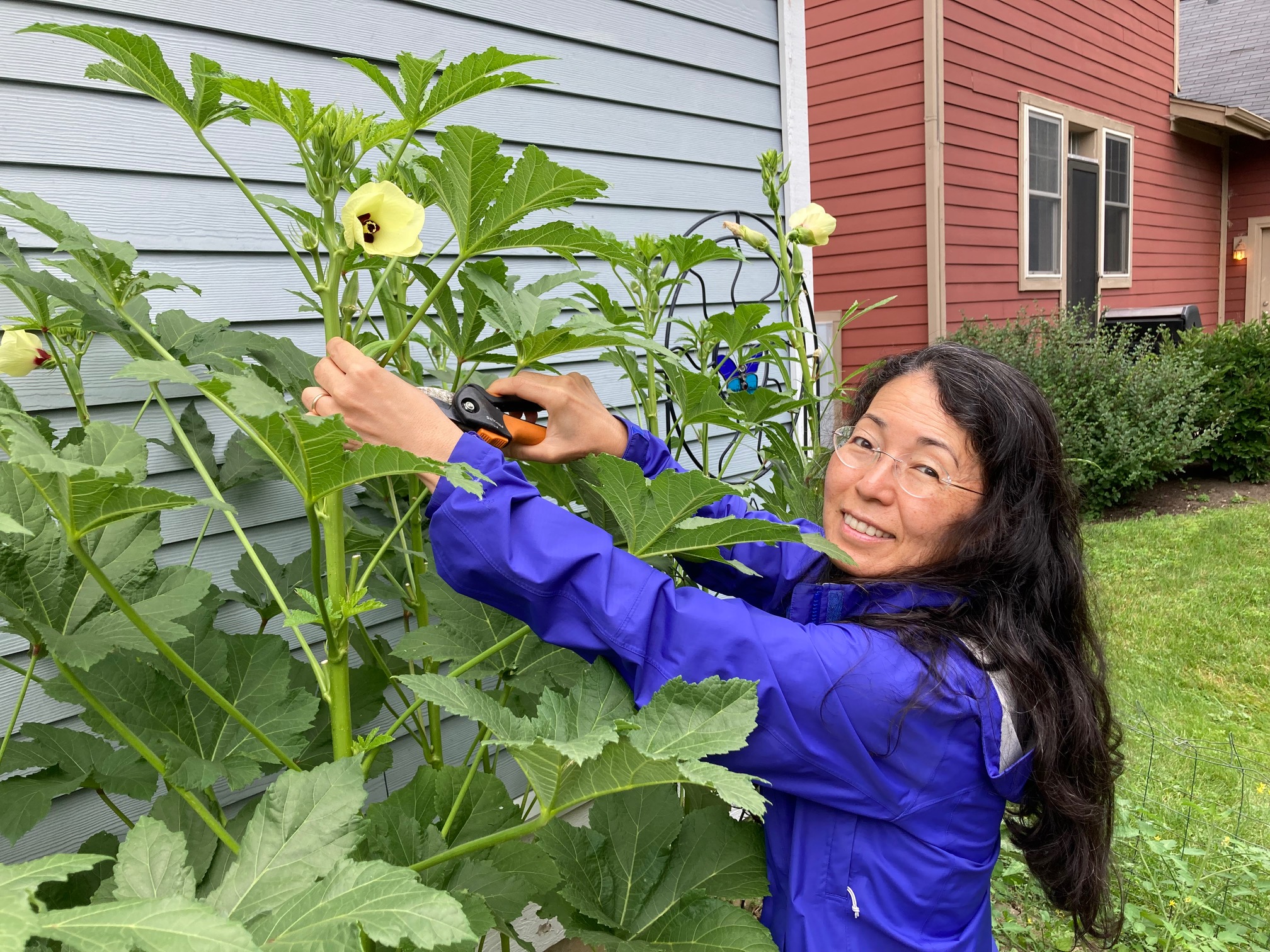
1. Bounty from the Garden: My wife Mayumi has been building the soil of our pesticide-free garden for more than 15 years. In 2022, she harvested a wonderful bounty – garlic, Asian pears, beets, kale, green beans, parsley, ground cherries, and even okra. During the height of the okra season, she was harvesting and cooking it in delicious ways almost every day. God’s Creation enables us to taste and see that God is good.
My wife harvesting okra

My wife Mayumi harvesting okra from our garden that she will cook later. Through her careful tending, the garden produced wonderful food again this past year.

2. Earthkeepers Podcast: Early in 2022, James Amadon and Forest Inslee interviewed me for their Earthkeepers Podcast, a production of Circlewood. Circlewood is an organization in the Pacific Northwest that is working to accelerate the greening of the Christian faith. I first interviewed James for this blog back in 2017 when he was still early on in his move from being a church pastor to becoming Circlewood’s executive director. I’m delighted to see that his gifts are bearing so much fruit. I was also honored that I would be chosen to be interviewed. Through the Earthkeepers Podcast, James and Forest are interviewing fascinating people on the edge of faith and ecology.

3. Good and Brave People: In 2022 I had a good conversation with the elder of a church in Davenport, Iowa. He had given a sermon about the Biblical basis and faithfulness of Creation care. He had been nervous but felt compelled to bring up the topic. We need more brave people like him.

Through my work and my own personal seeking, I continue to have the chance to encounter brave farmers. They are willing to go against the current of conventional practices and raise crops in ways that minimize harm to God’s earth. These same ways produce excellent, healthy products, from vegetables and meat to grains and flowers. Farmers like these put their livelihoods on the line in their choice of how they will raise food to sell. Their faith and values are profoundly inspiring to me.
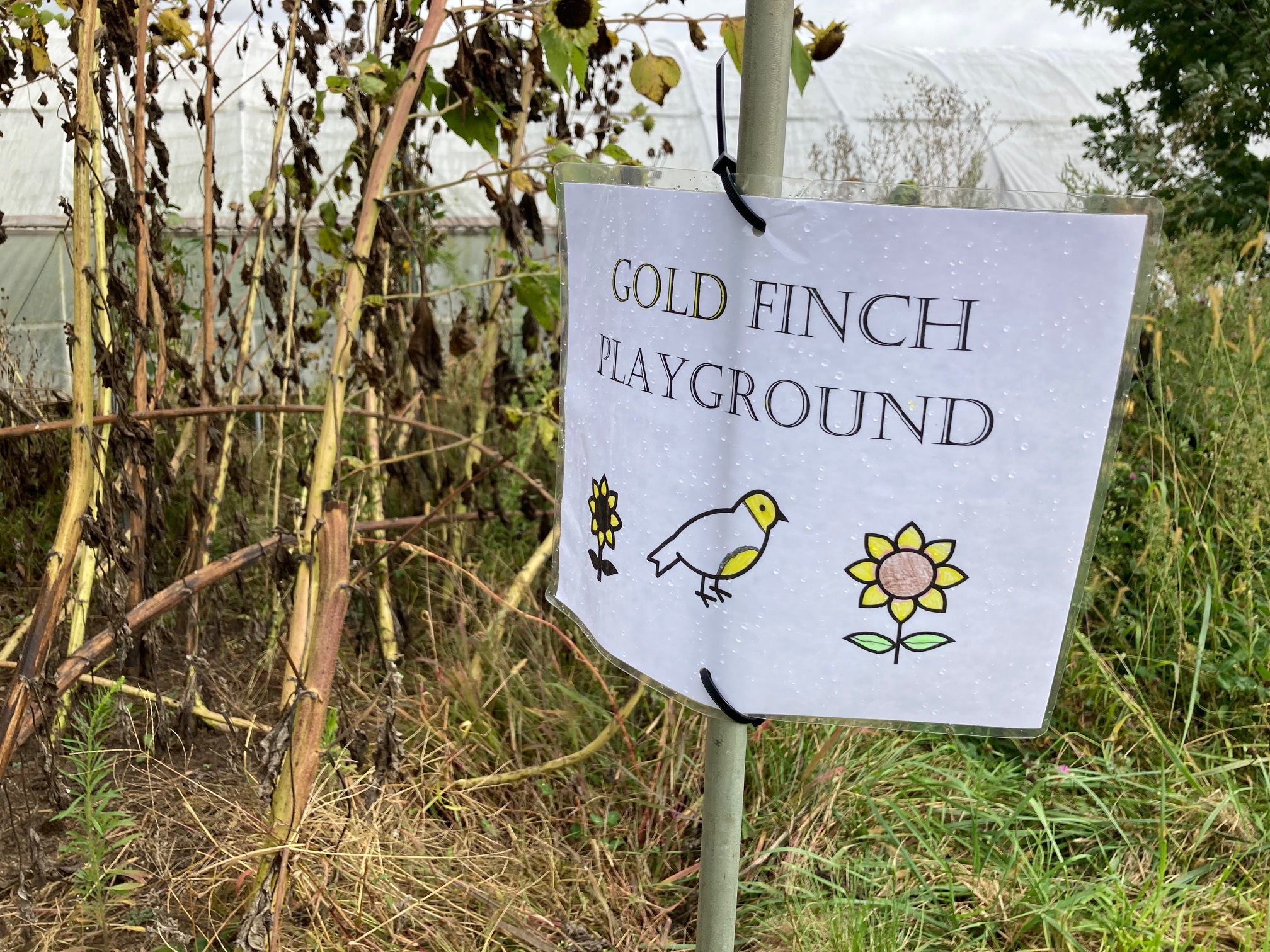
This sign at Broadview Farm in Marengo, Illinois, highlights an area planted with sunflowers specifically to feed goldfinches. I’ve been fortunate to meet many farmers who keep the life of God’s world in mind as they plan the uses of their farm.

Over the past years I’ve had the opportunity work with and help a number of public conservation and forest preserve districts work to improve the sustainability of their farmland management systems. These are public organizations with thousands of acres of farmland which have largely been farmed with a chemical-reliant, production-first approach for decades. I have been blessed to work with staff who care deeply about the land and water under their management.They are creatively advocating within their institutions to move more earth-friendly farming requirements forward. They do this even when others in their institutions don’t get it. I admire them.
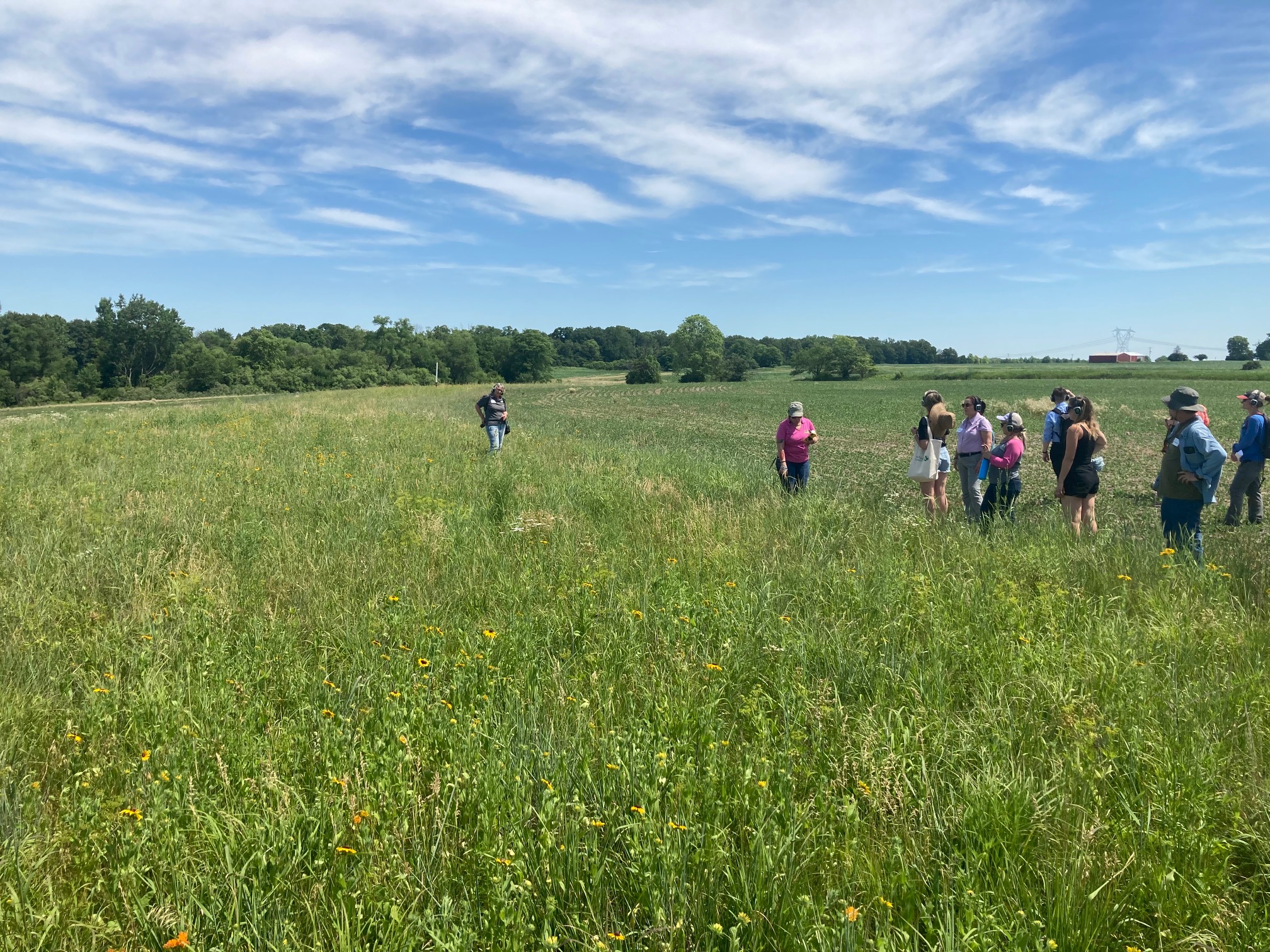
During a 2022 field walk at a farm field owned and managed by the Forest Preserve District of Will County, participants were shown a prairie strip planted perpendicular to the downward slope of the field. The strip provides habitat for wildlife while slowing erosion from farmed land. 

4. Food Forest and Land Stewardship Near Galesburg: This summer, my wife, eldest son, and I visited friends who had purchased some beautiful land near Galesburg. Just one of the ways they are tending this land is by replacing conventional corn and bean fields with trees that will produce nuts and fruit. They have a long-term vision and love the land very much. Their willingness to try new things, work hard, and build community inspired us greatly.
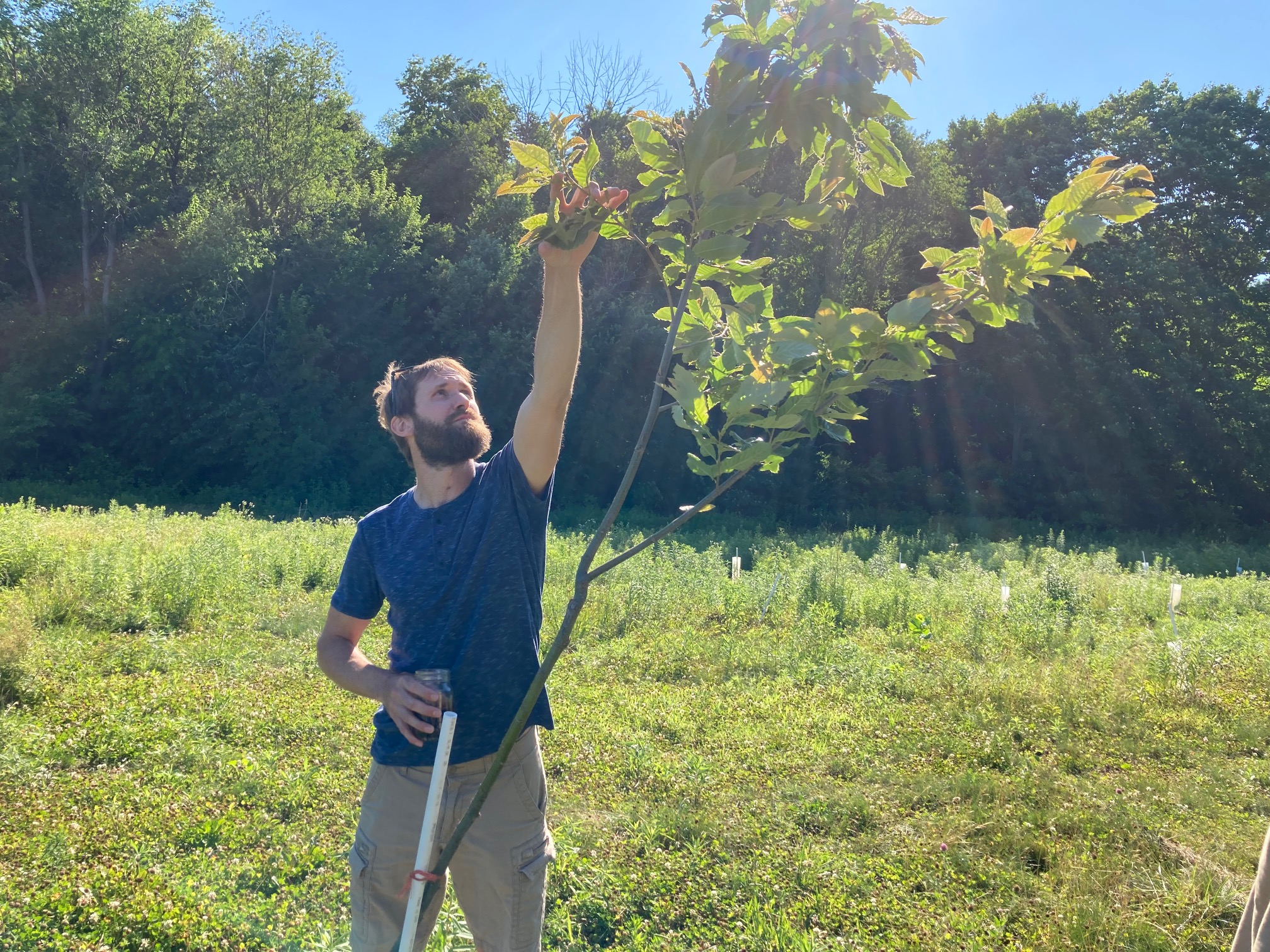
Our friend Craig showing us one of the chestnuts he and his wife planted on their land near Galesburg.

5. Positive News in the World: In the midst of many negative forces, we cannot forget that Creation, when given the chance, can begin to rebound. Check out this story about the response of nature in New York Harbor, which used to be a cesspool of pollutants. A key point to remember is that in a world in which we are all tempted to sin, good regulations and laws are needed.

We can also forget that people can push for decency and goodness in their society….and succeed. Check out news of this ruling in Maryland that preserves the right of homeowners to garden and landscape in ways that enable nature to thrive. A brave couple made that happen.

6. Birds of the Garden: We had three surprise avian visitors this year to our largely naturally landscaped yard. Two were birds – a nuthatch and red-bellied woodpecker – that came to the bird feeder and thrive around trees. After 19 years, our yard has three bur oaks, a pin oak, and two hackberries that are all of decent size. I particularly appreciated the nuthatch. It is able to descend headfirst down the trunk of a tree with perky little movements. Its  upturned beak is perfectly suited for seeking out food in the nooks and crannies of tree bark. It also, as this excellent article explains, stockpiles seeds in the bark of trees for accessing later.

The third bird was a red-tailed hawk. It somehow caught a rabbit, despite the restricted air space of our small property. The hawk consumed the rabbit on top of a rain barrel with little concern for the sensibilities of the people looking at it from their dining room.
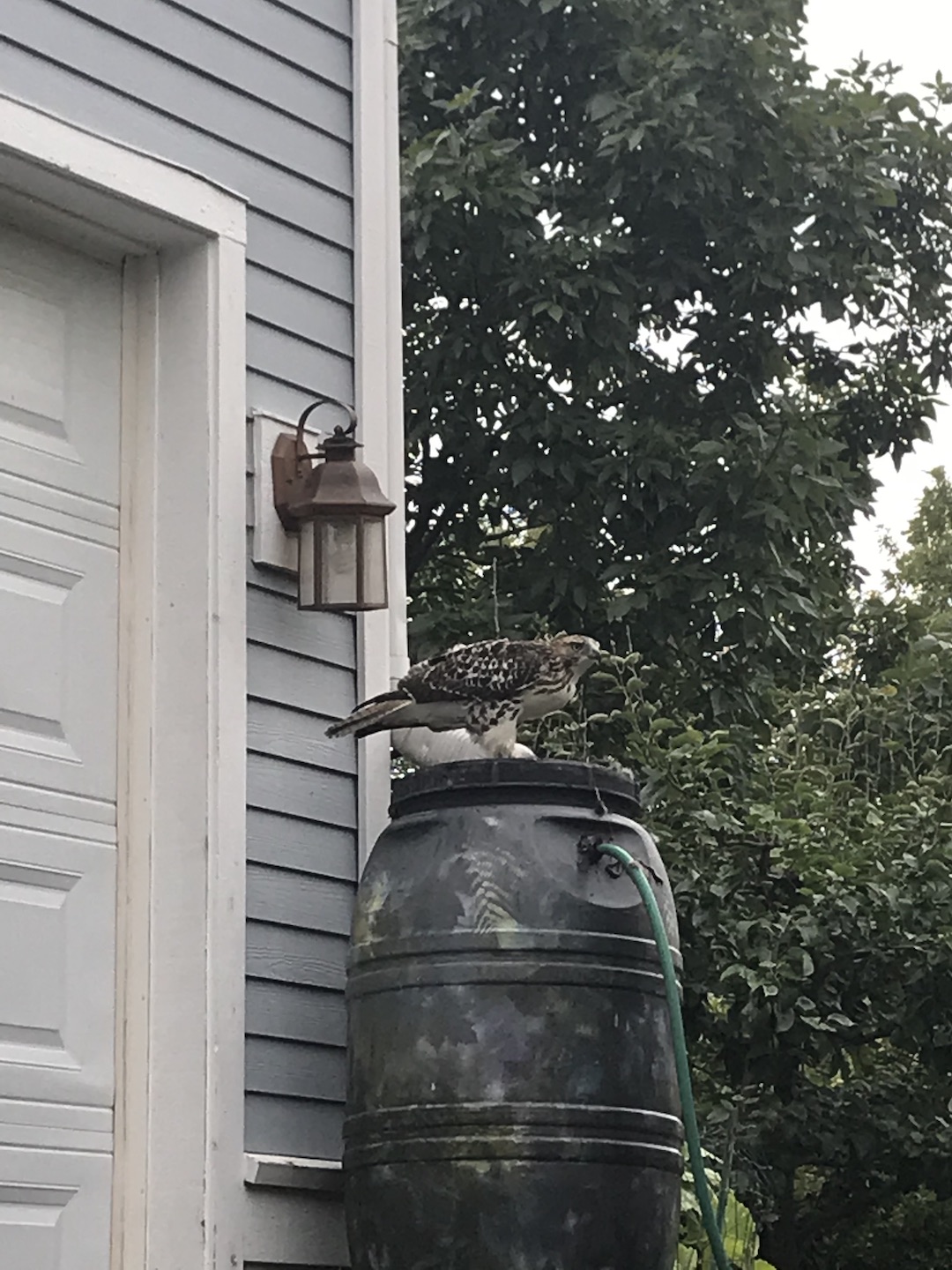
This red-tailed hawk has the remains of a rabbit on the top of the rain barrel in our yard during a rain day. (Our son Owen snuck up close to get this picture)

7. Thought-Provoking Books: There were two books I read in 2022 about Christianity and Creation that were so thought-provoking that I read them twice – Victoria Loorz’s Church of the Wild and Norman Wirzba’s This Sacred Life. I’m grateful to the authors, their editors, and their publishers for producing these books.
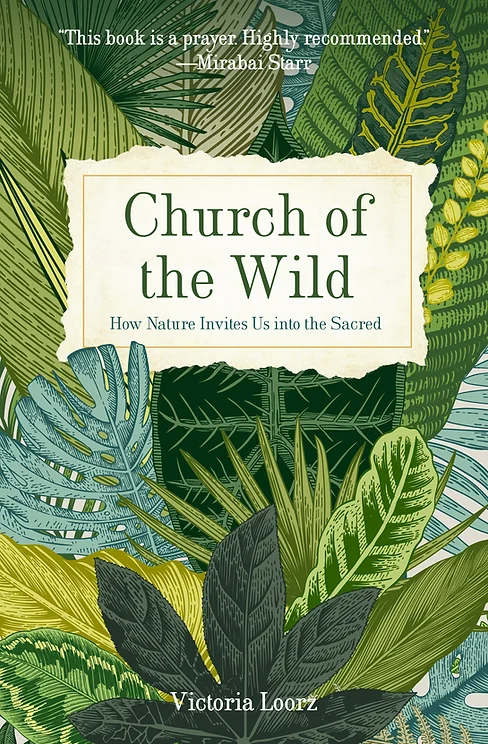
This book was insightful and moving. it also used language far from traditional conceptions of Christianity. I

8. Inspired Words: I continue to find inspiration (and challenge) in reading the Bible. Thanks to my interview with John Kempf, I now have Job 12: 7-10 indelibly etched into my consciousness. How much better would we be faithful servants of God if we actually did ask the beasts, the birds, the bushes, and the fishes of the sea and were willing to listen and learn from them? What if we remembered that our lives and the livings of all living things are in the hand of the God? We are created kin.

What are you grateful for in 2022?

Write those things down. Talk about them. Feed your heart and soul with them. Share them if you would.

Many blessings to you all.

My tendency, as you’ve seen from my past blog posts, is to think big picture. I learn towards theology, ideas, trends, analysis of verses,patterns of people marring God’s Creation, and patterns of people regenerating God’s Creation through ingenuity and commitment and faith.

In this post, I go in a different direction. I share some moments in my life in the month of April that relate in some way to God’s earth.

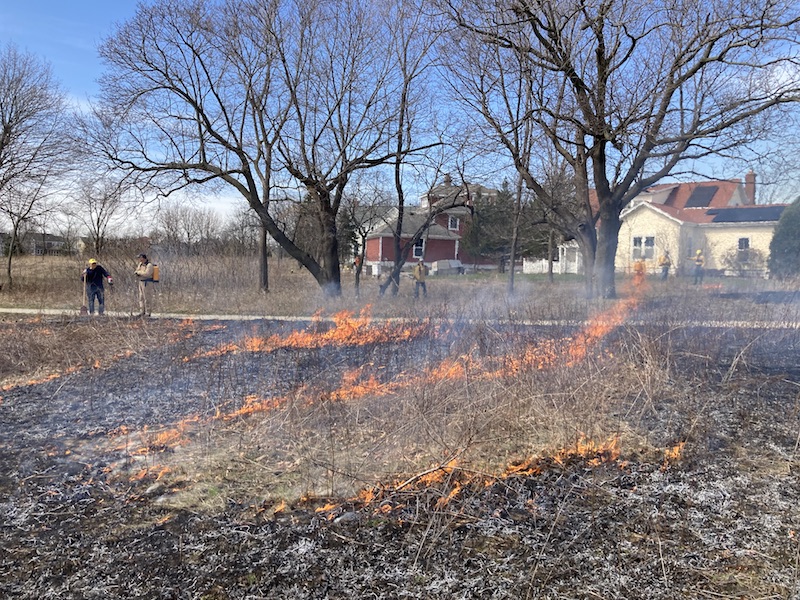
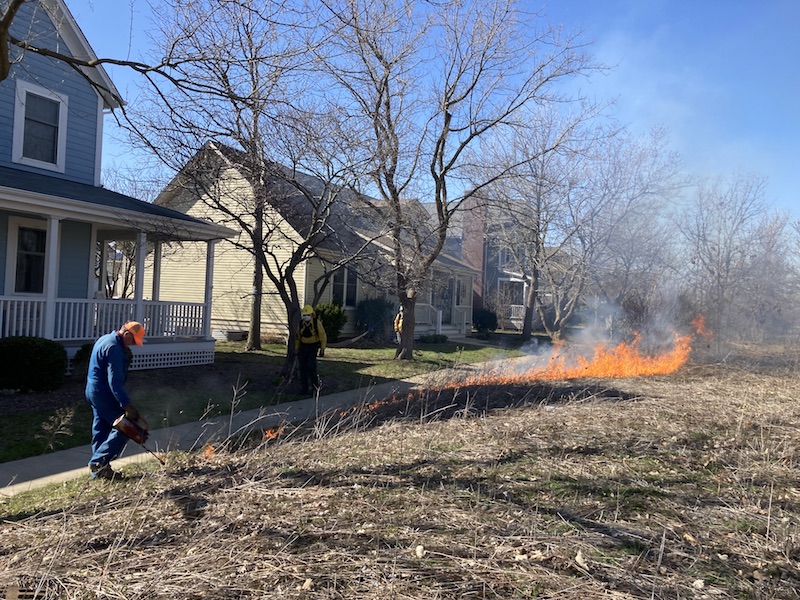
April 10 – I volunteer along with other residents here in the Prairie Crossing conservation community to burn several sections of the prairies and other habitats of our community’s common areas. Our burn leader – Jim O’Connor – takes extreme care in the planning of the burns so that homes are never in danger. Jim also keeps track of when areas are burnt. It’s not good to burn at the same time of the year every time. Prescribed burns are essential to keep prairies healthy.


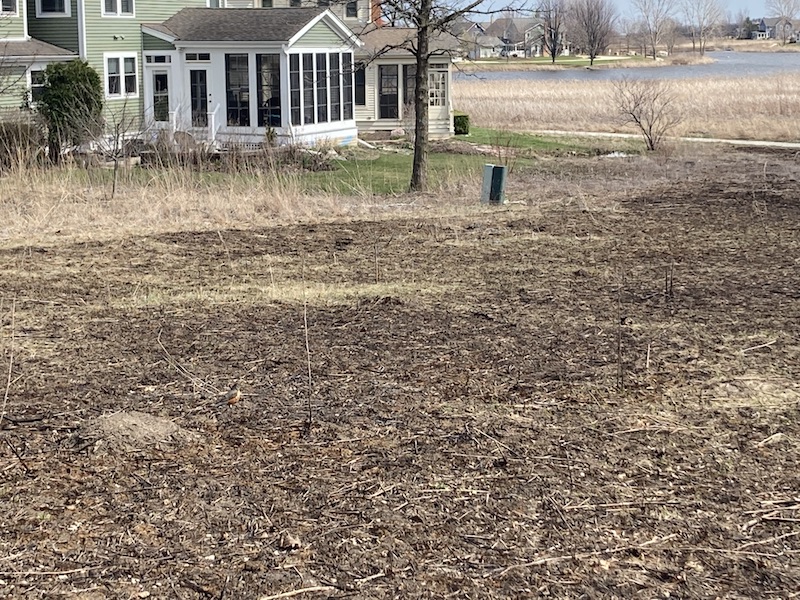
April 16 – This is the same area six days after the burns on April 10. Look carefully in the bottom left corner of the image. Can you see the mound that has a different texture than everything around it? And can you see the robin just to the right of the mound? The mound is that of a colony of prairie ants (likely Formica montana). With the weather warming, the ants had begun to appear on the surface. And that had drawn the robin which had been scarfing them down like a famished guest consuming a tray of hors d’oeuvres. Prairie ants play an important role in prairie ecology and provided a useful, high-protein, high-fiber diet supplement for the robin early this cold spring. I wonder what King Solomon would make of this.


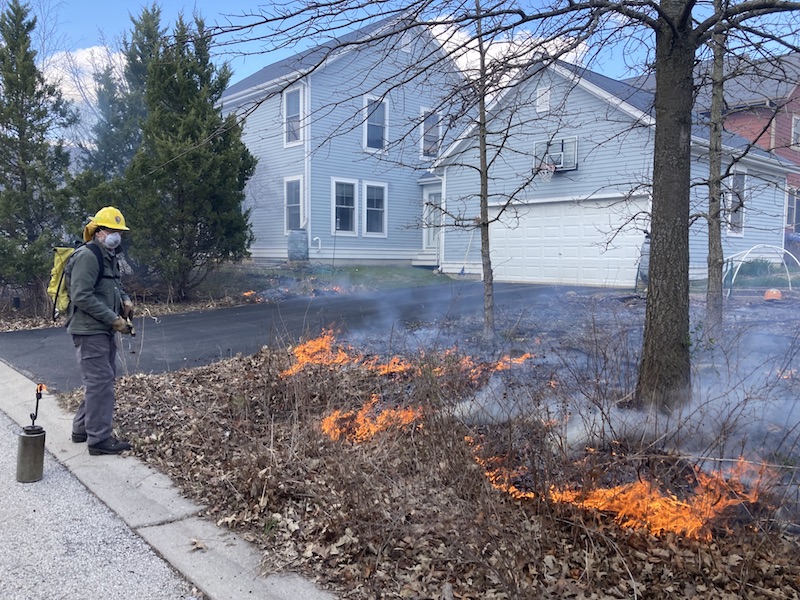
April 19 – Many residents in Prairie Crossing have native habitats on their own properties as well. Here Jim O’Connor (yes, he is everywhere) and Bill Pogson (not in the picture) are helping me burn the natural habitats of our yard. Further down the alley we have a small open prairie. Here we have three oaks whose leaves burn nicely, contributing the fire ecology of the habitat. Prairie Crossing HOA regulations require us to have at least 3 adults carry out any burn and to also make sure that the weather is suitable for a burn that day. Burning together with neighbors brings us together. After the burn was completed (and perhaps inspired by the beer), Jim expertly recited portions of a Robert Burns’ poem.


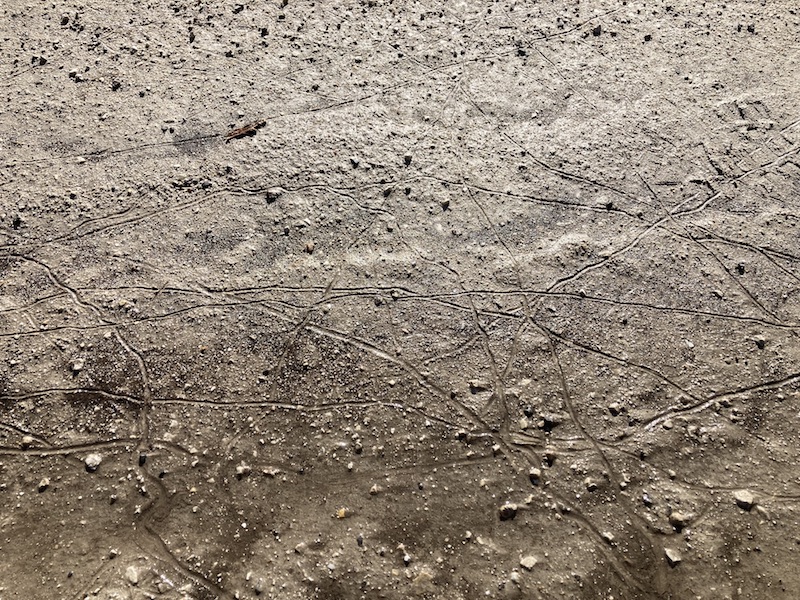
April 21 – Any ideas what this is? A lunar landscape perhaps? It’s been a wet month. Rain the previous day turned some eroded soil along the edge of Harris Road near our non-profit organization’s office into mud. These are worm trails visible early on a weekday morning. The ephemeral trails were ever so faint traces of creatures whose lives are usually invisible to us.


April 21 – Another burn in a Prairie Crossing common area. My friend and neighbor Bill Pogson uses a drip torch to spread the flame. Earlier we had burned to the right of the image so the flames you see that are being pushed by the wind will only go a short distance and then run out of fuel. I had more work to do at the office that Friday afternoon, but I felt I needed to help out as good burn weather can often be rare. Glad I did. The needs of people and nature don’t always fit in nicely with our plans for a day.


Stir fried basmati rice

April 25 – It’s a weekday night, and Mayumi and I need to figure out what to make for dinner in a hurry. We had leftover basmatic rice I had made over the weekend, so Mayumi created a quick stir-fried rice dish with organic peas, onions, carrots, and pasture-raised eggs.


April 25 – Gus, one of our two cats, enjoying a nap in covers we’ve pulled up around him. I believe our love of our pets and how our homes feel much better with plants in them remind us of something profound we see in Genesis – we are meant to be in a state of shalom with the rest of life.


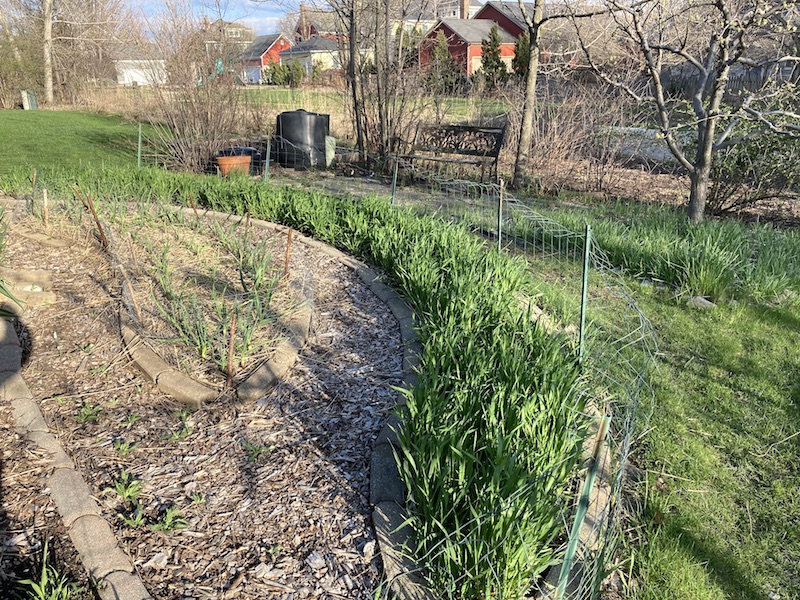
April 26 – Our small garden at the south end of our home. You can see the compost bins in the background. To the right of the bin is a choke cherry and a shagbark hickory, both native woody plants. And at the right edge of the image is an Asian pear tree. The abundance of vegetation you see in the garden itself is winter rye, a cover crop that my wife Mayumi planted last fall to build the soil. The winter rye stayed green all winter, and with all of the rain, it is now growing quickly, which means it is pumping dissolved sugars (liquid carbon) into the soil which feeds the microbes and fungi there. This is our first time using cover crops in these beds. We keep trying to learn.


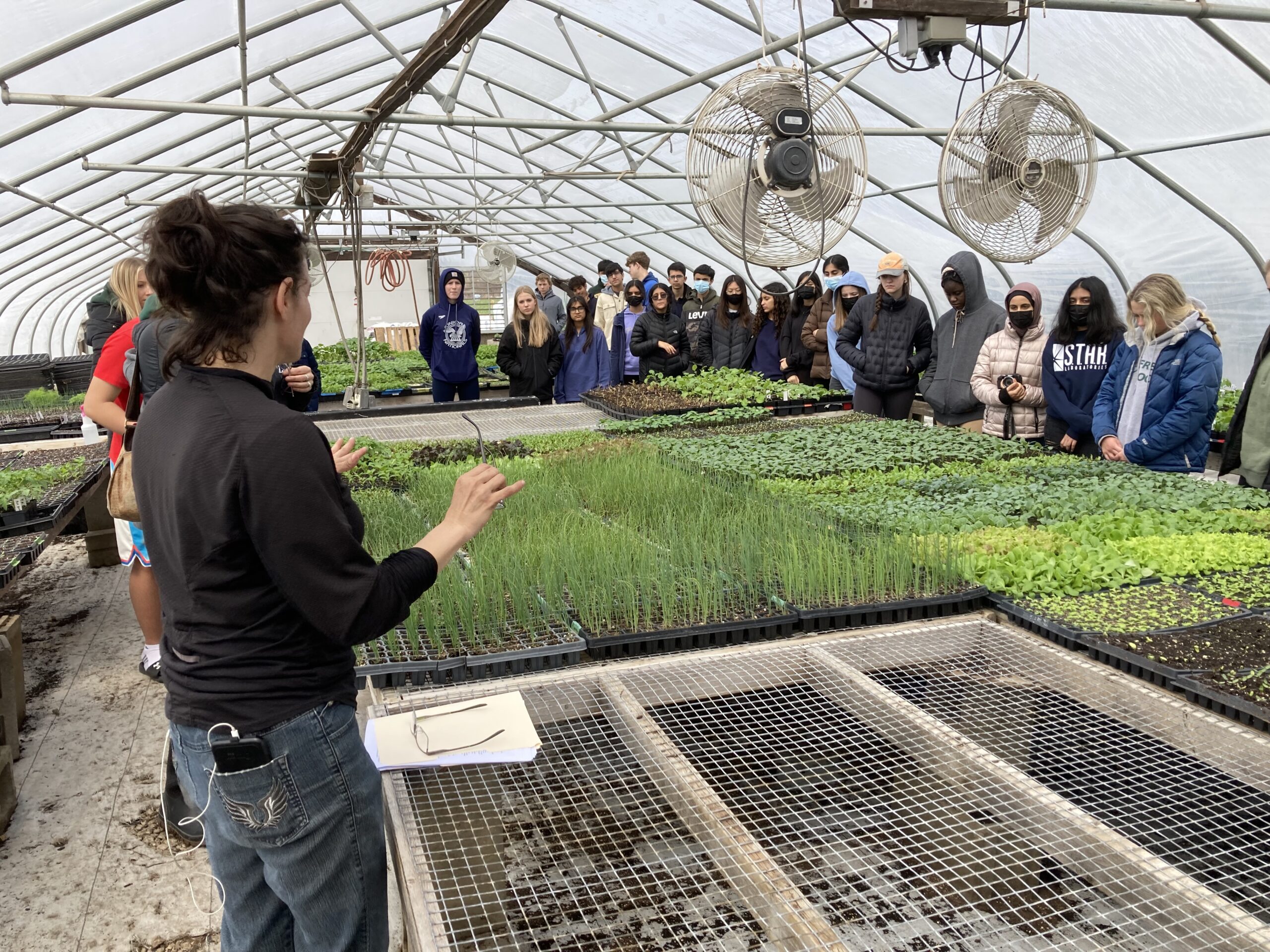
April 27 – It’s not exactly in my job description, but on this Wednesday I led a tour of our farm and Prairie Crossing for ~40 students of AP Human Geography classes from a local high school. Here my colleague Meg Runyan explains how she gets 8,000+ plants germinating and growing in our greenhouse for our annual organic plant sale. Earlier I had shared why it makes such a big difference to human health and nature how food is farmed. One of the teachers said at the end of the tour, almost as an aside, that just reading about sustainabilty has little impact and meaning. Youth need to experience what it actiually looks like.

I also gave a sermon to the North Suburban Mennonite Church and Christ Community Mennonite Church on the Sunday after Earth Day. In preparation for the sermon I reviewed my notes from a book I had found inspiring some years agao – The Forgotten Ways: Reactivating the Missional Church by Alan Hirsch. A quote I found that I couldn’t squeeze into the sermon that I still find compelling and want to share is:

“To say this more explicitly, there is no such thing as sacred and secular in biblical worldview. It can conceive of no part of the world that does not come under the claim of Yahweh’s lordship. All of life belongs to God, and true holiness means bringing all the spheres of our life under God.”

One of the ways we can live out a whole Christian faith-life, whether as families or as communities of faith, is to restore and maintain natural habitat on our own properties.

Whether or not we do so matters.

Without natural habitat – without food to eat and places to find shelter – much of the wildlife of God’s earth cannot survive.

Restoring habitat usually and primarily means replacing lawn with vegetation that is native to your particular place. But if your property already has areas that you do not keep as lawn or garden, then restoring habitat can also involve removing invasive plant species and, again, planting more native plant species.

To inspire you, I want to share the video below of a presentation by Stephen Barten entitled “Backyard Wildlife: If you Build It, They Will Come.” He gave this presentation for the non-profit group Chicago Living Corridors through the Barrington Library in October.

Stephen, a veterinarian and award-winning wildlife photographer, has been restoring his family’s property in the Barrington area for the last 25 years. In the ~75-minute presentation, he shares photos and trailcam footage of 70 species of mammals, insects, reptiles, amphibians, and birds that have been seen on their property.

If you’re like me, you’ll be gobsmacked by the sheer variety of creatures Stephen documents.

That experience of sharing their world with a wide vairety of creatures is something Jesus and the other people of the Bible would have understood. From bears and jackals to the white stork and partridge, the Bible is full of many references to wildlife in the air, on the land, and in the sea. We need to visualize the many shepherds in the Bible interacting with livestock, wildlife, and complex vegetation ecologies all of the time. We know, too, that King Solomon paid a great deal of attention to plants and wildlife as well. I suspect Solomon and Stephen would have a great time discussing their observations together, despite being native to two very different places.

You will also appreciate the insights Stephen provides about a number of the different species of wildlife he encounters. He even shares tips about living with some of that wildlife, like what to do if you find a fawn.

Stephen and his family do benefit from living within two blocks of a lake and from living in a wooded area with few homes. If you are living in a dense city area or subdivision, you will likely not be able to attract flying squirrels and mink no matter how much habitat you restore. But you will still see God’s creatures and help sustain them.

Now is the time to plan for what you will do with your personal property or church’s property in 2022.

Study the habitats of your area. Figure out where you will source native plants for planting in the spring. Get help from someone who knows those plants in designing your habitat. Remove and treat invasive woody brush (like Stephen describes in his presentation). Start small to get the knack of it all. Plan to plant some native plants (even just a few oak trees) in the spring. Get ready by spring.

There are a wide variety of resources available for learning about native plants and restoring habitat to your property. The organization Wild Ones is a good place to start. I would also highly recommend Doug Tallamy’s book Bringing Nature Home. (And if you don’t have your own property, volunteer to help create and restore habitat at your church or another place.)

Will your property look a little different from your neighbors?

It may.

But work to retrain your eyes and cultural assumptions to be in line with God’s perspective. Ask yourself this question – what kind of culture and values does a yard (or a church landscape) really communicate when the plants there almost completely deprive the life of God’s earth life itself?

A well-designed yard that includes habitat and a bit of well-placed lawn, on the other hand, communicates something very different. That yard communicates that the people of that place care about God, the life of God’s world, and their human neighbors, too.

Enjoy. Learn. Grow. Embrace challenge. Show your love of God. Create habitat.


P.S. My wife and I have devoted much of our small property in Grayslake, Illinois, to native plants and maintain the prairie sections with occasional prescribed burns. We’ve been delighted to see cedar waxwings, cardinals, squirrels, chipmunks, voles, chickadees, goldfinches, toads, a variety of bees, monarch butterflies, hummingbirds, house wrens, rabbits, Cooper’s hawk, and a red-tailed hawk eating a rabbit. And, honestly, we’re still learning as we go.

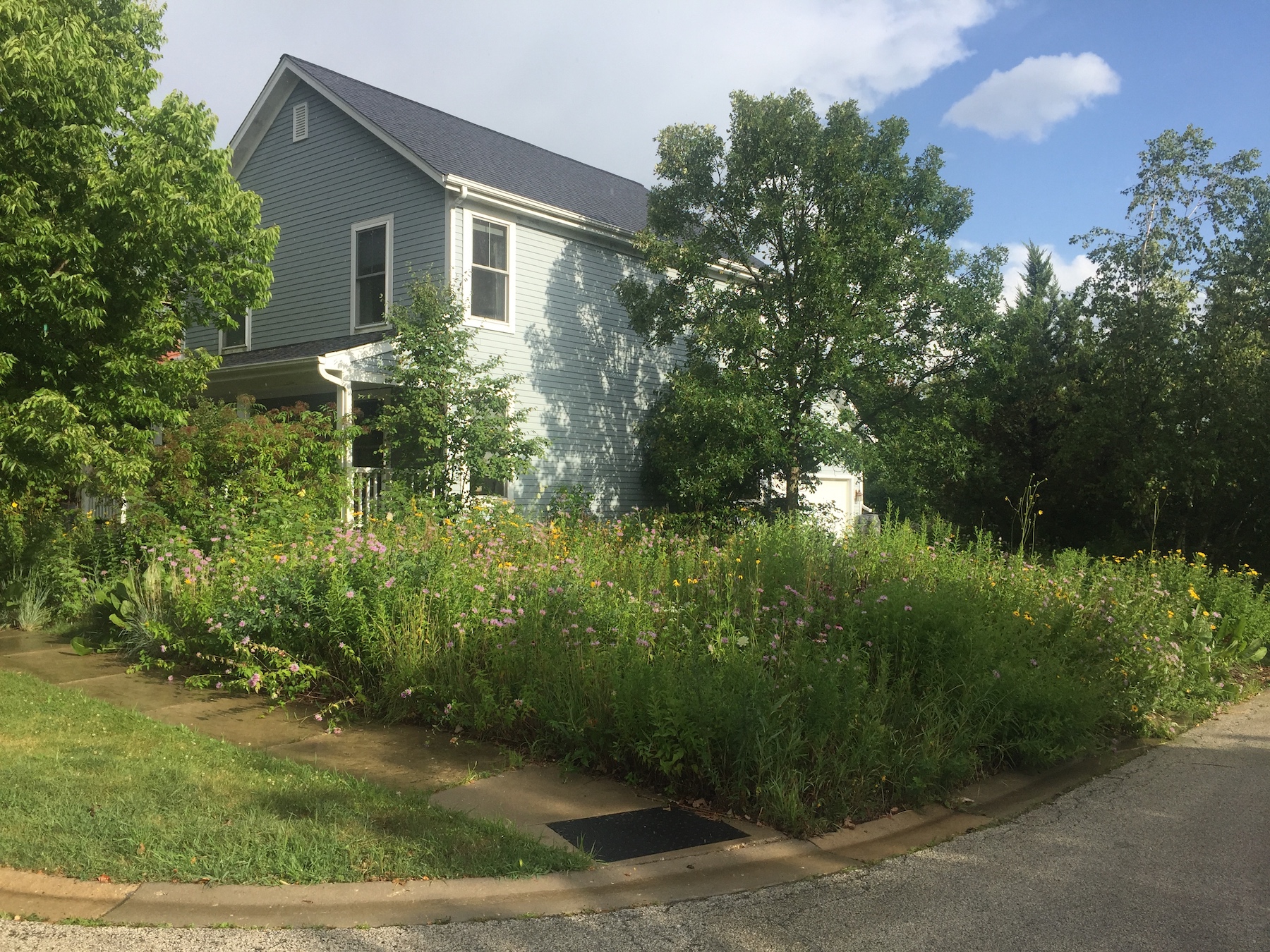
Image of Nathan's home with native plants and prairie habitat using most of space

Here is an image of the habitat around our small home just after a late summer rain. Native shrubs and trees are great additions to your home landscape. This section of our yard includes native trees like hackberry and bur oak. There are also native shrubs like elderberry, serviceberry, nannyberry, and witherod viburnum. A native habitat landscape in Arizona would, for example, look very different. Please share images of the habitat you create on your property with me at wholefaithlivingearth@gmail.com.


Faith of an Orchid Seed

Nathan Aaberg —  November 30, 2020 — Leave a comment

In the latest issue of The Nature Conservancy’s member magazine, there is an excellent article on orchids by Jenny Rogers. One paragraph in the piece astounded me. And what it reveals, I believe, is a metaphor for our Christian faith-life.

First, let me share a paragraph that will give some context about orchids:

With an estimate of at least 25,000 species in existence, and new species being discovered regularly, orchids are believed to be the world’s most diverse family of flowering plants. They outnumber all mammals, reptiles and birds combined. And scientists estimate they account for about 10% of all flowering plant life on Earth.

Please read the article to learn more about them and about the efforts being made to understand and protect them.

And here is the eye-widening, heart-opening paragraph:

Orchids begin life as seeds so minute they can only be seen under a microscope. They do not contain any stored food to fuel their growth. Instead, when seeds land in soil or on trees, they rely on a suite of host fungi nearby to supply the nutrients and other resources they require.

In other words, orchid seeds literally cannot begin growing into a plant without another life form – a fungus – being on hand to nourish them.

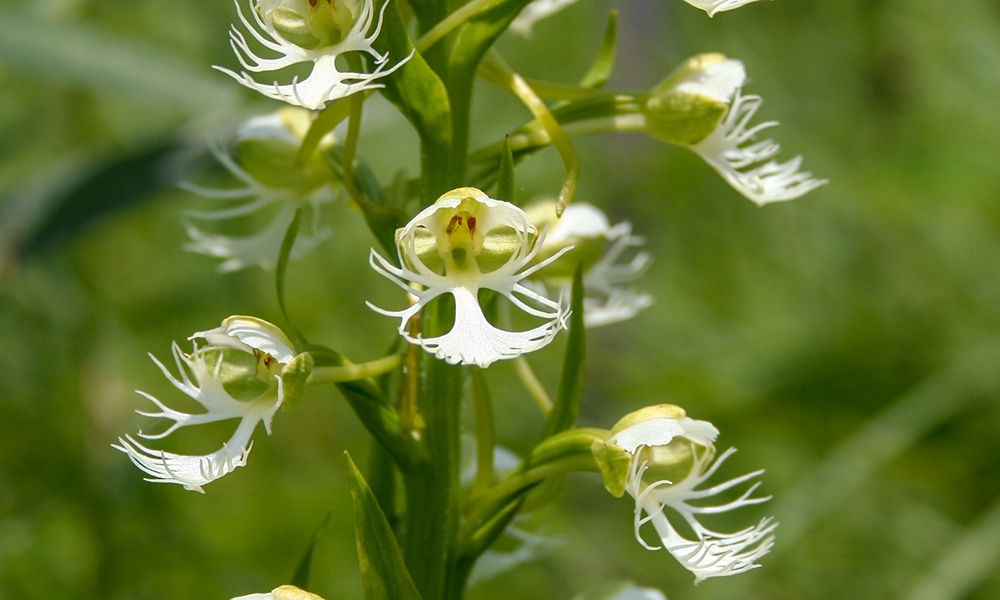
Blooming flowers of Easter Prairie Fringed Orchid

Eastern prairie white-fringed orchid (courtesy of Forest Preserve District of DuPage County)

We are, of course, accustomed to thinking of small seeds and faith from Matthew 17:20. There Jesus speaks of a person with faith as diminutive in size as a mustard seed being able to move mountains. We also read in Matthew 13:31-32 of a man planting a mustard seed in a garden. Despite the seed’s small size, it grows into a large plant that birds can even find shelter in. Jesus presents the planting of the tiny seed as a parable about the kingdom of heaven.

Thinking of our faith as an orchid seed can inspire us and give us insight in three ways:

Discipleship is like being an orchid seed: In Luke 9:2-3, we read of the disciples being sent out to tell people of the kingdom of God and to heal the sick. Jesus told them: “Take nothing for your journey,” he instructed them. “Don’t take a walking stick, a traveler’s bag, food, money, or even a change of clothes.” How often do we sense a calling from God but feel that we first need some stored resources in place before taking that initiative?

Jesus taught a radical trust in Him. He also taught a radical dependence on the “fungal network” of God’s work in the hearts of others. In fact, presenting need to others can actually move their hearts. Are you and I, individually and collectively, willing to bet our lives on this? And, conversely, are you and I, individually and collectively, part of networks of people responding to people living out their faith in radical, selfless ways?

We should be.

Embrace dependence and assistance: American culture is so full of the drive to be independent through wealth and technology. We want to move beyond ever needing help from others, especially in urban areas. We can even find ourselves looking down on others who need help.

A Christian faith like an orchid seed would help us move past all that. We are most truly in the image of God, a triune God of interdependence and interrelationship, when we are able to be dependent and respond to the dependent needs of others. You will need to be an orchid seed in your creative life of faith at times. You will need to be part of a supporting fungal network in your loving life of faith at other times.

The life of Creation is like an orchid seed: We increasingly dominate every element of how the world functions and what it looks like. When anything from an orchid seed and a baby dolphin to a sandhill crane colt or a piglet enters this world, we determine whether those elements of God’s Creation find sustenance, habitat, and conditions suitable for their ability to live the way they are meant to live.

Or not.

In fact, orchids, like many other species, are struggling to survive in the world we are making.

My friend Kathleen Marie Garness stewards two local natural area and specializes in botanical illustrations of orchids. She writes this: “… our elusive and disappearing native orchids highlight the close and subtle interrelationships within the natural world. Because orchids are so sensitive to their environment they have much to teach us about living in harmony with nature.”

Do we recognize that dependence? Will we recognize that tenousness of life, of God’s life? Will we exercise a faith like an orchid seed to act for life that cannot reward us in tangible ways? Will we trust that others of faith and even those without the faith we hold will respond to our efforts? Are we ready to change the dominant Christian model of dominion into something that reflects a true love of God and a love of our neighbors?

May our faith-lives be as beautiful as orchids and as humbly valuable and sustaining as fungi.

We live in such turbulent times. Unfolding climate chaos. The worldwide pandemic. And now, with the murder of George Floyd, boiling outrage over racist policing and other manifestations of the centuries-old racist stain that continues to mar the ideals of the United States.

What else can be said that others haven’t already said very eloquently?

I just have one humble thought. As we try to heal, we will sometimes need to do positive things together. And by positive things I mean tangible, limb-moving, calorie-burning, body-engaging things that are not self-conscious moments of conversation and reflection.

Talking and reflecting in heartfelt ways are, of course, incredibly important things. But actually doing things together is just as essential. Actions taken together can imbed new ways of thinking and feeling even deeper into our hearts, minds, and the very fiber of our being.

And what are things we can do that make us feel whole and just human together? I’d suggest any engagement with God’s earth in positive ways.

Birding. Making and enjoying food. Gardening. Farming. Restoration of natural areas.

Creation takes us out of our distinction-making mindset between people and reminds us we are one set of beings and we enjoy and depend on one world. Creation takes us beyond words and our head space.

And, ideally, in that activity in Creation there is an encounter wtih God, consciously or unconsciously, that leads to deep humility.

A Novel Idea

I want to give you fair warning – I have begun writing a novel. In it I plan to further explore the ideas I’ve been exploring in this blog.

While I’m moved by the power of story, I have almost no experience writing fiction. So, to get over paralzying hangups about doing this well, I have made my goal just this – complete the first draft of a very bad novel. I am happy to report that I am indeed on pace (a very slow pace) to write one of the worst novels ever written. I’m guessing in fact that the secret guardians of literary quality are already planning to treat this work the way Russian authorities treated Chernobyl – entomb it forever in concrete.

Am I being excessively humble?

Not really. My characters, for example, all speak like they were clones of each other. Actually, and what is even worse, I think they all speak like they were clones of me.

Despite all that, I’m doing my best to accept where I am and to just plug away. Over time I hope to build some craft. I have other story ideas, too, all of which grow out of my passion for the topic of the abundant life Jesus offers, including a new relationship with God’s earth.

We only grow when we are out beyond what feels comfortable and easy. What new things are you trying this year?

Water Scorpions

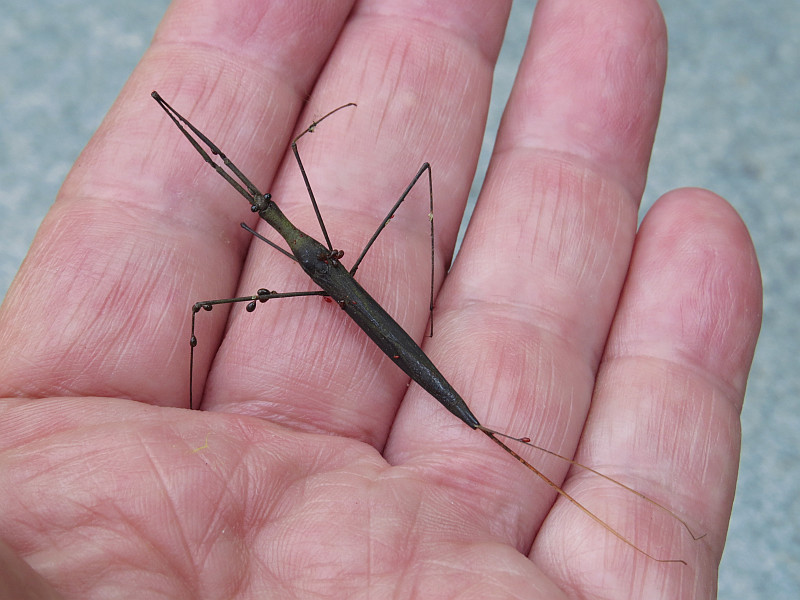
A friend and farmer here at the Prairie Crossing Farm in Grayslake recently saw an unusual insect while he was working in a vegetable field. The insect was nothing like he had ever seen. It was about four inches in length, including a long tube-like structure coming out of its back end. It flew away later with wings that emerged from under armored covering.

A water scorpion!

Water scorpions are not even closely related to real scorpions. Real scorpions are arachnids with eight legs, while water scorpions are insects with not a bit of venom. The tube-like structure is actually a breathing device that allows the water scorpion to hunt in its favorite hunting grounds – underwater. In fact, it can pack bubbles of air on its abdomen’s specialized breathing holes and then use the bubbles later like handy oxygen tanks.

There is so much more that is fascinating about these insect. I encourage you to read more about them here. This world is truly amazing.

Water scorpion on hand

Water scorpion (photo by Wim Rubers)