Archives For Agitations

Before I began reading his book Pollution and the Death of Man, I had only heard of Francis A. Schaeffer in reference to the Christian pro-life movement. He is one of the founding fathers of the intense conviction that abortion is profoundly wrong and that Christians should do all they can to stop it.

In light of the fact that there are many fellow Christians who are zealously pro-life when it comes to abortion and yet are completely sanguine about the destruction of the rest of life on God’s earth, I couldn’t help assuming that Schaeffer had a similar theological incoherence. This impression was reinforced by the fact that I first heard of the book from listening to Christian radio talk show host Janet Parshall. She regularly refers to Pollution and the Death of Man when she talks in alarm about the growing concern people have for the environment. She reminds her audience that Schaeffer had warned that human dignity would be compromised if humanity was presumed to have anything in common with nature and if humanity’s freedom to use the world in any way was questioned.
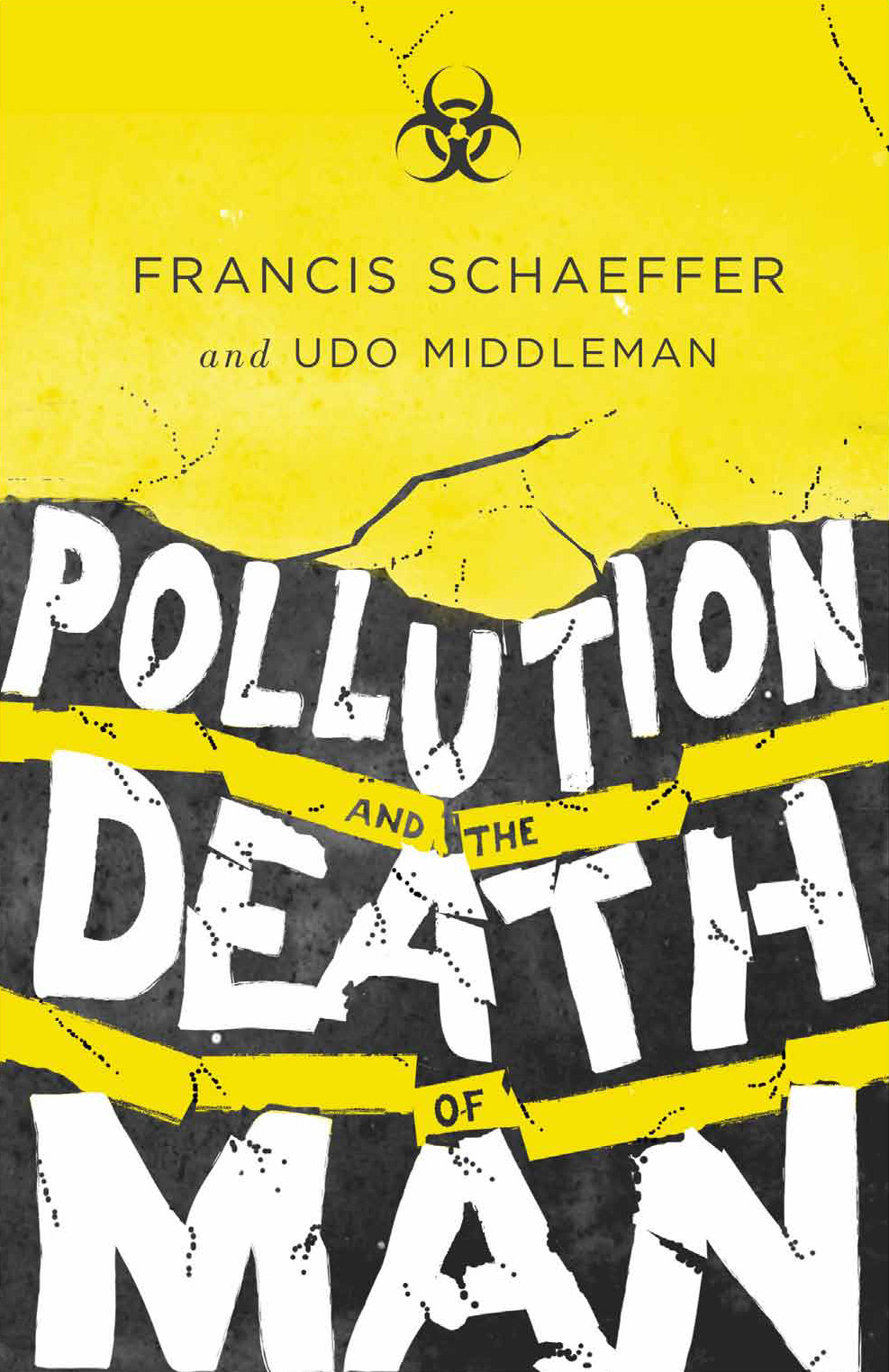
Pollution_rnd1 5 book cover

Forty-five years since its publication this book’s arguments still resonate.

Nevertheless, out of curiousity, I ordered the book and read it. I was floored. It certainly conveys a fierce love of God and commitment to the ideas that come from the Bible. But it also fiercely asserts that those ideas uniquely give real value to nature and that Christians have for too long been AWOL in caring for nature the way they should. It contains powerful ideas about what the true relationship should be between humanity and the rest of nature. And these ideas challenge the way Christians have thought about nature and acted towards it for centuries.

Because the book’s essential ideas have been misrepresented and because those ideas are still relevant today, I am using this blog post to share 10 key points about the book. I am including Scheaffer’s own words as much as possible because of their passion and power.

I would also encourage you to learn more about Francis Schaeffer. He was a complex person who led a complex life and challenged, in some way or other, almost everyone.  He was a relentless warrior on behalf of Biblical truth in the world of theology and philosophy. There are, in fact, elements of what he wrote and spoke that I profoundly disagree with. He was also a person who desired to bring people together and engage with them in conversation, fellowship, and mutual learning. He and his wife Edith founded the L’Abri community in Switzerland in 1955 which has become a network of learning centers around the world where people can ask honest questions about the Christian faith while enjoying fellowship and hospitality. He also believed that Christians should be compassionate and engaged with the culture around them even as they hold tightly to Biblical truths. Along those lines, he wrote this startling sentence: “Biblical orthodoxy without compassion is surely the ugliest thing in the world.”

You can learn more about him here. The best article I read was by Michael Hamilton in a 1997 issue of Christianity Today (you must, sadly, be a subscriber to read the whole thing). Here is an excellent quotation from that article about Scheaffer:

“Ideas were to him literally matters of life and death. History, thought Schaeffer, taught that the intellectual base on which a people build their society will determine that society’s laws and character: “There is a flow to history and culture. This flow is rooted and has its wellspring in the thoughts of people.” His singular message was that a society cannot hope for righteousness and justice without thinking the thoughts of God from the bottom up.”
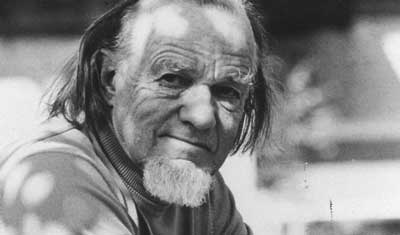
francis_schaeffer image II

This gives you a sense of his intensity and intellectual energy. It also helps you understand a bit why in his view the unmooring of Western civilization from Christian foundations and its movement towards cultural relativism alarmed him.

That same intensity and intellect is displayed in Pollution and the Death of Man. I don’t necessarily agree with every single point he makes.  Yet, there is much treasure and truth here. It makes one wonder what would the world would be like if Christians and the Church had been living out the principles Schaeffer presents in this book over the last two millennia. Above all, this book shows that taking the Bible seriously and reading it carefully leads to a profound commitment to being a good shepherd of the earth who finds wonder and beauty in it.

1. Schaeffer wrote in the context of a growing consciousness that humanity is destroying the world that led some to blame Christianity: Published in 1970, Pollution and the Death of Man was Schaeffer’s effort to insert Christianity into the battle of ideas surrounding the realization that nature was being destroyed. In 1962 Rachel Carson’s Silent Spring was published and caused America to rethink its relationship with chemicals. In 1966, the U.S. Bureau of Reclamation released plans to build two dams in the Grand Canyon (can you imagine that?), but the Sierra Club and others vociferously fought those plans and were ultimately successful. In 1969 the Cuyahoga River caught fire for the thirteenth time in its history, a brutal symbol for all that was wrong with America’s use of technology and relationship with nature (check out this article about how local responses to the problem of industrial pollution, not necessarily the Clean Water Act, resulted in the 1969 fire being the last on the Cuyahoga).

Thinkers grappled with the ultimate causes of this environmental destruction. In 1967, Lynn White, Jr.’s article “The Historical Roots of Our Environmental Crisis” was published. In it, he centered the blame for Western civilization’s unrelenting exploitation of nature on Christianity. An expert in Medieval technology, White argued that the paradigm-shifting triumph of Christianity had squashed the notion that there was spirit and sacredness in nature. Instead, it established humanity’s proper role as harsh, exploitative dominators. Nature, in other words, existed solely for the use of humanity. This assumption, White insists, has always made Christianity the most anthropocentric religion in the world.

Another key thesis of White’s was that the tsunami of negative impacts brought by science and technology can’t be addressed by applying science and technology in new ways. Christianity is at the root of the marriage of science and technology and is at the root of the idea that a tree is just a tree and is there for our exploitation. If we don’t change how we think of nature morally and ethically, nothing else will change. And because Western civilization’s great moral ideas come from Christianity, Christianity must be part of any solution. White pointed to Saint Francis as offering a better Christian path of faith and life.

2. Neither polytheism nor modern science are the answers, and both threaten the true nature of humanity: In Pollution and the Death of Man, Schaeffer wholeheartedly agrees that there is an environmental crisis. He also agrees with White that the destruction of nature is, at heart, a religious and moral problem. But he asserts that neither pantheism nor a modern, science-based philosophy are good answers either.

A morality based on either results in only a pragmatic concern for nature. “The only reason we are called upon to treat nature well is because of its effects on man and our children and the generations to come. So in reality,….man is left with a completely egoistic position in regard to nature. No reason is given – moral or logical – for regarding nature as something in itself.”

Schaeffer asserts, too, that pantheism and modernism undercut man’s dignity and will indeed bring the death of man in a metaphorical sense because all is reduced to particles and particles have no meaning. When humanity is merely another part of nature, which both pantheism and modern science suggest, then people can be treated like any other element of nature.

3. The wrong kind of Christianity will lead to wrong views of nature: Listen to these words by Schaeffer:

“It is well to stress, then, that Christianity does not automatically have an answer; it has to be the right kind of Christianity. Any Christianity that rests upon a dichotomy – some sort of Platonic concept – does not have an answer to nature; and we must say with sorrow that much orthodoxy, much evangelical Christianity, is rooted in Platonic concept. In this kind of Christianity there is only interest in the “upper story,” in the heavenly things – only in “saving the soul” and getting it to Heaven.”

In one of the best stories of the book, Schaeffer relates how he walked over to a pagan community across a ravine from a Christian school he was visiting. He was told that he was the first person from the school to ever have visited them. What especially struck Schaeffer was that the Christian school was ugly while the pagan community’s landscape and buildings were beautiful. Schaeffer considers this situation and writes: “Here you have a Christianity that is failing to take into account man’s responsibility and proper relationship to nature.”

Later, Schaeffer writes: “God is interested in creation. He does not despise it. There is no reason whatsoever, and it is absolutely false Biblically, for the Christian to have a Platonic view of nature. What God has made, I, who am also a creature, must not despise.”

4. We should respect what God has created: For Schaeffer, understanding nature properly rests on the fundamental truth that God created the world and the cosmos. God is not part of nature. Nature is separate from God. This, Schaeffer asserts, is the basis for science.

But the distinctness of God from nature does not mean nature is of no value. Because God made nature, all of nature deserves our “high respect.” Listen to what Schaeffer writes:

“But while we should not romanticize the tree, we must realize God made it and it deserves respect because He made it as a tree. Christians who do not believe in the complete evolutionary scale have reason to respect nature as the total evolutionist never can, because we believe God made these things specifically in their own areas. So if we are going to argue against the evolutionists intellectually, we should show the results of our beliefs in our attitudes. The Christian is a man who has a reason for dealing with each created thing with a high level of respect.”

To consider the things of this world as worthless or low, Schaeffer asserts, is to insult God.

In addition, we have God’s own example to follow. Schaeffer writes, “… God treats His creation with integrity: each thing in its own order, each thing the way He made it. If God treats His creation in that way, should we not treat our fellow-creatures with similar integrity? If God treats the tree like a tree, the machine like a machine, the man like a man, shouldn’t I, as a fellow-creature, do the same – treating each thing in integrity in its own order? And for the highest reason: because I love God – I love the One who has made it! Loving the Lover who has made it, I have respect for the things He has made.”

5. Jesus’ death, resurrection, and ascension remind us that all things spiritual and material have value and will be redeemed: The things in front of us are sometimes the hardest to see. Schaeffer looks directly at the historic center of the Christian faith – Jesus’ death, resurrection, and ascension – and sees an affirmation of a principle that is too often overlooked by Christians. He writes: “The resurrection and ascension prove there is no reason to make false dichotomy between the spiritual and the material. That is a totally non-Biblical concept.” In other words, matter matters. Nature matters.

Schaeffer pays attention, too, to the eighth chapter of the book of Romans. “As Christ’s death redeems men, including their bodies, from the consequences of the Fall, so His death will redeem all nature from the Fall’s evil consequences at the time when we are raised from the dead.” In other words, nature is an essential part of the Biblical story of the world from the beginning to the end.

6. Separate from yet united with nature: A core theological concept for Schaeffer is that the God of Christians is unique “in being both infinite and personal.” All of matter is separated from God who is the Creator and who is infinite and who has always been. Yet, God created people in God’s image, which makes them unique. This means that people have a unique relationship with God that the rest of nature does not.

While many Christians stop right there, Schaeffer doesn’t. He asserts that we simultaneously have two different relationships with nature. Yes, we are unique, we are separate, and we do have dominion (the right kind of dominion). But we also have fellowship with everything else in nature. Why? Because we collectively share the same status – we are all creations of God.

“This is the true Christian mentality. It rests upon the reality of creation out of nothing by God. But it also follows that all things are equally created by God. All things were equally created out of nothing. All things, including man, are equal in their origin, as far as creation is concerned.” (Those italics are Schaeffer’s.)

Schaeffer emphasizes this point throughout the book. Here is a startling line in the context of the balance Schaeffer advocates between our right to use nature wisely for our ends and our fellowship with the rest of nature. “Even the moss has a right to live. It is equal with man as a creature of God.”

Humans, especially Christians, however, are quick to assert that we are distinct and separate from the rest of nature. Schaeffer would agree that we are distinct and different and would argue that our ability to have consciousness, choice, and will power are key elements of our uniqueness. This presents a fundamental and spiritual challenge to us. We as humans do have options. We have choices. One of our fundamental choices is whether we do all to nature that we have the capacity to do.

Unthinkingly using all of our unique capacities to manipulate the rest of the created order for our satisfaction and convenience at the cost of nature’s vitality lowers us to the state of the rest of the natural order. Conversely, making the conscious choice to limit ourselves for nature’s prosperity affirms our own humanity.

This is where Schaeffer is making, I believe, a subtle argument that people like Janet Parshall are not picking up. It is easy to conclude that Schaeffer’s title refers only to the idea that pantheism and modern materialism, as reactions to the ongoing destruction of nature, will lead to the death of man. But Schaeffer is also all but saying explicitly that if we do not exercise conscious and moral choices in relation to nature than we are also denying human uniqueness. In fact, if we do that, we are acting with exactly the same values that would flow naturally from an evolutionary, materialist perspective. In other words, not limiting ourselves in how we use our creative powers to extract from nature what we want and not opening ourselves to a psychological relationship with nature leads also to the spiritual death of man even if we have some theologically correct ideas of God.

7. Christians have acted badly: Christianity has, in Schaeffer’s estimation, the answer to the environmental crisis. This is because “It is the Biblical view of nature that gives nature a value in itself…” Nature, in other words, is not just valuable for its practical benefit to us but has its own ethical and spiritual standing. And if we give ourselves to God and allow God to guide our values and actions, then we will treat nature as it should be treated.

But despite having a clear basis for acting rightly toward nature, Christians haven’t. In fact, Schaeffer’s story of the pagan community across from the Christian school captures the sense that Christians have done far worse than many non-Christians in how they treat nature.

“The Christian is called upon to exhibit this dominion, but to exhibit it rightly: treating the thing as having a value in itself, exercising dominion without being destructive. The church should always have taught and done this, but it has generally failed to do so, and we need to confess our failures. Francis Bacon understood this, and so have other Christians at different times; but by and large we must say that for a long, long time Christian teachers, including the best orthodox theologians, has shown a real poverty here.”

And Christians have committed sins of omission throughout history by not defending nature.

“They (hippies) were right in fighting the plastic culture, and the church should have been fighting it, too, a long, long time ago before the counterculture ever came onto the scene.”

Schaeffer even poses this powerful question: “…what would have happened if the church at the time of the Industrial Revolution had spoken out against the economic abuses which arose from it?”

And listen to this critique of Christians and their selective interest in nature that is, 45 years later, as trenchant and stinging as ever.

“Nature has become merely an academic proof of the existence of the Creator, with little value in itself. Christians of this outlook do not show an interest in nature itself. They use it simply as an apologetic weapon, rather than thinking or talking about the real value of nature.”

Amen. AMEN.

Schaeffer takes that line of argument a step further.

“We must confess that we missed our opportunity. We have spoken loudly against materialistic science, but we have done little to show that in practice we ourselves as Christians are not dominated by a technological orientation in regard either to man or nature. We should have been stressing and practicing for a long time that there is a basic reason why we should not do all that with our technology we can do. We have missed the opportunity to help man save his earth. Not only that, but in our generation we are losing an evangelistic opportunity because when modern people have a real sensitivity to nature, many of them turn to the pantheistic mentality. They have seen that most Christians simply do not care about nature as such.”

This is one of the reasons why Schaeffer believes the church has become “irrelevant and helpless in our generation.”

“We are living in and practicing a sub-Christianity.”

In other words, when Christians articulate and live out a faith that is not whole, that does not give proper emphasis to the earth and cosmos, then people are not to be blamed if they find the Christian faith unappealing, inauthentic, and inadequately challenging and so decide not to become disciples of Jesus.

Ultimately, Schaeffer levels a damning suggestion about the impact of a wrong view of nature as well. He suggests, in the form of questions, that our faith in God is not real, that we don’t truly love God (the ultimate Lover), that our faith is not whole and complete and alive in us, if we don’t care for nature.

“If I love the Lover, I love what the Lover has made. Perhaps this is the reason why so many Christians feel an unreality in their Christian lives. If I don’t love what the Lover has made – in the area of man, in the area of nature – and really love it because He made it, do I really love the Lover?”

8. The Church should bring substantial healing to nature: Schaeffer believes that the Fall caused many divisions – man from God, man from himself, man from other people, man from nature, and even nature from nature. These divisions will eventually be completely healed when Christ returns to earth. But we are not simply to wait passively until then. Christians are to believe that with God’s help “substantial healing can be a reality here and now.” “God’s calling to the Christian now, and to the Christian community in the area of nature (just as it is in the area of personal Christian living in true spirituality) is that we should exhibit a substantial healing here and now, between man and nature and nature and itself, as far as Christians can bring it to pass.” In short, the Church and the local church are to do their best within their sphere of influence to live out God’s healing of all relationships as a sign of what God’s kingdom will look like when fully established in all dimensions of life.

What are some characteristics of the substantial healing the Church and the local church should bring?

One is an emphasis on Creation. It is important and not some secondary, optional, tertiary concern.

Another is the right idea of dominion. Dominion is not sovereignty. “It (nature) belongs to God, and we are to exercise our dominion over these things not as though entitled to exploit them, but as things borrowed or held in trust.”

And at the heart of the correct understanding of dominion is the concept of conscious, self-imposed limitations in light of the fact that our dominion is under God’s dominion and that nature is something God values. We will accept limits to our freedom for the sake of what is good and holy. We will not do all that we can do with science and technology. We will be patient.

9. The Christian who gets the relationship with nature right will have a psychological bond with it: Schaeffer is careful not to condone a romanticization of nature but in a nuanced way he repeatedly declares that we can and should have a psychological bond with nature because we know that we are distinct from nature and yet part of it.

“Psychologically, I ought to “feel” a relationship to the tree as my fellow-creature. It is not simply that we ought to feel a relationship intellectually to the tree, and then turn this into just another argument for apologetics, but that we should realize, and train people in our churches to realize, that on the side of creation and on the side of God’s infinity and our finiteness we really are one with the trees!”

Elsewhere Schaeffer writes, “In this sense Saint Francis’s use of the term “brothers to the birds” is not only theologically correct, but a thing to be intellectually thought of and practically practiced. More, it is to be psychologically felt as I face the tree, the bird, the ant.”

He also writes, “Because it is right, on the basis of the whole Christian system – which is strong enough to stand it all because it is true – as I face the buttercup, I say: “Fellow-creature, fellow-creature, I won’t walk on you. We are both creatures together.””

10. Making the choice to accept limits and treat nature rightly brings many benefits: When Christians and the Church act toward nature and relate with nature in the way they should, Schaeffer asserts there will be substantial healing. This healing will be seen in a “new sense of beauty.”The aesthetic values are not to be despised. God has made man with a sense of beauty that no animal has; no animal has ever produced a work of art. Man as made in the image of God has an aesthetic quality, and as soon as he begins to deal with nature as he should, beauty is preserved in nature.”

And the resulting improvement in the ecological condition of the world will benefit the long-term health of our economy as well as the value of humanity.

We will also experience a renewed sense of wonder. I love this line from Schaeffer in connection with this them: “Life begins to breathe.” And, provocatively, he calls attention to the fact that Charles Darwin shared in his notes that as he got older he lost his joy in the arts and in nature. By contrast, people who believe in God’s creative force behind the world’s creation can and should find that nature inspires joy and wonder.

Finally, choosing to relate to the nature as God intended will endow us with psychological freedom and open up an enhanced relationship with God.

My guess is that you already knew that.


My wife and I recently attended an eye-opening, two-day workshop for parents of adopted and foster children.

Many of the parents who attended the workshop are struggling as they try to deal with challenging, difficult behaviors from their children whose brains have been wired differently becuase of the trauma they experienced in utero and in the first years of thier lives. Many of the parents have been wounded emotionally. Some have even been physically harmed by their children. At the very same time, they face criticism of their parenting from their own families and from the community around them who simply don’t understand.

With therapeutic parenting, some of these children’s brains can be rewired so they have a chance for a more normal life. Not every child, however, can be healed completely from their trauma no matter what the parents do.  Some will always be off kilter in their emotional and cognitive development. The trauma of the broken world persists. And that, in turn, can bring its own trauma to the families who, out of compassion and love, take those children in.

At a breakfast we had with two other couples at the workshop, I asked a question about church, God, and their adoption experiences. The floodgates opened. The other couples poured out their struggles with their faith and with their churches since they had adopted. Neither couple now attends a church. Yet they miss it dearly.

While each couple had particular reasons why they had retreated from their church community, there was one common factor – their adoption journey had led them to have doubts about God.

One of the parents said something to the effect of, “Adoption has dropped me into the sewer of the world. I can’t believe a god in control of the world would allow things to happen that happened to my children.”

By “sewer of the world”, I believe that the parent meant the broken places of the world where there is violence, in utero exposure to drugs and alcohol, sexual abuse, profound neglect, and soul-crushing poverty in one big sordid stew.

Many of us want to avoid even catching a whiff of that stew. Many Christians have an instinctive urge to jump in and rescue God from the somber, raw direction of this conversation.

It’s the same instinct that leads us to say to a friend who is mourning the loss of a loved one, “God took him/her to a better place.” That tone-deaf assertion that God is in control of everything and that all can be seen with rose-colored glasses represents an unwillingness to be vulnerably open to the grief and despair of this world.

If I could have that breakfast conversation over again, I would encourage them to read the whole Bible carefully. In the Bible, you see a more nuanced pattern of God’s sovereignty over the world than is typically assumed. People in the Bible regularly make awful choices. There is no sense that God caused them to do so, and in the Bible we see God angered and frustrated by what they do. In Jesus, we see God profoundly sympathetic to the poor and suffering and sick. There is never any suggestion that God had anything to do with their original condition or willed it to be so.

Nor is there any sustained assertion in the Bible that all suffering leads to good in this world. Sometimes it is just suffering.

In Jesus, we also see God experiencing the sewer of the world. Jesus suffers in almost every conceivable way as he fulfills his mission. If Christians are called to be disciples of Jesus, then part of that discipleship clearly is to work to bring light to where it is most dark. That was the mission of Jesus. And Jesus was no Pollyana. He called things the way they were. There was an edge about him. He frequently expressed anger and sorrow. Jesus wept.

In short, a profound awareness of the brokenness of humanity and the world is completely in tune with the Bible and is as essential a component of a whole faith as is the conviction that God will eventually make all things right.

A recent blog post by Peter Harris, author of Under the Bright Wings and co-founder of the international Christian organization A Rocha, reminds us that the sewer of the world is not limited to human suffering.

In his post, he shares an experience of visiting the island of St. Helena in the South Atlantic. He is delighted to see his new grandson there, but he is also painfully aware of the wounded nature of the landscape he sees because he is aware of what the island used to hold.

… St Helena is a sobering place to ecological eyes, because it serves as a metaphor for much that is now happening so fast to habitats and species around the world. In the early 17th century the Portuguese landed goats and in just a hundred years they had reduced huge areas of its lush landscape to bare rock. For millennia St Helena had been home to hundreds of unique species, but most are now gone.

There are a million St. Helenas around the world. They are tangible evidence of what has been lost, of the profound misuse of the gift of freedom given to humanity.

People who care about God’s earth, whether they be believers or not, lament what has been lost and work to defend what is left. But our culture has often recoiled from them. This is in part because we are too often unwilling to be present and open to the impact of our brokenness. It’s too painful.

Aldo Leopold captured this when he wrote: “One of the penalties of an ecological education is that one lives alone in a world of wounds”

I believe a whole Christian faith must include sensitivity to all the forms of brokenness in the world.

That sensitivity to brokenness needs to be part of our consciousness, part of how we communicate the faith, part of where we are willing to go emotionally even as we have hope for what will come. This is because we know how much goodness was put into the world, how good things could and should be.

That sensitivity is not about being passively morose.

Instead, that vulnerability should arouse in us an implacable will to heal hurts, restore what can be restored of the abundant good God originally endowed people and creation with, and do all we can to prevent further pain and suffering.

That’s why quickly passing over the sewer of the world on the bridge of assertions that God is in control is such a problem. That simplistic, one-note approach to the Christian faith allows us to rationalize our retreat back to the comfortable Shire of our lives.

Our faith in life beyond death and our hope that all things work together for good for those who love God is actually, I believe, the rope we are equipped with to descend into the sewer with light. No one should be alone in a world of wounds. Christians should be there with them.

Above all, I believe that God ultimately desires us not to wait for all things to be put right but to be God’s hands and feet in doing our best to put them right now. No matter what the odds.

The two couples we spoke with are doing exactly that. They are doing their very best to restore a broken world in a way that will always test them and that will likely always mean a less than ideal world for them. It is profoundly sad that they feel abandoned by their faith communities and unsure of what to make of God even as they act the way Christians should.

And we could all learn something from them about what can happen when we do what we can to heal the wounds of the world.

Later in the workshop one of the fathers from that breakfast said something surprising and profound about his family’s adoption experience. He said, and I paraphrase, “Looking back, I wouldn’t do anything different even if I had the chance. I see the world differently. My wife and I have been changed in ways that couldn’t have happened any other way.”

I start this holy week blog post with an Easter buffet of quotations that express the joy of this holiday in ways that are meaningful to me and that I hope will be meaningful to you.

Then, because Easter was a day of questions for the disciples and others who loved Jesus, I will close with some questions for you and I to meditate on that relate to how we make our celebration of Easter holy and whole.

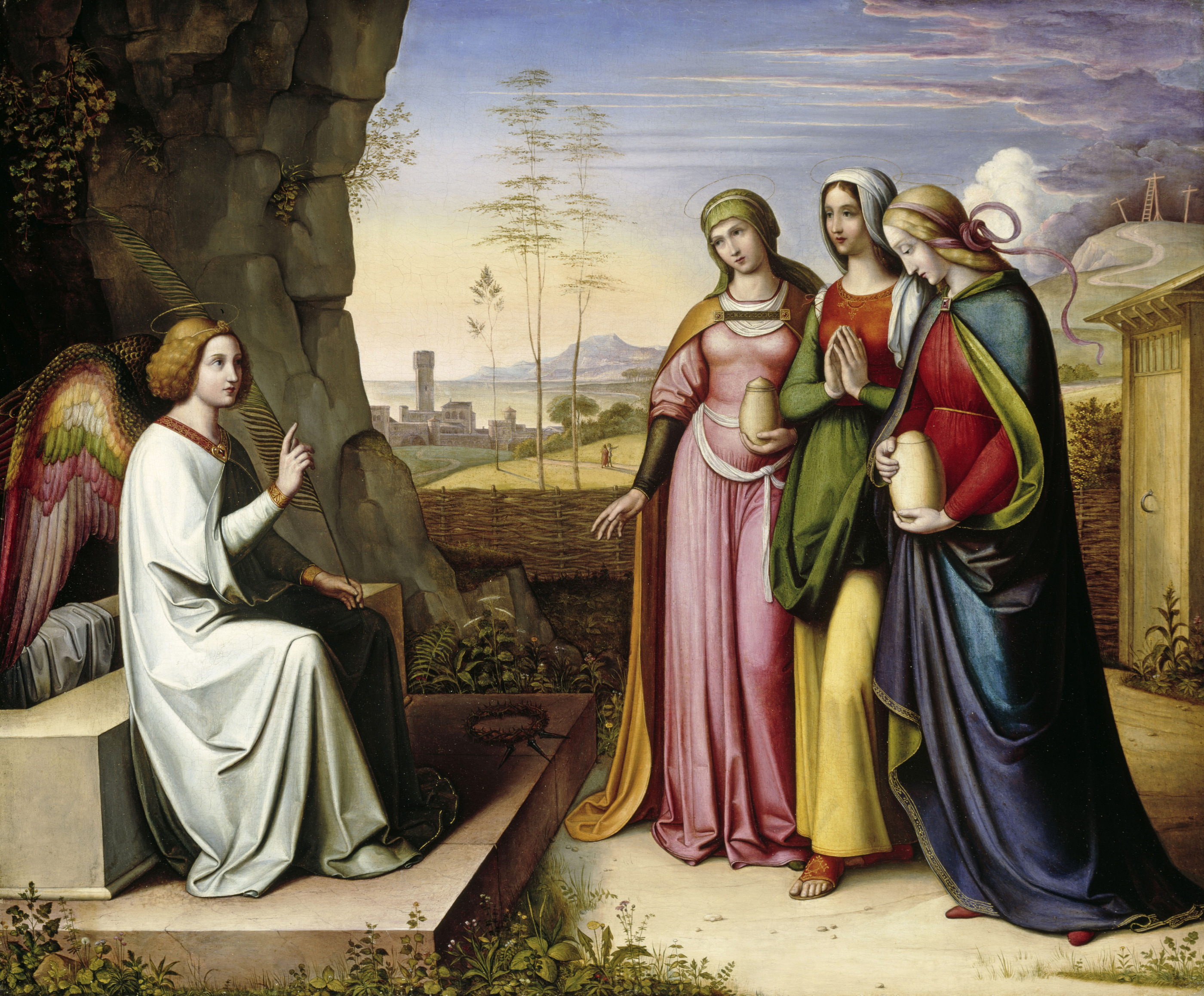
PAINTING OF ANGEL, WOMEN AT EMPTY TOMB OF CHRIST

God proved His love on the Cross. When Christ hung, and bled, and died, it was God saying to the world, ‘I love you.’ (Billy Graham)


“The point of the resurrection…is that the present bodily life is not valueless just because it will die…What you do with your body in the present matters because God has a great future in store for it…What you do in the present—by painting, preaching, singing, sewing, praying, teaching, building hospitals, digging wells, campaigning for justice, writing poems, caring for the needy, loving your neighbor as yourself—will last into God’s future. These activities are not simply ways of making the present life a little less beastly, a little more bearable, until the day when we leave it behind altogether (as the hymn so mistakenly puts it…). They are part of what we may call building for God’s kingdom.” (N.T. Wright, Surprised by Hope: Rethinking Heaven, the Resurrection, and the Mission of the Church)


The great gift of Easter is hope – Christian hope which makes us have that confidence in God, in his ultimate triumph, and in his goodness and love, which nothing can shake. (Basil Hume)


“Jesus’s resurrection is the beginning of God’s new project not to snatch people away from earth to heaven but to colonize earth with the life of heaven. That, after all, is what the Lord’s Prayer is about.” (N.T. Wright, Surprised by Hope: Rethinking Heaven, the Resurrection, and the Mission of the Church)


Christ the Lord is risen today, Alleluia!
Earth and heaven in chorus say, Alleluia!
Raise your joys and triumphs high, Alleluia!
Sing, ye heavens, and earth reply, Alleluia!

(first verse of “Christ the Lord is Risen Today,” a hymn by Charles Wesley from 1739)


 “Made for spirituality, we wallow in introspection. Made for joy, we settle for pleasure. Made for justice, we clamor for vengeance. Made for relationship, we insist on our own way. Made for beauty, we are satisfied with sentiment. But new creation has already begun. The sun has begun to rise. Christians are called to leave behind, in the tomb of Jesus Christ, all that belongs to the brokenness and incompleteness of the present world … That, quite simply, is what it means to be Christian: to follow Jesus Christ into the new world, God’s new world, which he has thrown open before us. (N.T. Wright, Simply Christian: Why Christianity Makes Sense)


And here are the questions. Read them at your own risk!  Living out God’s ways in this world can be disruptive.

Do you and I believe Christ’s resurrection is an epic moment that only has significance for people or does it also have meaning for all of Creation, the Creation that Paul writes is “groaning”?

What kind of people does God desire you and I to be? What does the holiness (what I could call “pure goodness”) that comes from being filled with God’s Spirit look like?

Can you and I as Christians be filled with holiness and the fruits of the spirit while simultaneously committing selfish violence against God’s earth and the living creatures of that earth?

Has the food you and I plan to consume on Easter Sunday been raised in ways that are in keeping with the fruits of the spirit and God’s abiding love?  Do we honor God by what you and I eat on this day?

In particular, if you and I plan eat meat, what do you and I know of how the people raised the animals from which the meat came? Did the farmer who raised that animal raise it kindly and with consideration to the unique needs and innate characteristics of that animal? Or did it live in deprivation and was it pumped full of chemicals and antibiotics and then slaughtered in a place that is inhumane to the animals and to the workers?

And if our answer to that last question was yes, how do you and I reconcile our choice with the loving, merciful God of Easter that we say we follow and love?

Will you and I open our hearts to the full meaning of Easter and the renewed eternal life God offers us, our neighbors, and all of Creation out of His love?

Will you and I choose to live out God’s love for the whole world on this most holy of days in the food that we choose to eat and the food we will say grace over?  Even if that means bucking tradition by not eating meat to make Easter a day of complete peace and grace? Or even if it means putting in the time to find a source of humanely raised meat and paying the true cost of it?

Will we, in other words, make what we eat harmonious with our worship of God and our love of Jesus?

And I end with this final quote from N.T. Wright (obviously a favorite Christian thinker of mine) from his book Simply Christian: Why Christianity Makes Sense.

“That is what worship is all about. It is the glad shout of praise that arises to God the creator and God the rescuer from the creation that recognizes its maker, the creation that acknowledges the triumph of Jesus the Lamb. That is the worship that is going on in heaven, in God’s dimension, all the time. The question we ought to be asking is how best we might join in.” 

To imagine all of Creation joining humanity and angels in praising God is an unreal image that I know may strain the credulity of some of my readers.  But the beauty and wholeness and holiness of that image is one of the reasons for my faith.

Let us worship God with special joy and fervor this weekend.  May you have a blessed Easter.

We can learn a great deal from farmers as we read the Bible.

Each year, the non-profit organization MOSES (Midwest Organic & Special Education Service) holds an organic farming conference in La Crosse, Wisconsin in late February. It has become the largest gathering of organic and sustainable farmers in the country and features a wide array of workshops, roundtables, exhibits, and social events.

I just attended it for the first time and came away more aware than ever of the complexity and challenges of farming, especially if you are trying to do so in a way that sustains the life of the land and water.

What especially struck me was how thoughtful, observant, patient, open-minded, and nuanced many of the farmers revealed themselves to be, whether they were plaid-wearing young millennials or middle-aged men who looked, well, farmers or the reserved Amish men I talked to at breakfast one morning. From patterns of weed growth to the body language of a cow, the farmer must observe and interpret carefully what is in front of him while prudently considering the context. Fundamentally, I sensed deep humility.

We all could benefit from engaging the Bible and God that same way. But too often we don’t.

A good example is the nature of human exceptionalism.

This comes to mind because of something I heard recently on Janet Parshall’s program, “In the Marketplace,” on WMBI, the flagship station of the Moody Bible Institute. On this particular day, Parshall was interviewing Wesley Smith, the author of The War on Humans and a blogger about human exceptionalism on the National Review’s website. The way Parshall and Smith spoke of human exceptionalism in relationship to the natural world exemplified how easy it is for all of us to read the Bible in simplistic, self-centered ways.

In the program, Parshall played a portion of a Conservation International video in which Julie Roberts speaks as Mother Earth, and addressing humanity, she solemnly states, “I have fed species greater than you, and I have starved species greater than you.”

Parshall and Smith used this as the stepping off point for several broad assertions. First, environmentalists are anti-human. Second, extreme environmentalists exhibit a common mindset that humans are worth less than other species, that we are a destructive cancer upon the face of the earth. Above all, Parshall and Smith shared the conviction that the concern people have for earth is one more symptom of a distressing falling away from the Christian truth of human exceptionalism.

It is true. Humans are exceptional.

We do understand that people are made in the image of God, unlike any other creature. Clearly, a great deal of the Bible is about the interaction between God and people. From the beginning, God has a special relationship with humanity.

Jesus also clearly states that humans are of more value than sparrows and sheep (although there is no suggestion that sparrows and sheep have no value).

And the testimony of history reveals humanity to be endlessly inventive and creative. One advance builds on the foundation of the previous. We work technological wonders that would astound people of centuries and millennia past. We delve into the mysteries of the universe, of the workings of atomic particles, of the microbiotic worlds in our guts and in the soil.

Napoleon on his Imperial Throne (Jean Auguste Dominique Ingres); Does this exemplify the character of human exceptionalism in the world we see in the Bible?

Napoleon on his Imperial Throne (Jean Auguste Dominique Ingres); Is this the kind of human exceptionalism God wants us to exercise in the world?

But Parshall and Smith fail to provide a complete understanding of human exceptionalism in two ways.

First, they ignore sin. This should temper any discussion we have about our elite status. In fact, in the story of Noah we experience God’s utter revulsion at the violence and sin of humanity, which doesn’t sound that much different from the reaction of environmentalists to the violence we are inflicting on the life of the earth today.

Second, if you read the Bible like a good farmer, you will find a whole view of exceptionalism that is very different in nature.

When Abraham is called to be the founder of the nation Israel, one might expect Abraham to be told that the nation of which he will be the father will enjoy extreme prosperity and even build its own empire. But read Genesis 22:18 – “And through your descendants all the nations of the earth will be blessed—all because you have obeyed me.”

In fact, if you read the Bible, it’s clear that the standards and expectations for Israel are higher than for other nations. Israel’s exceptional status comes from God’s grace and from God’s choice and it brings greater responsibility and greater expectations. They are called to be holy, to bear witness to God in how they live as a light to other nations and peoples. The people of Israel, to say the least, do not always welcome this kind of exceptionalism.

When Moses is called by God and has direct interactions with God, you would be hard pressed to say that Moses’ exceptional status was intended for Moses’ glory and for Moses to exploit for his own gain. He is called for God’s purposes and Moses actually finds that role challenging, fear-inducing, and extremely frustrating. Again, the expectations for those who are given exceptional roles are high.

The point of the God-given exceptional role is serving God’s purposes.

Prophets are similar in this way. Their unique role as bearers of God’s words and messages does not make for easy lives. They speak the truth. Their earthly lives are challenging and dangerous. They are tormented by the wrongs they see and the tragedies that will unfold.

The disciples are chosen by Jesus and have the exceptional blessing of daily interaction with Jesus and the opportunity to learn about God and the kingdom of God. There are times where it’s clear they hope their selection is for their glory, even arguing about who will sit at Jesus’ right hand in heaven. In fact, their selection is for a much more serious and humble mission. They are charged with serving God by spreading the gospel and making disciples after Jesus’ death and resurrection. All of them, according to Christian tradition, with the exception of John, died as martyrs in this service.

The Apostle Paul, whose life Jesus redirected in dramatic fashion, calls himself a servant of God.

The incarnation itself speaks volumes about God and the nature of how God exercises dominion over us.

We see in Jesus a God who cares about us, creatures who in comparison to God are limited and weak. We see in Jesus a God who cares about the poor and alienated and powerless. We see a God who reminds us of our common sinfulness, who calls us to repentance.

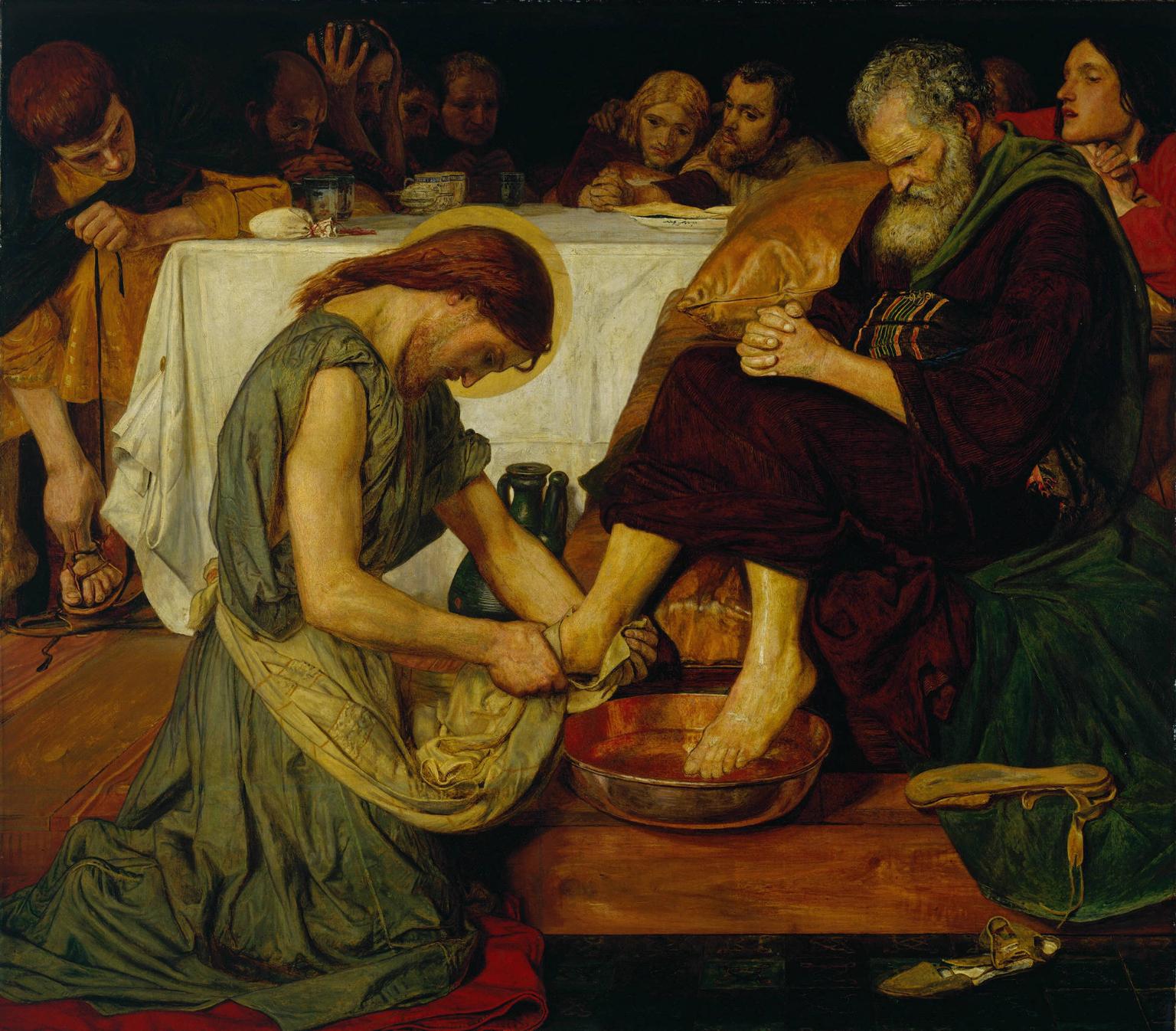
He is a shepherd willing to give his life for his sheep, a friend willing to lay down his life for his friends. He spoke of the first being last and the last being first. He washed the feet of his disciples. There was nothing in his life that communicated that life was about power, glory, and mammon.

I am struck, too, by the parable Jesus told of the ruler and the servant, which is recounted in Matthew 18: 21-35. In it, a ruler forgives the large debt a servant owes him but the servant puts in prison a fellow servant who owed him much, much less. This angers the ruler, and he punishes the servant. There is a strong sense that the ruler desires his servants to live out the same values that he, the ruler, demonstrates.

Ultimately, Jesus demonstrates love and mercy to humanity because God so loves the world. He restrains the power he has at his disposal for what is needed for the world and humanity.

Jesus Washing Peter's Feet (by Ford Madox Brown): The exceptionalism of Jesus.

Jesus Washing Peter’s Feet (by Ford Madox Brown): The exceptionalism of Jesus.

Do we deserve this? Do we deserve a God who would become human because of his love for us and for the whole world? Is exercising our unique power in the world for power and mammon and at the expense of the life of God’s earth in tune with the exceptionalism we see in Jesus and in the Bible in general?

The first line of Rick Warren’s best-selling book, The Purpose Driven Life, captures the point of our exceptionalism perfectly: “It’s not about you.”

To be fair, Wesley Smith, who is highly articulate and compelling, does acknowledge in the interview that environmental efforts to protect clean water and clean air are important. He says we have a duty to leave a “clean environment” to “our progeny and our posterity.”

But there is something off in that eloquent phrasing. The word “clean” is a word of neatness, a self-directed and sanitized contentment with the order and comfort of things.

Our real duty is far larger than that and far less human-centered. Our duty as it relates to God’s world is to keep the world in a condition that honors God, provides a beautiful and sustaining environment for our children, and provides a beautiful and sustaining environment for all of the rest of life. Our duty as carriers of God’s image is to protect creation’s integrity and wholeness even as we must use it.

The ultimate measure of our success at carrying out that duty is whether all of creation is thriving. A shepherd who has lost many sheep but still has enough of them to eat in order to survive is not a good shepherd.

What Parshall and Smith failed to acknowledge, too, is that Christians have largely failed to be leaders in the effort to care for Creation and, in fact, too often have been leaders and apologists for the diminishment of Creation.

The fruit of this is an unraveling planet and a conviction by many that to be Christian is to support violence against God’s world and to be self-focused and self-centered. Why would that faith and value system be of any appeal to people, like Julie Roberts, who sense the mystery and beauty of this world?

Janet Parshall has it exactly right when she says, “Ideas have consequences, and bad ideas have deadly consequences.”

I encourage you to make up your own mind about what it means to be made in the image of God, what it means to have been shaped from the soil, what it means to be a disciple of Jesus, and what that all means for how we should treat the world.

And I encourage you to do that the way a good farmer would – with nuance, patience, humility, an open mind, and an open heart.

In the last post, I wrote that we need the equivalent of World Vision, the $2.67 billion Christian humanitarian and community development organization, to bring tremendous resources to bear on the effort to preserve and mend God’s earth. I promised to lay out some ideas of the work that new organization might do and how it would be funded.

I didn’t expect to be writing this and the last post. I actually have a spreadsheet chockfull of blog post ideas that I’ve been working through and adding to. This post and the last are not on that spreadsheet.

I had envisioned this blog being a place for me to share ideas, stories, and insights about the whole faith that includes Creation. I hoped it would inspire other Christians to hold onto a whole faith and act on it. Perhaps, I thought, it might let Christians who already care about God’s earth know that they are not alone. I desired, too, that it might show people outside of the Christian faith and who care about this living planet that a whole Christian faith shares their conviction that the world has reason and value for existence beyond serving humanity.

I still believe there is value in all of that and, God willing, I hope this blog will be of value in those ways.

But the more I read and learn, the more I’m convinced that my conception of the blog was too redolent of an ivory tower mentality – safe and theoretical but not incarnational. Getting the small (tiny? infinitesimally small?) number of folks who might read this to take small actions in their individual lives for God’s earth as part of a complete Christian life will hardly move the needle.

A friend of mine once made an offhand comment that has stuck with me. It was something like: “I wish Christians worried more about being effective than being correct about every detail of their doctrine.”

I realize I may well be guilty of that same sin.

Part of my motivation in writing this is that I want to be in the right theologically. I want people to come to realize a whole Christian faith necessarily includes a recognition that God’s Creation is part of God’s redemption plan.

But what does that matter if the truth of that theology is not lived out and does not become the reality we see around us?

Not much at all.

We must bear fruit.

So the test of what I am about to suggest for the activities of this international, large-scale organization is this – will they have a chance of having an impact at the scale of the problems God’s earth faces?

Let’s dive in:

Channel Christian philanthropy to conservation at an unprecedented scale: Giving to religious organizations is the number one category of giving in the U.S. Giving by churches and individuals in a concerted way would be a way in itself for churches and individuals to have powerful impact for the work to restore God’s earth. The organization I propose would need to create a fundraising network and system that would be dynamic, ubiquitous, and compelling. It would use those funds for the activities described below and for selectively funding existing organizations that are already doing key work.

Whole Kingdom projects: Land, water, and community skills are the true source of community wealth. This organization would invest resources and staffing in strategic conservation projects that combine nature conservation with sustainable economies and healthy communities. In some cases, these projects would be started fresh. In some cases, where something similar is already being done, we would invest and support the existing project so it could be done even better. Gorongosa Park in Mozambique is not necessarily a full example but it reveals what a difference investment can make in bringing stability for nature and for local communities. What if, for example, investment was made in working with local communities in Haiti to restore a large forest and to have around that forest core sustainable agriculture and community development that relies on sustainable energy so that people no longer needed to cut down trees for firewood? This would benefit people and Creation. I come from a long line of worst-case scenario worriers so trust me I realize that these kinds of ideas have many variable and many ways to fail and may even be naïve. But ultimately we need to create new economies and new ways to live with the land as communities. Let’s start with where people and God’s earth are suffering the most.

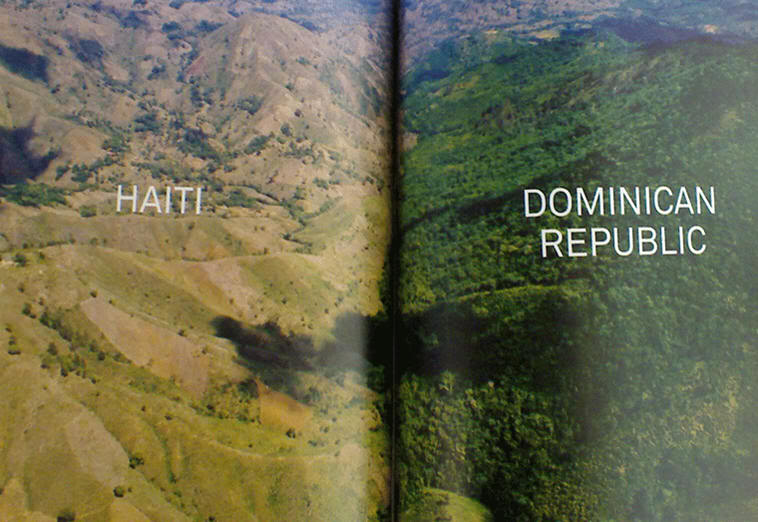
In 1923, over 60% of Haiti was forested. In 2006, less than 2% was. This is a calamity for people and wildlife in Haiti.

In 1923, over 60% of Haiti was forested. In 2006, less than 2% was. This is a calamity for people and wildlife in Haiti. There is an opportunity to integrate community development and ecological restoration there.

Leadership Project: This project will inspire, educate, and train Christian leaders in business, government, and communities to be whole faith leaders. Leaders have a singular and tremendous impact on our world. The potential return in investing in leaders’ hearts and minds might be greater than any other investment. Imagine if Christian leaders throughout the world led their organizations and communities in ways that reflected a whole faith, that valued God’s earth for being God’s, for being vital for the lives and health of our neighbors and especially for the poor? As much as possible, this project would be led by other Christian leaders and would create peer groups among Christian leaders who would support each other and hold each other accountable.

New stories and art: There is a tendency to pursue left-brained solutions to problems in our world, but the right-side of our culture’s brain must also be engaged. In other words, the sickness of our world is not just a question of wrong policies and systems. It is also about the state of our hearts. And what reaches the heart, in addition to God’s Spirit, is art. We need movies, books, graphic novels, television shows, plays, and music that integrate Creation and that celebrate people and communities who seek to mend Creation out of their faith in God. We also need art that challenges and that has a prophetic voice.

Shape Policy and Political Discourse: If you can shape the terrain of ideas and values that frame the terms of a debate, you are more than halfway to shaping what happens in the world. Think tanks like The Heritage Foundation have done just that but have done so, despite their “conservative” labels, with an emphasis on values and thinking that subtly tempt our hearts away from living out values originating in Jesus Christ. We need a think tank that, to build off of the Heritage Foundation’s mission statement, formulates and promotes public policies based on the Christian principles of compassion, justice, creativity, love for our neighbors and for ourselves, and caring for God’s earth. We must think through how those principles can be applied in a fallen world. We must battle, with truth and love, ideas that come cloaked in respectability and sometimes even in Christian rhetoric that are actually antithetical to the incarnational, loving God we find in the Bible.

New church network: As I wrote in the last post, investing efforts in persuading more churches to have and live out a whole faith is not, in my opinion, the most effective way to actually preserve and mend God’s earth at this crisis point. It should be done, of course. I want to help that happen. But there is too much inertia in the current structure of many churches that works against a whole faith in the short term. What if we formed a new type of church or a new type of missional order or a hybrid of both? What if this new form of Christian community integrated God’s earth into the life of the community and the way it worshipped? What if these new churches owned significant amounts of land and demonstrated in each of their particular locations good ways of producing food and creating habitat? What if these new churches also served their communities while also contributing resources to the larger organization? Christian youth could serve and learn at these places during summer vacations and as part of internships, thus incubating new Christian leaders. Christian business people could help make these places well-managed and effective. These would also be communities where people who have sacrificially decided not to have children of their own for the sake of God’s earth could be supported when they adopted and could be linked to other families in covenant relationships if they didn’t.

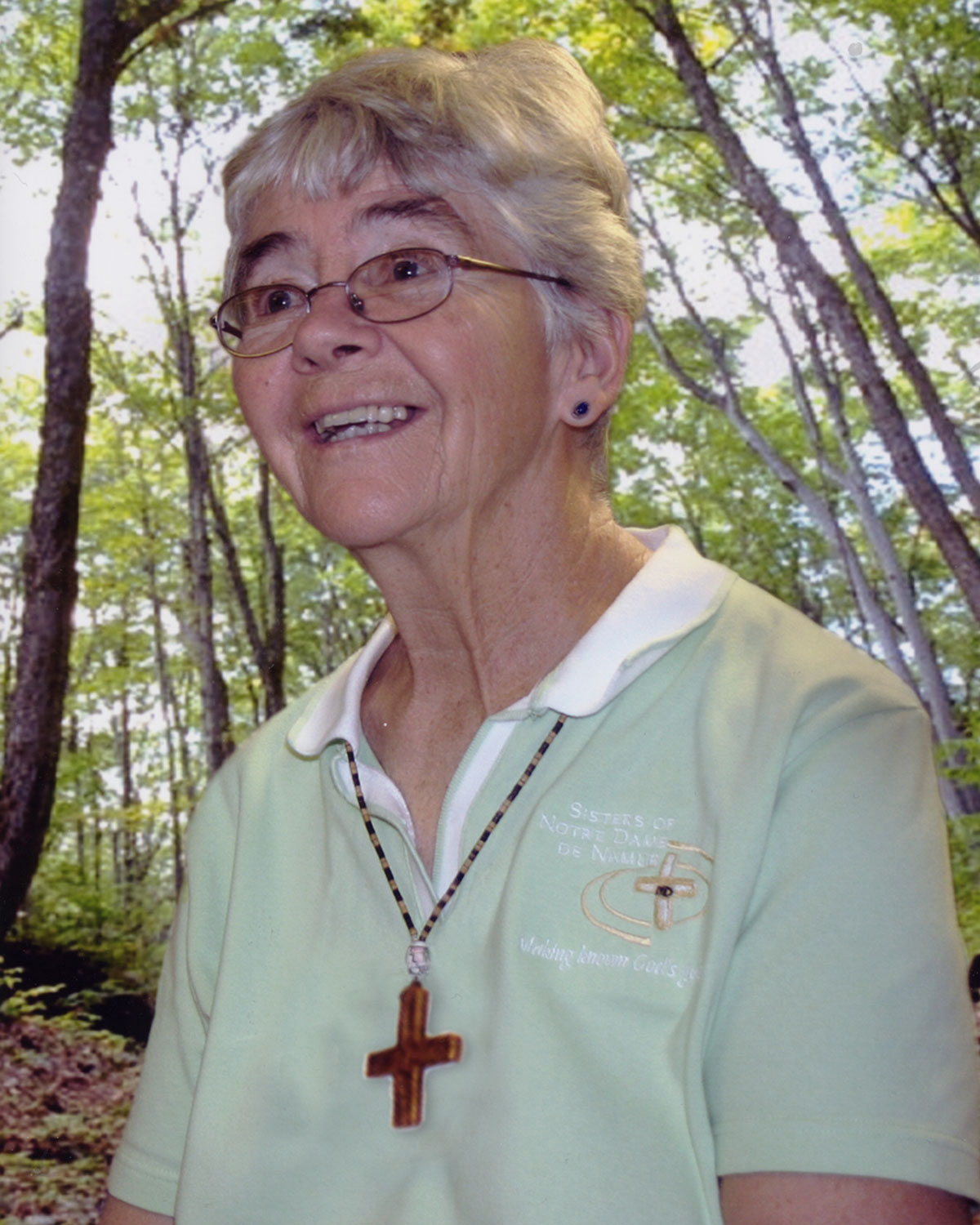
Prophet protection: When it comes to the borderlands where earth-consuming forces seek to extract every bit of wealth the can from the land and water, the community leaders who speak up against those forces are extremely vulnerable. This is where laws are rarely enforced, where prophets are easy to kill. Perhaps you heard of some of them when they were alive? Dorothy Stang, Edwin Chota, and Chico Mendes are examples. It’s more likely that you heard of them after thy were murdered. Christians should stand in solidarity with those vulnerable prophets. People, resources, economic support, social media attention, leaderships networks should be brought to bear by Christians to protect them. These prophets speak for the most vulnerable communities, the most vulnerable places. These prophets are nerve signals to their communities and to the world as a whole that precious peoples and places are in danger of being lost. We must respond.

Dorothy Stang was a Christian who spoke up for the poor and the forests of Brazil, angering loggers and ranchers. She was shotgunned to death 10 years ago.

Dorothy Stang was a Christian who spoke up for the poor and the forests of Brazil, angering loggers and ranchers. She was shot to death 10 years ago.

A theological think tank & seminary: Within the Church, there is a need for a compelling and tenacious voice that presses the Church in theological and prophetic ways to change its theology and its members’ way of life to reflect a whole faith. This would combine theological vigor with dynamic, challenging advocacy. It would even press for new practices of the faith. It would also be a new seminary that trains church and ministry leaders in an incarnational whole faith for the new church/missional order I described earlier.

Prayer & laments:  This organization would be a catalyst for unceasing waves for God’s earth and the people who are trying to protect it and the people and creatures that suffer due to its devastation. As Christians, we believe prayer opens us to God’s Spirit and changes our hearts. We also believe that God will respond to prayer, sometimes in miracles and interventions that we can see. It is also time to lament. The destruction of the land and water of a community devastates the spirits of those people. People who care about God’s earth, like many scientists and conservationists, and who have seen its destruction are psychologically devastated. They need places to go and laments to sing that will allow them to express their sorrow and loss. Christians should come alongside those people and share their pains with new rituals and songs and pieces of art. They should mourn with them.

* * * * *

For 14 years, I was involved in fundraising for nonprofit organizations and now I work for a private operating foundation. This has given me a full appreciation for how important funding is to enable organizations to carry out activities and have an impact. With that in mind, I have some thoughts about where funding would come from for the organization.

Christian philanthropy: A fullcourt press would be applied to gathering financial support from Christians, their foundations, and their businesses. The reality, of course, is that many Christians don’t see the preservation and restoration of Creation as important as many other elements of the work of the kingdom. This could be very hard and challenging work. The fundraising would need to be imaginative and compelling in making the case for the importance of this organization’s work.

Non-Christian philanthropy: If this organization is uniquely effective, philanthropists of all sorts will be good prospects for joining in the effort.

Social enterprises: An emerging form of nonprofit funding and nonprofit charitable activityis the social enterprise, a business that advances the nonprofit organization through its actual activities and by generating money. A great example is Goodwill, which helps people with barriers to employment by employing them in their retail operations. The profits made in the stores then help fund other job training and education activities Goodwill carries out. Let’s turn loose the creative entrepreneurial talents of Christians into new social enterprises that are good for God’s earth and generate funding. Examples might include sustainable farming operations (think Newman’s Own but more vertical, from farming to processing), ecotourism, and even art and culture production.

Support of new churches and existing churches: If a new network of churches was developed, these churches would, as part of their establishment, commit to funding the larger organization on an ongoing and significant basis. Extensive efforts would be made, too, to reach out to existing churches and seek out support commitments over time.

Volunteer corps: Having enough resources to do what needs to be done is not just about raising funds. It is also attracting people and resources at no cost or low cost so your dollars can be stretched further. Habitat for Humanity and other organizations understand how to harness the power of volunteers. An army of volunteers and interns would be an important component of this work. Whereever possible, youth from around the world would be engaged in projects that advance the movement as well while giving them skills and experiences they can carry into the rest of their lives.

Endowment: Colleges are big believers in endowments – gifts pooled into funds that generate income for the college in, theoretically, perpetuity. Right from the start, this organization would seek out gifts, especially bequests, that would build this endowment so that the organization would have an assured stream of income to augment other fundraising efforts. The endowment funds would, of course, be invested in Creation-friendly and community-friendly ways, thereby advancing God’s kingdom as well.

* * * * *

I have two last thoughts. One is that the traditional organizational trajectory of starting at a very small level may not be wise at all in this case. The challenges and needs we face are at a tremendous scale. And the long-term success and impact of such an organization would depend in part on starting big and having an immediate impact on a large scale that would attract additional large-scale funding. I know that sounds crazy.  But that is the reality of the situation.

Second, I’ve been reading The One Thing, and it’s made me realize that trying to do all of the things I’ve just proposed all at once might mean scattered, meager progress on a very small scale. Priority should be given to one of those efforts starting out. Frankly, I’ll need to give more thought to which one that would be. I would need wise counsel from other to helps figure that out. What do you think would be the wisest initiative to begin with?

Writing this has made me realize the daunting scale of the challenge in front of us. Can we actually stop the inertia of millennia that has drained and diminished the vitality of God’s earth?

I don’t know. I don’t believe in false hope.

But I do know It’s time for the hearts and faiths of Christians to be fully and energetically committed to bearing fruit in the form of green, verdant, life-filled, justice-permeated communities.