Archives For Agitations

Earlier this year, I had the opportunity to speak at length on the phone with a Christian I had met at a gathering of conservationists and other community members in central Illinois. He and his wife are active members of their church. They also happen to care deeply for God’s earth.

This wasn’t always the case.

The turning point came in 2005 when he had back surgery while living in Ohio and couldn’t walk for some time. When he began to recover, he made it a goal to walk all 16 Metro parks in Columbus. The experience renewed his love of nature. Later, when he retired and returned with his wife to Illinois, he completed a Master Naturalist program. This, in turn, led him to get further involved with conservation through a local non-profit organization that preserves and restores natural areas. As part of their desire to live as simply as they could, they bought a seven-acre property, built a passive solar home, and have been restoring the land to native natural habitat.

Yet, he has found that not everyone at their church sees the connection between the Christian faith and the his and wife’s attentiveness to Creation.

He vividly remembers being asked by a fellow church member, “Why do you waste your time with that?”

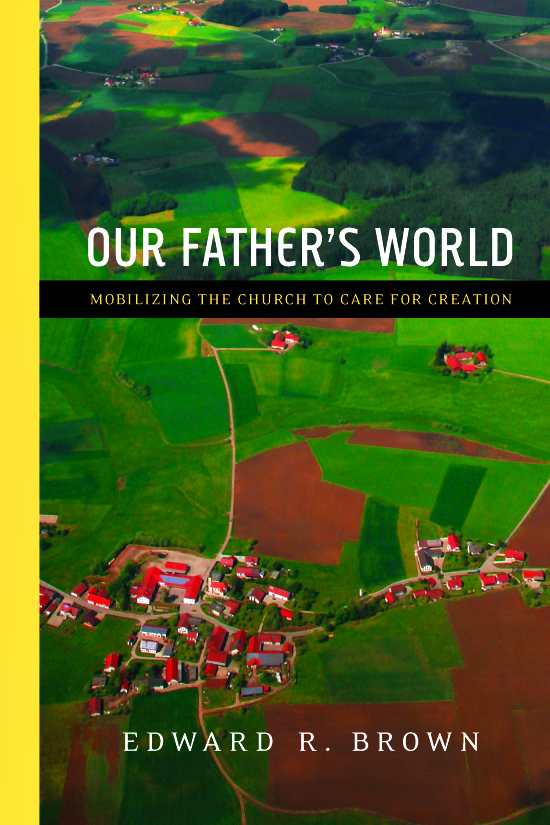
In Our Father’s World: Mobilizing the Church to Care for CreationEdward Brown recounts a similar experience. He was having a conversation over coffee with a friend he deeply respected who had been the principal of a missionary school that both Brown and his wife had attended early in their lives. When Brown describes the mission organization he had founded (Care of Creation) and his personal commitment to environmental missions, he could tell this friend was distressed by all that he was saying. Here’s how Brown recounts his friends’ words to him: “He finally put down his cup of coffee, looked me in the eye and said, “Ed, what in the world does this have to with the Great Commission?””Our Fathers World #3484 IVP FINALOur Fathers World #3484 IVP Version

If you’re Christian and you’ve expressed a concern for God’s earth, you’ve probably faced something like this moment yourself. So how do you answer those questions?

The following excerpt from Our Father’s World, published by InterVarsity Press, will be helpful for you to read. You’ll see that Brown places a commitment to preserving God’s earth within the context of a whole Christian life.

He also pushes back. He highlights the negative consequences that unfold when Christian missions don’t present a complete faith that includes a commitment to shepherding God’s living world.

Here is the excerpt:

If you’ve stayed with me this long, you have a pretty good idea of why I believe caring for God’s creation has everything to do with that final command that Jesus gave his disciples: “Go and make disciples of all nations” (Matthew 28:19). I’ve made a case for full, creation-restoring redemption. But my friend’s question is a serious one. He has seen the primary message of the gospel of Jesus Christ diluted by various kinds of “social gospel,” and he believes he has some reasons to be nervous. Is this just one effort to make a timeless gospel relevant, focusing on human needs but cutting out the essential heart of redemption and forgiveness of sins through Jesus’ sacrifice on the cross? The history of Christian ministry is littered with the carcasses of organizations that attempted to adapt to the needs of the moment and in the process lost the spiritual power that made them unique.

So how is caring for creation different? The first part of the answer requires a review of the foundation laid in the first part of this book. Christian missions is the effort of the whole church to extend Christ’s ministry of reconciliation (see 2 Corinthians 5:11-21) to all nations and all peoples, making disciples and “teaching them to observe” all of Jesus’ teachings and commandments (Matthew 28:20), in effect teaching them to live in ways that will reverse the curse of sin throughout all of God’s creation.

We’ve seen that this process involves a restoration of each of the relationships broken at the time of Adam and Eve’s sin: our relationship with God is restored in salvation; our relationship with ourselves in sanctification; our relationship with each other in koinonia, the restored community of the church; and our relationship with nonhuman creation in learning to live in harmony with it again, a process reflected in the ancient Hebrew word shalom….. If, then, the purpose of Christian missions or ministry is the accomplishment of this kind of full redemption, including creation care is not a distraction from the main goal. It is the goal.

Countries like Kenya have experienced more than one hundred years of missionary presence, but their current state shows no improvement. Depending on what you want to measure, Kenya is possibly a great deal worse off than before the gospel arrived. Is there a correlation between this and the truncated view of the Christian missions we’ve promoted for the last century? If the biblical goal is shalom, but we thought we were finished when we delivered a simple message of salvation, it’s no wonder things haven’t worked out quite as well as we might have expected. Bad theology – or at least incomplete theology – will always give bad results.

Jesus warned his disciples of the dangers of casting out a demon and leaving the “house” swept, cleaned but unguarded. That demon returns with seven others more powerful than itself (see Luke 11:24-25). We have driven out the demons of paganism with a lightweight gospel of personal salvation. Today the churches in these countries are reaping the harvest. If we’re honest, the results of this are evident not just in the daughter churches of missionary-receiving countries, but also in many of the mother churches that sent missionaries out in the first place. Bringing creation care and missions together will restore the theological integrity of the missionary enterprise.

My sons and I have been watching many of the NCAA Men’s Basketball Tournament games, and one of the things I’ve been struck by is the intense teamwork. Recognizing that just one loss will bring their season to a sudden end, the players give everything they have together. They exult in each other’s successes. And they press each other hard to do things right even under tremendous pressure.

Shouldn’t church be the same way?

But when the Barna Group surveyed Christians across the country a few years ago, they discovered that “…only 5% of people say their church does anything to hold them accountable for integrating biblical beliefs and principles into their lives.”

George Barna, the study’s director, said this of those findings:

“One of the cornerstones of the biblical concept of community is that of mutual accountability. But Americans these days cherish privacy and freedom to the extent that the very idea of being held accountable by others—even those with their best interests in mind, or who have a legal or spiritual authority to do so—is considered inappropriate, antiquated and rigid.”

It’s in that context that I describe the first of many features of a whole faith church.

(As background, in Needed – A Whole Faith Church, I asserted that preserving and renewing God’s earth will only become part and parcel of what it means to live a Christian life when churches have a whole faith woven into their worship, theology, and culture. I’m beginning to work out what that would look like.)

Ironically, the first feature I’ve identified does not explicitly relate to God’s earth at all. It’s this simple thing – membership in a whole faith church would not be a casual association but a deep commitment to being a follower of Jesus, to the church, and to other members of the church.

Membership, in other words, would mean something profound in a person’s life.

An article in Leadership Journal included this provocative statement:

“The church should be less like a cruise ship and more like a battleship, says Ken Sande of Peacemaker Ministries. Rather than emphasizing their casual atmosphere and fun activities, Sande says it’s time for churches to raise the bar, to focus on a serious mission, and ensure that every person aboard serves a vital function.”

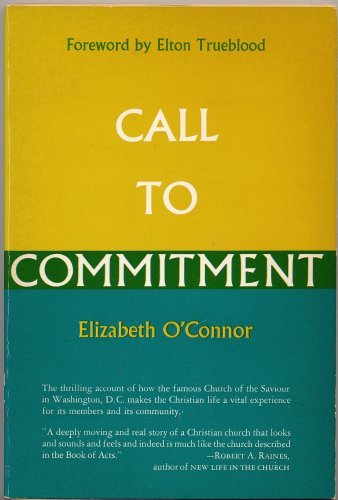
To get a sense of what that might look like, I’d encourage you to read Call to Commitment by Elizabeth O’Connor. First published in 1963, this book chronicles the beginnings and development of the Church of the Saviour in Washington, DC which attracted considerBook imageable attention for its unusual approach to church life and the devotion of its members to living out that faith together out in their community.

The leading figure in the origin of this church was Gordon Cosby, and one of his formative experiences was serving as a chaplain to the 101st Airborne during World War II. Cosby discovered that the average self-avowed Christian in the unit wasn’t ready to deal with moral pressure and difficulty of any sort. The faith these Christian men expressed loyalty to and the way they lived had been shaped more by the culture of their family and community than by a deep personal commitment to God.

A turning point was when Cosby led a man named Joe to profess a faith in Jesus. Cosby was delighted and anxious to see what a difference that faith would make in Joe’s life. When Cosby checked in with Joe’s commanding officer a short time later and told him of Joe’s conversion, however, he was in for a surprise.

“If Joe’s a Christian, “ he said, “nobody in the company knows it.”

So when Cosby and a tight-knit core of other committed Christians began to come together to form the Church of the Saviour in a house in Washington, D.C., fostering Christian integrity was a critical concern.

The following are key elements of what membership involved at the Church of the Saviour.

Extensive education requirements: A person desiring to be a member was required to take six courses in their School for Christian Living. In addition, as part of the process to becoming a member, a sponsor was chosen for that person who could get to know the member on a deeper level and help the member develop further in his or her spiritual life.

Ongoing growth in faith life: The School for Christian Living offered elective courses to enable people who had become members to continue to grow in their faith. Personal study programs were also encouraged.

Sacrificial commitment: Sacrificial giving was expected and all members participated in a mission group that met regularly not only carry out that mission activity but to also worship, study, and pray.

All members are ministers: Each member of the church was seen as a non-professional minister. For this reason there was a concerted effort to identify the particular ministry gifts of each member and to find ways for those gifts to be expressed in the church. Through an ordination service for laity, the church as a whole confirmed a clear role that the particular member was called to fill.

Powerful vows of membership: The book details the vows that the first members took when the church was launched in 1947. Here are just some of the statements:

“I unreservedly and with abandon commit my life and destiny to Christ, promising to give Him a practical priority in all the affairs of life. I will seek first the Kingdom of God and His Righteousness.”

“I commit myself, regardless of the expenditures of time, energy, and money to becoming an informed, mature Christian.”

“I believe that God is the total owner of my life and resources. I give God the throne in relation to the material aspect of my life. God is owner. I am the ower. Because God is a lavish giver I too shall be lavish and cheerful in my regular gifts.”

Each year, by the way, existing members renewed their membership vows as a way to remind each other of what they are committed to and their commitments to each other.

Living a Christian life: Members were expected to live a Christian life. Here’s how Gordon Cosby put it in one of his sermons:

“It is fundamental to everything which we do as Christians, that we personally develop a style of life which is recognizably Christian. This means that in our family groups, in our businesses and our government offices, when we walk in, a light goes on.”

In other words, a deep commitment to God will lead to a common Christian culture that is expressed by Christians in everyday life decisions 24/7.

The only way a church will be strong enough, however, to be a community of people where God’s ways are lived out in every phase of life (including the cherishing of God’s world) is if being a member of that church really means something.

An early brochure about membership in the Church of the Savior highlighted the danger of being a fully committed member of their church along with other disciples of Jesus: “It is indeed dangerous for if one becomes committed to this way, all life will be different and every sphere of one’s existence involved in the change.”

When was the last time your church described membership as a dangerous thing?

I realize as I write this that a sense of intense mission is one of the things I find missing in the churches my family has visited as we look for a church home.

On the other hand, I realize, too, that intensity and deep commitment to church have too often given birth to cults, abuses, and narrow, harsh interpretations of the Christian way.

Nevertheless, the Bible and many Christian thinkers have long asserted that becoming who God wants us to be happens best and most thoroughly when we are in close, committed, loving fellowship with others.

And for everything else in a whole faith church to work, that closeness, that commitment, that willingness to be accountable to each other must be present.

This is a leap of faith we must be willing to take.

In the last blog post, I asked this question – when will preserving and renewing God’s earth be part and parcel of what it means to live a Christian life?

Here’s my answer – that will happen when churches have a whole faith woven into their worship, theology, and culture.

This is a radical thing to propose.

Many Christians would flatly deny that caring for God’s earth is an essential part of being Christian. Others would give lip service to that ideal while recoiling from any call to tangible action that might inconvenience them, much less challenge them.

You will find Christians, of course, who care deeply for God’s earth. You are likely one of those already. You live in thoughtful, self-sacrificing ways outside of church. You may even lead or support activities in your church – like recycling or improving energy efficiency – that move the church toward collectively being more responsible in its stewardship of God’s earth.

These are all good and worthy of honor. That has probably not always been easy in your church community.

But if we look with eyes wide open at the state of God’s earth around the world and the lack of concerted action by churches and Christians in addressing the earth’s desecration, then it is painfully clear that what is being done is not enough.

Earth stewardship too often is one of a number of activities that are in orbit around the core life and culture of a church. In no fundamental way is a loving concern for the life of God’s earth integrated into a church’s DNA.

It is like a mother and father who take their family on a two-week summer vacation trip each year but otherwise neglect their children and rely on nannies and school activities for engaging their kids. For years the parents are able to pursue their professions, interests, and hobbies unhindered. They are dramatically successful and accomplished in every way. But they eventually reap what they have sown. Their kids have troubled adolescent years. Later, to the parents’ surprise, the children turn out to be selfish and uninterested in visiting the nursing home where the parents end up, alone and full of regrets.

What those parents needed to do was not plan even more special vacations or even better birthday parties. They needed a whole different value system that permeated the way they lived and the way they interacted with their children every day and every moment.

Similarly, what church communities need is an awareness deep in their culture and worship that the salvation God ultimately offers is the healing of all Creation. They also need an urgent, church-wide commitment to protecting and healing God’s earth as part of their membership’s united efforts to help make God’s will be done.

Can this completely happen in existing churches? I’d like to think so, but I don’t know.

Established institutions have a hard time changing. It is difficult for all of us imbedded in our culture to distinguish what about our values is cultural and what is the fruit of hearts and minds fixed on God. It will be much easier and instinctive for denominations, theologians, pastors, and long-time believers to dismiss these concerns as secondary or even heretical based on long-standing theologies.

For those reasons, I can’t help but believe it is time for new wineskins.

It is time for new whole faith churches.

These wouldn’t be churches for everyone. They would be, however, cherished church homes for people who have been spiritual nomads to this point. They would be homes for people who love God so much they find it hard to worship when they can hear the cries of people and the non-human life of this world who are falling, metaphorically, into a pit that we ourselves have helped dig. They would be seeds of larger change as well.

I write all this with trepidation. Yet, I see no other way.

From Thursday to Saturday, I joined 4,000+ people at the MOSES 2016 Organic Farming Conference that is held in La Crosse, Wisconsin. This annual conference, organized by the non-profit MIdwest Organic and Sustainable Education Service, is now in its 27th year and is the largest of its kind in the country. (It may also, by the way, be the largest gathering of flannel outside of a lumberjack convention.)

I felt fortunate to attend as there may not be a more important topic than farming that relates to how we treat Creation.

Farming is where human culture intersects with God’s earth in the most dynamic, ongoing, transformative ways while still leaving land and water as land and water. With 40% of the earth’s non-ice terrestrial surface being used to grow food, how we farm has a tremendous impact on the health and vitality of God’s earth as well as on the health of all of us.

With all of that at stake, you’d think Christians and the Church would pay great attention to discerning the proper ethics and principles that should make up the culture of agriculture.  But that rarely seems the case.

And that needs to change.

So who am I to be engaged in this discerning? It’s a bit of a mystery how someone raised in in inner city Chicago could find himself in workshops learning about cover crops, soil sampling, glomalin, high tensile fencing, and the workings of the FSA (Farm Services Agency). That I would find it so compelling is an even bigger mystery.

But here I am, and here are just a few notes and anecdotes from the conference that I hope you find meaningful.

I was taken by the goodness and passion of so many of the farmers there. I met a woman from Minnesota who, along with her husband, is raising pastured animals and other food outside of a small town. They were inspired by the books of Joel Salatin, a Christian farmer, and they are just getting by as they slowly build their business. Yet, they are working their hardest to produce healthy food in ways that work well for the animals and the land. She admitted to be a person who for most of her life has been most comfortable with animals and less so with people. Yet, out of necessity, as they sell their products directly to customers, she is finding pleasure and satisfaction in talking with people about their farming there. She and her husband have faith that this will eventually pay off.

In the midst of the positive energy of MOSES, there were also notes of concern and even despair about world and national trends. Wildlife continues to decline. Did you know that there has been a 90% decline in monarch butterfly populations in the last 20 years? Weather patterns are becoming more severe. A farmer told of how a wind storm destroyed their orchard, and that those kinds of wind storms are becoming more frequent and more powerful. And at times, our own government works against the interests of what is good and what the public and God’s earth need.  Instead, it too often works for people and organizations wholeheartedly in thrall to money,. Another Minnesota farmers said these haunting words based on her own experience and those of others: “Our laws don’t seem to be protecting us.”

Yet, the relationship between people with open, loving hearts and the land they tend and care for can be tender and deep. The farmer, whose quote I shared at the end of the last paragraph, also said this, “We love this land so much.”

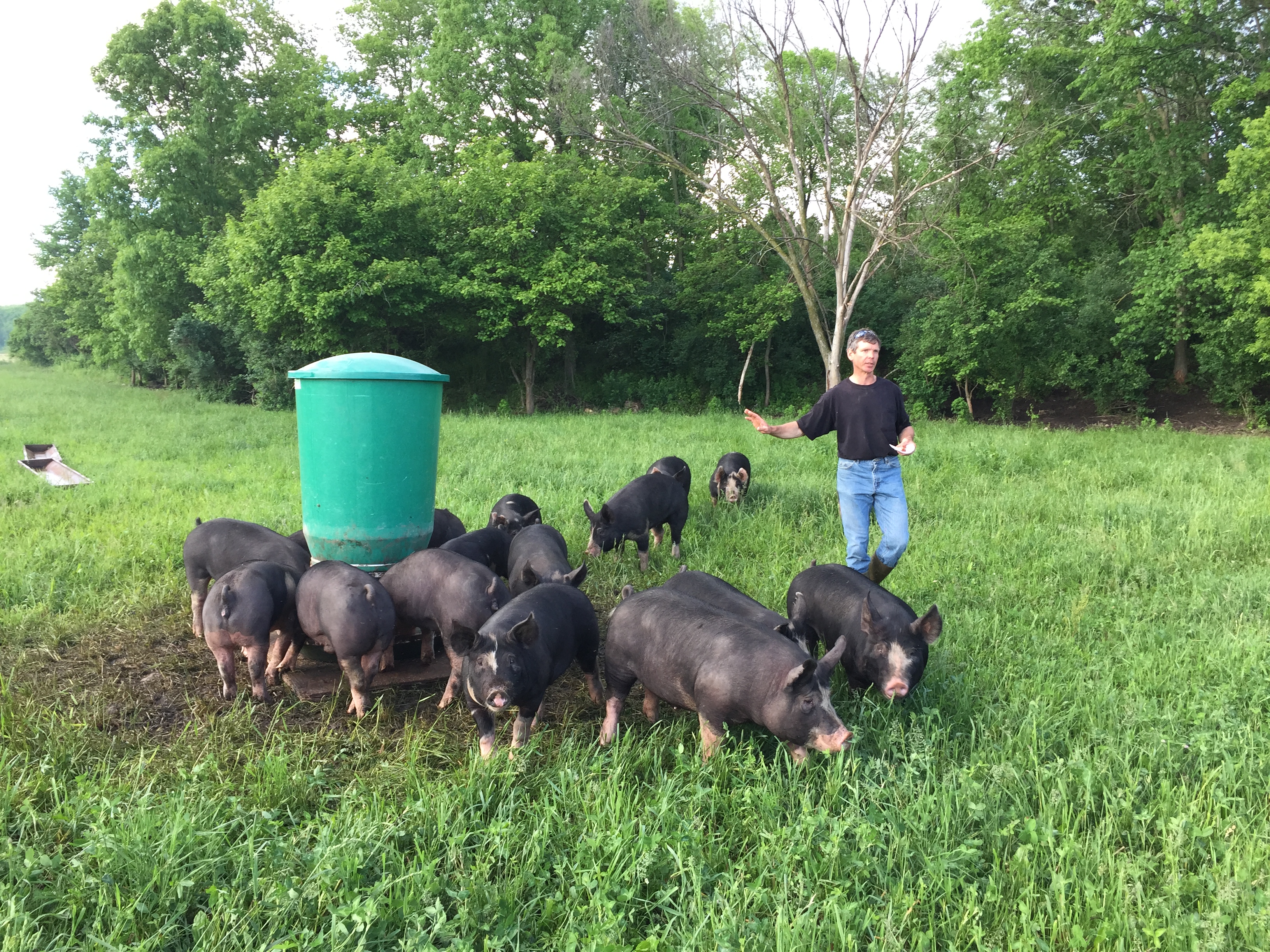
Several farmers I met and heard made the emphatic point that you will not make lots of money raising livestock on pasture in ways that are good for the animals. One Wisconsin farm where pigs are grazed on pasture in multi-age groups with much consideration for their welfare has five goals: (1) financial sustainability, (2) environmental sustainability, (3) top-level animal welfare, (4) top-level food quality, and (5) overall system robustness. He and his wife do their best to optimize those goals and must continually tinker, rebalance, and refine their system. When you eat food, are you eating food from a farm that cared about all of those elements? Are you and I supporting farmers who have that kind of value system?

I was struck by how adaptive, attentive sustainable farmers need to be. Every year is different. Every field is different. When one part of your farming system changes, it has impacts on the other parts of your system. Ray Archuelata, a conservation agronomist with the Natural Resources Conservation Service (NRCS), explained during a day-long course on enhancing living soil that he and his fellow instructor weren’t there to tell attendees exactly what tools to use in every situation. Instead, they wanted to inspire the farmers to work from an ecological consciousness and awareness and figure out the exact means on their own land.

The soil is central. A common theme was that creating healthy soil is the central task of the sustainable farmer. Healthy soil leads to healthy plants which lead to healthy foods which leads to us, the consumers of those foods, being healthy. How fitting that Genesis describes God forming Adam out of the ground and that “Adam” itself is related to the Hebrew word “adamah” which means soil or ground. Check out this video about soil stewardship using cover crops and livestock that is authentic and inspiring.

Human integrity = ecological integrity. This is a statement that Archuelata made several times. I believe that what he means is that the degree to which the natural systems of the earth will thrive is determined by the degree to which we have as much integrity in applying our core values to our stewardship of nature as we do in treating family, friends, and neighbors. Integrity, like God-centered values, is not meant to be compartmentalized.

I hope you will join me in praying for the lives and success of farmers and their families as they respond to a calling to work the earth while at the same time causing it to flourish and thrive.


In a sermon on Sunday, the pastor of the church I attended that day told the story of how he had learned to adjust his response to the usual question that seatmates on a flight ask each other – “So what do you do?” Before he made the adjustment, he had always answered directly, “I’m a pastor.” He found the conversation faded out shortly thereafter.

To create a different (but still truthful) context for a longer dialogue with fellow traveler he has begun to answer differently. The essence of his new response is this, “I’m with a non-profit that builds hospitals, feeds the poor, cares for orphans, helps people live more meaningful lives, and builds community.” The pastor said this typically generates enthusiastic curiosity. People want to learn more.  I gathered they want to talk further even after he later made clear what that “non-profit” and his role actually are.

That story struck me for several reasons.

In our world today, Christianity and the Church, for so many reasons, have a connotation that is negative or at least unsettling.

And how powerful and compelling it is when people can see, both in individuals and communities of faith, the good fruit that comes from giving one’s heart and life to God.

Yet, there is something missing in that pastor’s description of what his “non-profit” does. Can a person or organization bearing good fruit in human communities out of love for God and our neighbors ignore the state of the earth? Or even contribute to its further degradation?

When will a pastor like him or you and me be able to say, “I’m a passionate member of a non-profit that builds hospitals, feeds the poor, cares for orphans, helps people live more meaningful lives, protects and renews nature, and builds community?” When will preserving and renewing God’s earth be part and parcel of what it means to live a Christian life and what a church sends out its members to do?

And picking up on the theme of the last post, what can I do to shorten the time between now and then?

More solemnly, is that transformation even possible?

I ask that last question because I fully realize how challenging a dream and a calling that is. What is needed is a new mindfulness of the value of Creation to God that is integrated into worship, culture, and the lives of Christians. We should have a hunger and a thirst for righteousness and justice for all that has breath. Christians and the Church should desire with all our hearts to be wholly holy.

That doesn’t happen overnight, especially when there are hundreds of years of history and tradition that lead believers and churches in the other direction.

I had a good conversation several weeks ago at another church with a friendly couple after the service. When they asked what I do, I told them of the non-profit I work for that, among other things, promotes sustainable farming. They were very interested. As the conversation unfolded, I learned that the husband had written a dissertation on the linkages between certain farm chemicals and Parkinson’s disease. Farm workers and families living close to fields where those chemicals were used were shown to be at higher risk for developing that debilitating disease of the central nervous system.

I later brought up the link I saw between the Christian faith and how followers of Jesus should treat and care for God’s world. The couple seemed genuinely surprised to hear me say that there might be a linkage. “I hadn’t thought about that before,” one said.

I fervently pray that there will be a day when anyone who hears the assertion that one of the fruits of the Christian faith is a mindful, loving stewardship of the world will, because of the teaching they have heard and the actions of Christians they know, have this quick and automatic response:

“Of course! How could it be otherwise?”