Archives For How Shall We Live?

Some time ago I wrote about the 10 ways in which being committed to shepherding God’s earth deepens your faith.

I now feel compelled to explore the ways in which living as if Creation mattered to God tests us and challenges us.

There is an obvious but oft-overlooked reason why some Christians are averse to seriously shepherding God’s earth.

It’s because it can be just plain hard.

I believe, however, that when you know what’s coming, you can brace yourself. You can, at least to some degree, gird yourself mentally and emotionally for the challenge. I hope this is useful as you grow in determination to take on the challenges of Creation shepherding..

#1: Living in a World of Wounds

As human beings, it is fairly easy for you and me to imagine the pain that other human beings experience due to violence, poverty, and even emotional blows. At least it is if you had a childhood in which empathy was modeled for you and God’s Spirit has helped you be other-centered. It helps, too, if you have protected your heart as Proverbs 4:23 urges us to do. That can be radically hard to do today.

If we allow the Spirit to shape our hearts so they are open, pure, and child-like, we can have that same kind of empathetic imagination for Creation.

When we do, we will pay attention to Creation and eagerly learn more about it. We’ll carefully pay attention to trees, birds, bobcats, dolphins, soil microbiomes, and even the ecology of whole landscapes. We will actively restore life to Creation, tapping the regenerative ecological capacity God gave to it. When we use Creation, as we inevitably must, we will do the best we can to be respectful and reciprocally beneficial to God’s earth in ways that express love for God and our neighbor.

The expansion of your empathy beyond yourself and beyond humanity brings both profound kinship and vulnerability. This is because the more expansive your empathy the more easily you can imagine the pain and fear that beings in Creation experience. When you become convinced that the land, water, and living things around you are precious to God and when you know how beautiful Creation can be when fully healthy and complete, then you will begin to grasp how challenging we have made life for our Creation kin. Your heart will be wounded by the wounding of Creation.

You will also be aware of what you should see and hear but do not. There is a silence that is not the silence of peace but the silence of missing life. Being aware of that will cut your heart. You will feel pain at what is missing in Creation because of human sin. 
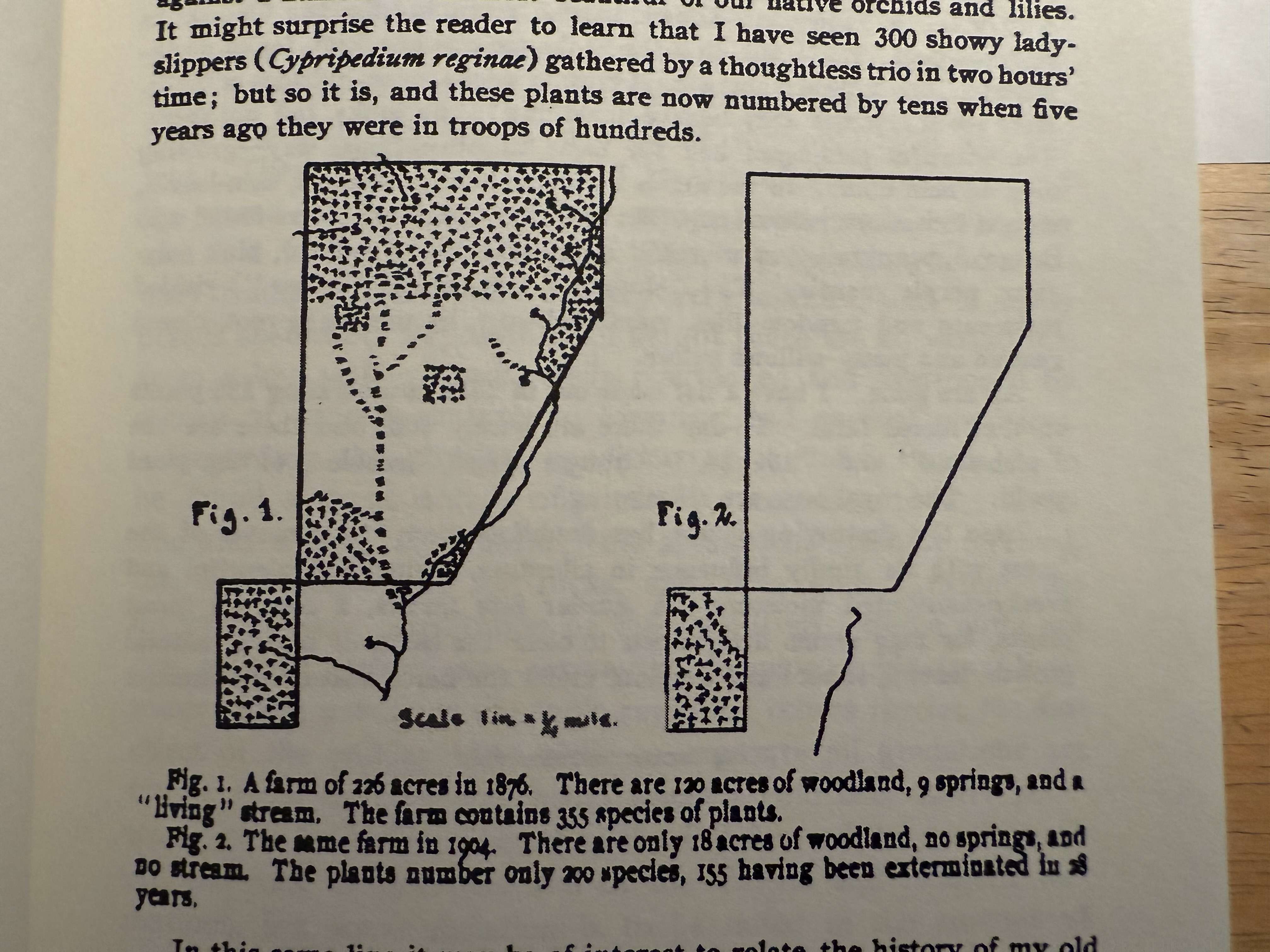
I have been reading some essays and papers by H.S. Pepoon, a biologist who documented the flora and fauna of Jo Daviess County, Illinois, (where we now live) more thoroughly than anyone else ever has post-settlement. In one short report, he documents the decline of life on his 226-acre family farm. In 1876, there were 355 species of plants. In 1904, there were just 200. One hundred fifty-five species were, as Pepoon writes, “exterminated in 28 years.” What, I wonder, is the state of that farm today? From what I’ve seen and what I know, I’m guessing the number is less than 50.

The decline of life on the Pepoon farm is a smaller version of what the whole world is experiencing on a much vaster scale.

When you take the blue whole faith pill of seeing what is happening to what our Creator God created, your heart can be broken..

#2: Living Alone in That World of Wounds

Ecologist and writer Aldo Leopold wrote: “One of the penalties of an ecological education is to live alone in a world of wounds.”

There are two pain points to which Leopold calls our attention. Seeing, thanks to one’s ecological education, the way humanity breaks the individual pieces and systems of nature is one “penalty” (what a euphemism, by the way). The other is experiencing the pain of that awareness largely alone.

Leopold was speaking largely of the loneliness experienced in American society as a whole.

I would argue, however, that there is a particular species of loneliness that Leopold probably did not understand. That is the loneliness of being among Christians who praise God for creating this world but who seemingly believe that God does not take personally how we treat it. Worse yet, some Christians will even criticize other Jesus followers who act compassionately and respectfully towards Creation do for being political, liberal, woke, or just plain unchristian. Facing that kind of critique and its accompanying personal castigation is no easy place to be.

Of course, being mindful of God’s earth does not represent a falling away from the roots of Christian understanding. The true situation is that mainstream Christian culture and theology have, in this area, fallen away from the roots of the Bible, the love of God, and God’s second scripture – Creation.

When you and I show concern for God’s living earth and question how it is used, we are actually bringing up uncomfortable truths. We are reminding others that the vineyard we are using is not actually ours. The criteria for what is right and wrong about our use of the vineyard is not what grows our power and wealth. The criteria for right and wrong is whether the vineyard owner will be pleased with the condition of the vineyard when the owner comes to reclaim it.

This all can complicate your experience of being in a local faith community. Do you compromise your principles? Or be a persistent voice in your community for Creation shepherding? Or take some kind of third path?

#3: Resetting Your Life Habits and Mission Overload

A Christian serious about a whole faith will, among many things, seek to create habits that daily reduce negative impacts on Creation and contribute to its regeneration. You wil, for example, think about what you eat. What you give to. How you treat your piece of God’s earth. How simply you live. It can be all-encompassing.

Between making a living, caring for family, maintaining a dwelling, and being involved in activities of one’s church, where does one make room for a real commitment to protecting and renewing God’s earth? All that needs changing can be overwhelming.

Creating new habits can be challenging. And when our lives are busy already, adding another layer of consciousness can seem like just too much to handle. This is especially true when a place we live in makes it hard to do good for God’s earth.

I can tell you, however, that you will eventually find that striving to be faithful and thoughtful in your life actions, including how your actions impact God’s earth, will grow your faith and increase your awareness of all of the world mattering to God. New choices will become new habits. Gradual yet tenacious effort will bear fruit over time. You will ultimately feel good, even as you realize we can never live perfectly.

#4: Between Faithful Response and Zealotry

The awareness of how frequently we interact with God’s earth and how marred Creation often is by our individual and collective actions can prompt a number of different responses.

One is overwhelm. This leads us to try to avoid thinking about it.

Another is a life of intense effort to be environmentally pure in every single act or habit of living. Because so many people don’t pay any attention to their life habits, this approach could actually seem extreme. Choose not to eat meat from an inhumanely treated pig? The average person might consider you a zealot.

A zealot, however, is not someone who builds habits so that they are as faithful as possible in a particular area of life, like the shepherding of Creation.

Zealotry, in my mind, is something different. Zealotry is when your passion for purity in one area of life overwhelms faithfulness in other areas of life. It is when purity in one area of life becomes the sole measure of your life’s morality.

Let’s consider the example of being invited to a new neighbor’s houses for a party. The food is not food that is healthy nor raised and produced in ways good for Creation, one’s farmer neighbors, nor their communities. Do you reject it all?

That might be pure, but how would your new neighbors understand your reaction? And what would your rejection or abstaining do? The food is already produced and purchased. Your new neighbors might have no frame of reference for understanding why you are acting the way you are. If they’re not Christian and they know you are, that might impact their impression of you and your family. Are you loving your neighbor in that situation?

Living out a whole faith with intentionality and consistency while avoiding zealotry requires God’s help and wisdom. It means paying attention to all of the facets of our life and all of the facets of what it means to love God and love our neighbor and follow Jesus.

It’s hard, but not impossible, to do this.

#5: Caught in Tsunami-Scale Systems

Almost all that we do every day is a form of interaction with God’s earth. The food you and I eat (even the food that is not really food) comes from God’s earth and the work of our neighbors.

Our furniture comes from God’s earth, whether it be from trees or petroleum by way of plastic. Our clothes come from the earth. So do our cars and homes. Plastics are a sadly good example of how our wizard-like powers to transform petroleum into everything from plastic bags to plastic bottles have the unintended consequences of poisoning Creation and ourselves.  The growth of artificial intelligence technology is taking our energy and water consumption for virtual activities to a whole new and disturbing level.

Yet, how does one live without being part of the depletion of Creation? How could one change global systems?

Abstaining from eating factory farmed meat, although it is a good and righteous thing to do and sends a virtuous economic signal, does not change the system of factory farming that dominates places like Iowa.

Walking and biking as much as possible, as good and righteous as that they are, does not change our world’s consumption of fossil fuels on a system’s level.

Individual good deeds are not enough to turn us around from systems that degrade the life out of the earth on a massive scale.

This is one of the biggest challenges I experience in caring about the fate of God’s earth.

I believe in building habits of faithfulness in our everyday lives towards other people and Creation. I want to believe that if enough people do good things that that will contribute to a better world.

But it is clear that there is a tsunami of larger forces and trends at work. It is also clear we live in a world in which laws (or a lack of laws) and systems often enable the strong and powerful to take advantage of the weak, whether the weak are the poor or vulnerable beings of Creation.

Can better systems be built on local scales? Absolutely. There are example all around the world. But will those examples replace the systems degrading God’s people and world? It’s not clear to me that will happen before God brings a new heave and new earth. And that is, at least for me, a heavy thing to live with.

 #6 Running Upstream Against Economic Nationalism

The power of a country, including its military power, depends in large part on economic power. Economic power is derived, in large part, by the extraction of wealth from Creation.. It logically follows that if you and I speak up for restraining humanity from extractive and violent uses of Creation in our community or country, then we could be seen as obstacles to success, wealth, and power.

And calling for restraint and restrictions on how individuals, businesses, and national institutions will use Creation also puts us at risk for being seen as unpatriotic. Nationalists, even Christian nationalists, will castigate us. Or worse.

A recent article from Inside Climate News shared this:

Since Global Witness began tracking annual deaths in 2012, more than 2,253 environmental defenders have been murdered or disappeared. Many of the victims opposed extractive industries, such as mining, logging and industrial agriculture, or had challenged systemic issues like organized crime and land theft. 

These sad and tragic statistics mostly come from countries like Colombia and Guatemala. Someday, if we extrapolate from current trends, there could well be similar violence done in the United States, as our country becomes increasingly ruled by power rather than by law.

Being faithful isn’t so hard when your version of being faithful fits neatly within the value system of the dominant ruling class of the country you live in. But if your country’s actions and systems are counter to actual Christian values, like the shepherding of Creation, then being faithful will put you at personal risk.

Nevertheless, we are first and foremost patriots for God’s Kingdom.

#7 Torn Between Present Anguish and the Joyous Certainty of Renewal 

Seriously shepherding Creation compels you to wrestle with the one of the paradoxes of the Christian faith. On one hand, violence done to the fabric of God’s people and world is a clear and present sin that should provoke outrage in us. On the other hand, we have confidence that people and all of Creation will someday have an eternal, joyful existence with God.

This is difficult to live with and process.

One of the reasons I’ve not released a blog since August is that I’ve been struggling with this post for months now. It has been hard to get it to a point that feels complete, authentic, and clear. And this paradox in particular twists my heart and mind into a knot.

I don’t know what face to show the world. Or how to organize my own attitudes.

There are Christian leaders in the Creation care field who seem to only show a positive, upbeat face to the world. I believe this is, in part, because they believe the voice of lament and grim anger is not winsome. I also believe this is because the Gospel’s message of hope and future world renovation fills their hearts so much there is no room for sadness and doubt. I admire their work, but the one-dimensional tone of optimism doesn’t land for me.

I also find that I don’t feel at home in faith communities where every service is 100% full of optimism and happiness.

And with that statement, I’m sure there are some readers who will feel I have gone completely off of the deep end. How, you might ask, can the Christian faith be anything but positive, hopeful, and reassuring?

Let me be clear – worshiping in hope and joyous faithfulness is a powerful centering force for my heart and mind.

But wouldn’t there be good that came from reminders, both in content and tone, that the reason the Good News is such good news is that Jesus came because God hates to see all of Creation so dysfunctional, so warped, so full of pain and frustration?

And isn’t it Good News that our salvation, our being turned by God towards Him and filled with God’s Spirit, equips us for good works in this world so darkness is pushed back, even just a little?

We are meant for being God’s active and good presence in this world. We are called to address the pain and dysfunction of the world.

There is a line of Christian theology that says the conviction that all will be put right does not have to reduce the energy of the conviction that we must step forward to address the world’s sickness from sin. It makes some sense in theory. But it feels like the practical default application is for Christians to feel that injustice towards people and Creation is unfortunate but acceptable collateral damage. There can be easy rationalization for minor responses or just plain inaction.

Life would be easier for me if I accepted pat theological answers and focused only on the happy ending Christian theology tell us is coming. But I can tell when I’m not yet fully convinced in the deepest depths of my soul.

I find the mixture of emotional chords in the Bible resonates with me in a way that I have a hard time finding in church.

I am, for example, challenged by the prophets. There is so much strident, unsettling, harsh emotion there. Yet, simultaneously, there is also hope and faith in the compassion of God. I find Isaiah 11 to be one of the most moving and inspirational chapters in the Bible, especially the ninth verse:

They will neither harm nor destroy
    on all my holy mountain,
for the earth will be filled with the knowledge of the Lord
    as the waters cover the sea.

The prophets did not believe the exile of the people of Israel was the final word, but their words expressed deep outrage at the idolatry and injustice that caused God’s judgment. They lamented the fall and captivity of Israel, even as they had faith that there would be a return. That is the kind of paradox I believe we need to lean into.

When was the last time your liturgy dived deep into the prophets on a regular basis?

Interestingly enough, Jesus brought those same paradoxical chords of tone and message. He was full of both love and sharp outrage. I am convinced, even though I don’t know exactly how to apply the conclusion in my life, that we need to be Christ-like in this way. Getting the balance right is no easy thing.


My hope is that these reflections strengthen your faith and prepared you for the challenges of doing what you and I are meant to do – love God, love our neighbor, confront injustice, and be the image of God for all of Creation. May you and I do so with 100% commitment that comes from a whole life-faith centered on Jesus. Jesus offers us both an easy yoke and a life purpose that will stretch us and grow us beyond what we might have expected.

Let’s lean into that.


It has been awhile since I shared a message here. This is largely because our family has experienced a great unsettling and reshaping of our lives.

Over the last number of months, we’ve prepared to sell our house in northeast Illinois, found a new house in northwest Illinois (with some woods), bought that new house, sold our former house, mourned my mother’s passing, experienced a friend’s passing, had two wonderful wedding weekends, and moved into just a small portion of our new house so renovations can be done.

I’m looking forward to sharing more about the house and land we now inhabit as well as about the process that brought us here in future posts. In short, we had a very stable and comfortable life in the Prairie Crossing conservation community in Grayslake. Despite that, we felt compelled to move to a new place and, among other things, stretch ourselves in our Creation shepherding. The preparation for the move and the new life we now have stretched our faiths as well. You likely know how that feels.

It’s easy and natural to look ahead in this kind of situation.

Naturally, we’re planning for the renovations. We’ve begun doing some modest work on the landscape while holding off, reluctantly, on any major actions until we can develop a holistic plan for the whole site. How, we are already asking, can we reduce the amount of lawn in order to create more habitat for Creation and reduce the mowing needed? How can we increase health and diversity in the woods?

We’re also figuring out new shopping patterns and how to get along with our new neighbors, both human and our other kin. The deer, for example, are both captivatingly beautiful and seem to feel the apple trees are theirs. A northern flicker, a most handsome and striking bird, has pounded away at the vent on the top of our roof several times, causing our cats great panic.

But how does one’s heart and mind process all one has left behind?

We tried to squeeze in as many conversations with our friends and neighbors as possible before we left.  Time ran out before we could do that with all of the people we care about. And, most poignantly, we realized there were relationships that could have been even deeper if we had just realized earlier how much we had in common.

I still remember our neighbor Jane coming over to say hello and goodbye just as we had packed up our two vehicles and were about to drive away. She had just attended a cooking class and insisted we take all of the orange raspberry muffins she had just made. There were both sadness and encouragement in her eyes and voice.


Despite the anticipation of a new life and land, I also found myself experiencing a strong sense of loss for the tiny but precious piece of God’s earth we were leaving behind.

This brought to mind Psalm 103:15-16 which reads:

The life of mortals is like grass,
they flourish like a flower of the field;
the wind blows over it and it is gone,
and its place remembers it no more.

The series of two verses begin with a meditation on the ephemeralness of the human life. It poses an interesting analogy of the human life to the brief existence of a flower. It depicts that flower dissipating to nothingness after a wind.

Doesn’t that seem like the natural place for that meditation to end?

But it doesn’t end there. There is one more line that gives the series of lines a twist that tugs further at the heart.  The last verse introduces a new character to the scene – the flower’s place. And that place, the verse explains, remembers (or “knows”) the flower no more.

Isn’t that curious? The last lingering focus of the verses is on the evaporation of the relationship between the flower and the place.

At the very least, that last line deepens the sadness and melancholy of the two verses.

Could it, I sometimes wonder, be more than poetic license but actually a Scriptural clue to a deeper mystery? Could the places we are part of know us?


The emotional toll from moving that usually gets our attention is the heaviness of saying farewell to friends and neighbors.

But if one has invested in the life of the land, there is also a wound to the heart in saying goodbye to the living things one has tended.

Here are some examples of the life of the property I will miss and wonder about:

How will the towering and flourishing pin oak, with its uniquely pin oak silhouette, grow and mature over time?

Will the pasture roses continue to spread throughout the prairie in the interstices between other prairie plants? How far will these single-stemmed and single-flowered native roses be able to spread?

Will the two pawpaws on the east side of the house continue to grow and will they produce fruit and attract zebra swallowtails as their leaves are known to do?

Will the oak sedge areas continue to expand and grow, offering up their unique sedgy greenness? (Carex pennsylvanica is one of my favorite sedges, and it is a wonderful ground cover.)

Will the Bradford pear seedlings that have been springing up under several trees be able to be controlled?

Will the royal catchfly flowers be able to persist and spread further? Will the hummingbirds continue to come to them? 

Will the new owners recognize that the thistle near the cedars is not a weed but a native wildflower that happens to be a field thistle and has great value to pollinators?

Will the garter snake that visited us last fall return and will its return be welcomed?

Now that I think about it, I realize I saw an unfolding story in each square foot of that small little place I could walk around in less three minutes.

The patterns of weed pressures. How long the spring ephemerals (like Virginia bluebells and Virginia waterleaf) were in their glory. Where the invasive garlic mustard must be monitored carefully. Where butterfly milkweed has been seen before and where it might be seen again. The once-thick patch of prairie coreopsis (a spreading prairie flower that needs at least a half day of sun) that is now disappearing because of the deepening of the shade brought by the bur oaks that used to be just knee high. The oak on the west side of the house that has been gradually reaching out its western branches out over the prairie to access more sunlight..

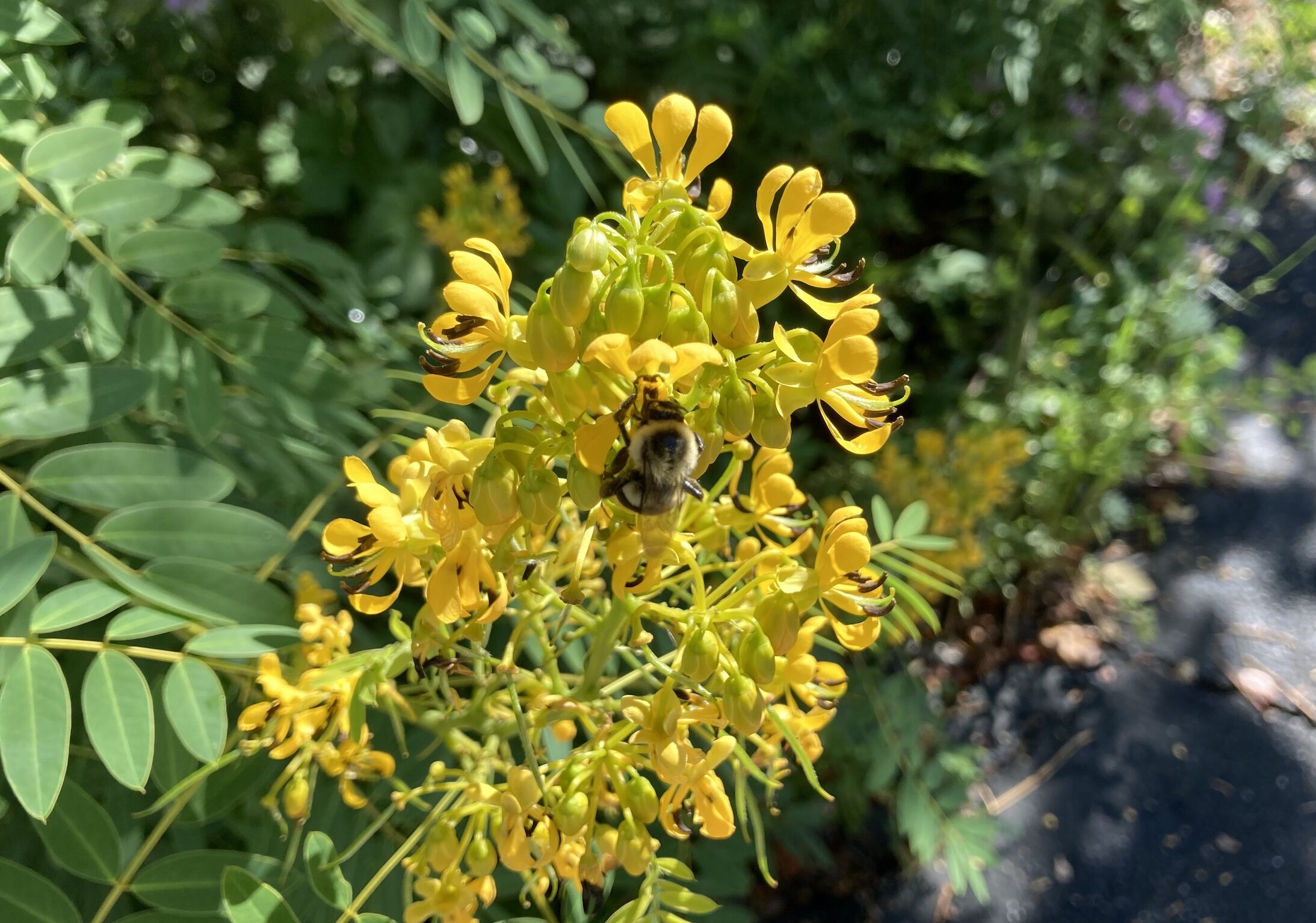
Bumblebees thronged to the flowers of the many wild senna plants we had around the yard of our former house. Will the bees find the flowers (and the sustenance they offered) there in Augusts to come?

We plan to have a house and land blessing later this fall to mark our gratitude to God for our new house, community, and piece of Creation.I would like to be part of a whole faith community that automatically offered that kind of blessing with all of its expectations of land shepherding to all of its members. Our ties to the land, to the living world God has given us, should be a clear and present part of the culture of a whole faith community.

What if every family had such a ritual carried out for them by the community of faith they were part of when they moved to a new house and new land? Perhaps this ritual would be a powerful, inspiring reminder to thoughtfully live out one’s faith not only in relationship with other people but also with one’s place.

The idea of a house blessing is, of course, not original (check out these two interesting links – here and here). The idea of a house and land blessing takes the house blessing idea just a little further.

But why should there only be a ritual for moving to a new house and a new piece of Creation?

In light of the emotional and spiritual significance of leaving behind a house and piece of Creation, what if faith communities also offered some kind of blessing ritual for the places that will know us no more?


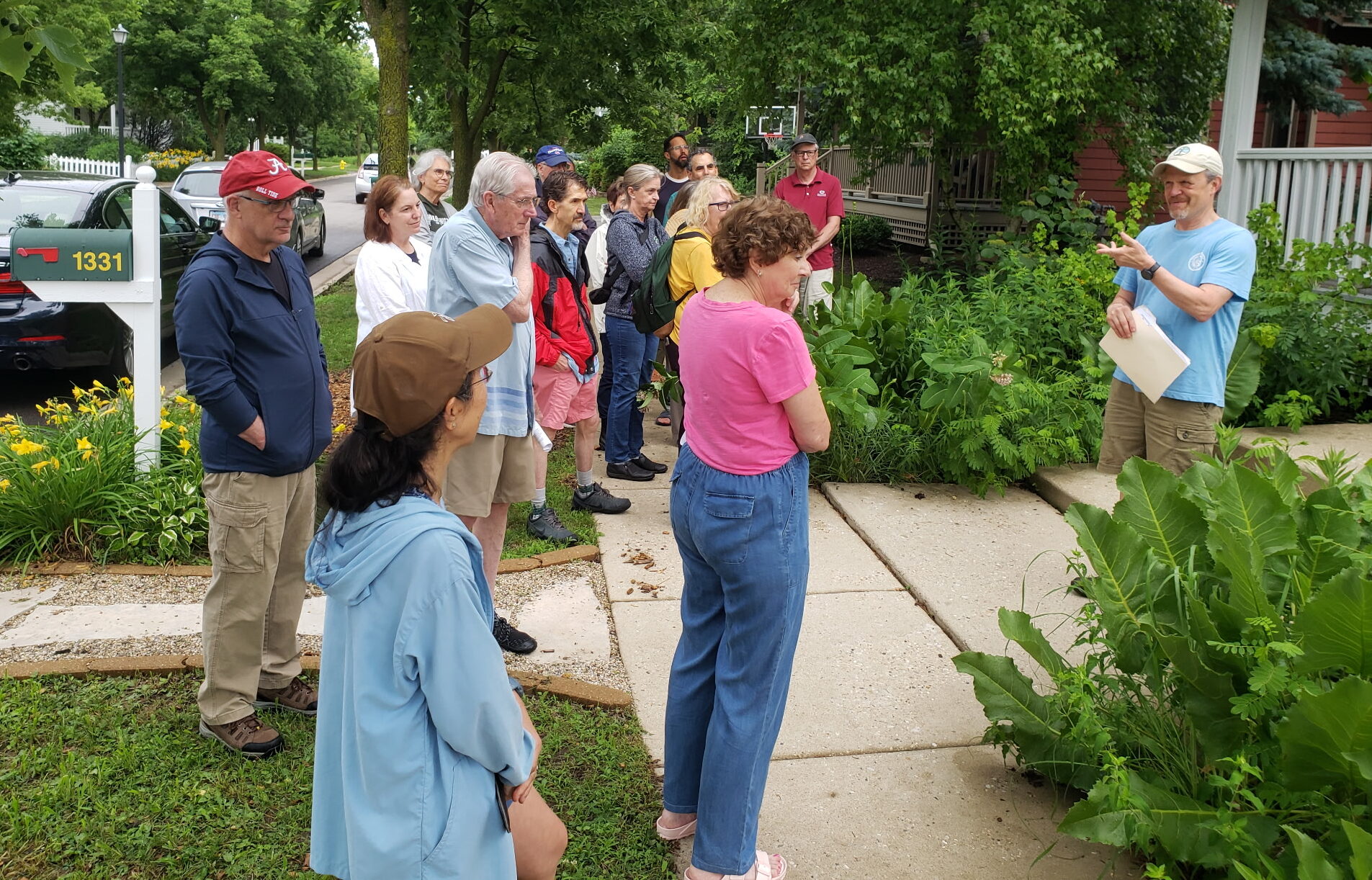
Mayumi and I invited friends and neighbors in Prairie Crossing to join us for a last tour of our little ~7,000 square foot lot that we had converted largely into natural habitat and an organic garden. Around 20 people joined us for a wonderful early evening of fellowship and learning. Mayumi and I  shared insights and lessons from our natural landscaping efforts over the last two decades. There were learnings from the people who attended as well. Then, at the end of the tour, everyone enjoyed snacks and drinks in our garage and on our driveway.

My wife Mayumi and I gave a tour of our property a few weeks before we moved. During the tour we did our best to explain the how and the why of what we and the many things we learned in the process.

My wife Mayumi (in the foreground with cap) and I gave a tour of our property a few weeks before we moved. During the tour we did our best to explain the how and the why of what we and the many things we learned in the process.

Mayumi and I did thank God for the house and land together. But ultimately, we didn’t have the chance to say goodbye and bless that property in a expressly spiritual way with other believers. And before we knew it, with all of the hustle and bustle of moving and cleaning, we had closed the garage door for the last time, said as many goodbyes as we could, made one last basket on the garage-mounted basketball hoop where our sons and I had played so many game, and were driving away as the sun began to set.

Lurking in our hearts was a sobering realization as well –  the life that Mayumi and I brought to that place could be lost in an instant by decisions of the new owners. In fact, I must admit I am reluctant to ever visit our property again. We knew of other new owners in the neighborhood who had torn up the prairies they had inherited to convert them into lawns. Seeing that happen to our yard would be very painful.

Moving, I’ve come to realize, is a kind of dying.

This became more clear as we got closer and closer to leaving our home and starting a new life. We had to let go of things we had accumulated over the years. There were goodbyes. We had regrets. We remembered good moments with our boys. The chip in the basement ceiling paint reminded us of our boys playing Wii with joyful energy …and no caution for their surroundings. The temporariness of life could not be ignored.

A melancholy realization began to permeate my heart and mind – we will have no more memories in that small but cozy house. There are people who we saw every week that we will never see again. We will not see the bright yellow of the spicebush leaves in fall again.

Moving is a kind of dying without the actual dying. It prompts us to remember the wisdom that we should number our days because those days are numbered. Each day on earth is precious.

If faith communities had farewell rituals for the places we are leaving, I wonder if we would be better prepared for death itself.

A farewell ritual would give us a community setting in which to remember the joys and goodness of a place with which we had become bonded. The community could help us come to peace with the sadness of leaving a place, of the place knowing us no more. That, in turn, would compel us to meditate on what our ultimate future is. A New Creation, a new heaven and earth, where, I believe (and other Christians do, too) we will have new life to live as bodies and souls with Jesus. We will be united with God and at peace with one and all. There will, I believe, be opportunities, too, to grow and expand our spirit and skilsl. New understanding and bonds with all of the life God created will stretch out before us.

One of the more uplifting stories I have heard of leaving a dear home place came from good friends who are working to restore over 30 acres of woods in Minnesota. The home and house they left before they came to their new place was also dear to them. Amazingly enough, the new owners understood our friends’ bond with the land and were grateful for their work with it. So the new owners have given our friends an open invitation come back each year to see how the land is doing. And our friends have taken them up on that offer.

Maybe the farewell-to-place ritual of whole faith communities is something that could bring together new homeowners and those moving on? Perhaps that could cause the new owners to see the house and the land in a new way. Perhaps the ritual’s evidence of God’s love for everyone and everything might even move the new owners’ hearts in surprising ways?


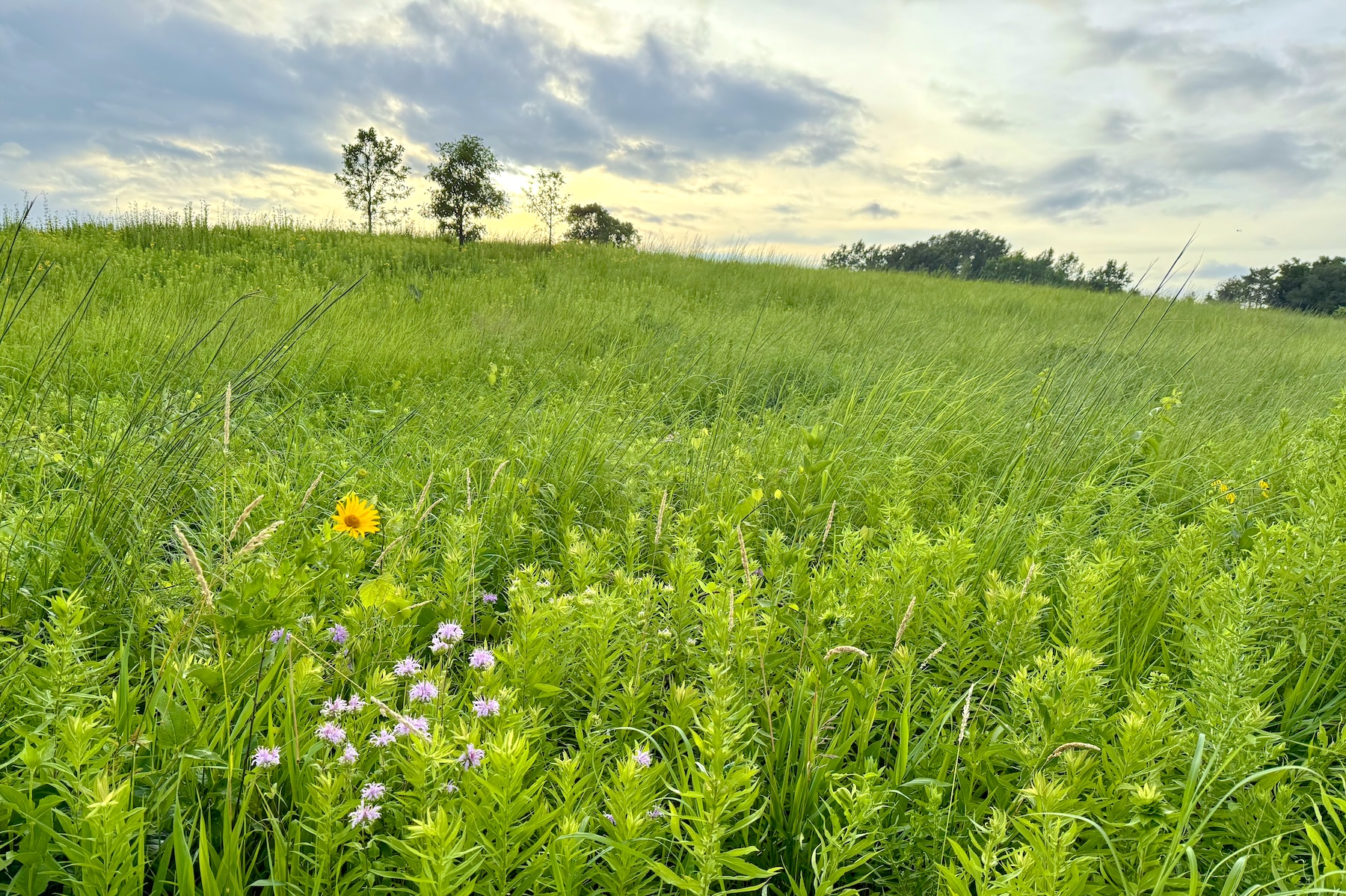
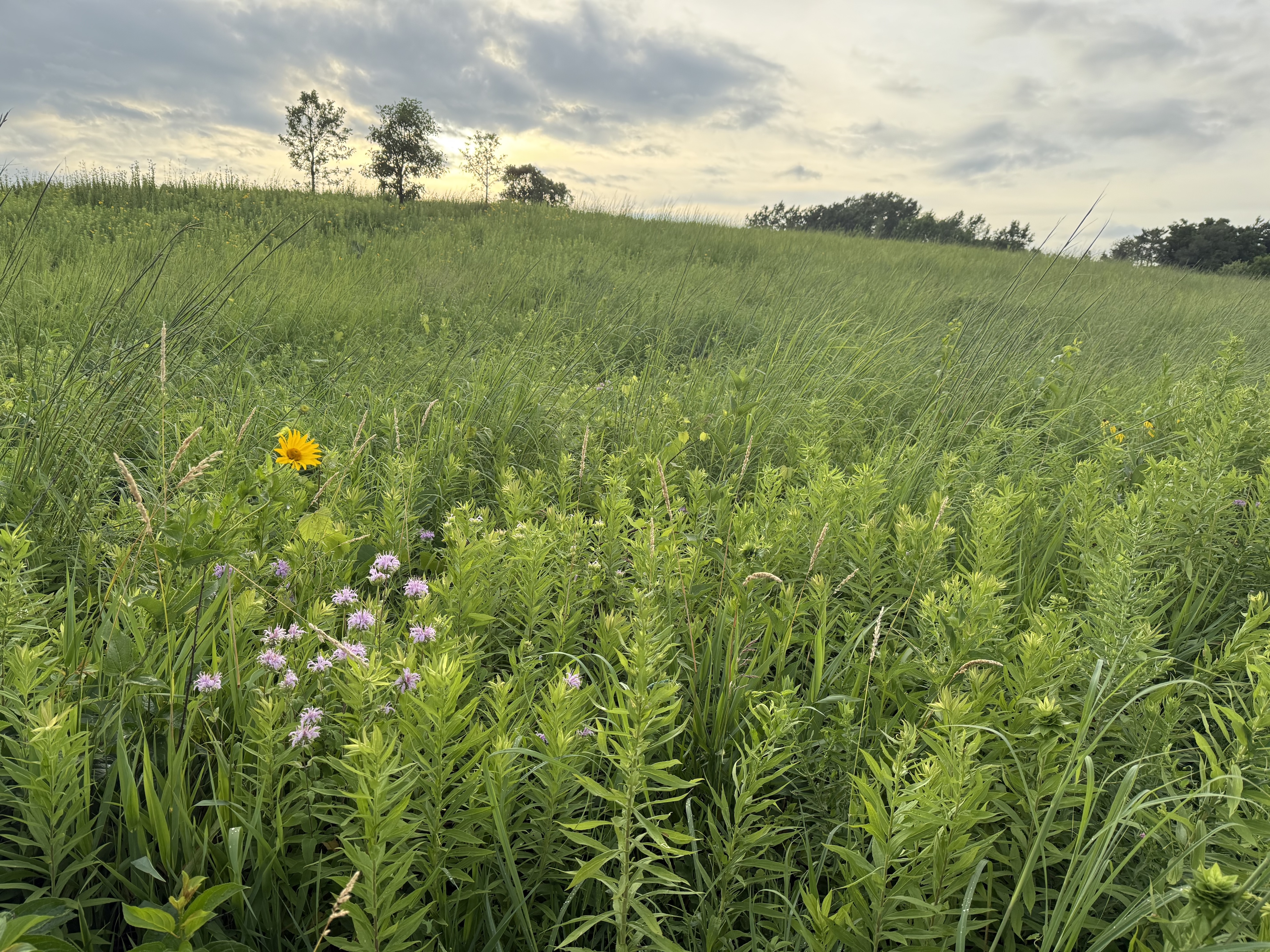
This is the hill just a few hundred yards from our former house in Prairie Crossing. Restoration of the hill to prairie began more than two decades ago. Almost every day for most of the 20 years we lived in the community, I walked by it and watched the diversity of the prairie increase over time.


Sometimes the words we use create a distance between us and the reality of what we are talking about.

In Christian theology, there are words like salvation, sacrament, and substitutionary atonement that are containers for a whole variety of complex ideas and frameworks. When it comes to communicating about God’s earth, there are, similarly, words like stewardship, biodiversity, green infrastructure, and environmental services. They are abstractions that take explanation.

My theory is that the greater the distance between a concept and the tangible reality of what we are talking about the more likely our hearts and minds are to be disengaged and passive. Complex and abstract words can create a slippery slope that takes us to rationalization of what we would not accept if it was understood plainly.

Framing something plainly, on the other hand, enables us to feel directly and authentically what is at stake. The decisions we must make become more clear, more stark. The power of Wendell Berry’s writing, for example, comes in part from the razor-like clarity and concreteness of the words and sentences he uses

The Bible is direct. Sometimes unsettlingly so. As an example, read Psalm 8: 3-9:

When I consider your heavens,
    the work of your fingers,
the moon and the stars,
    which you have set in place,
what is mankind that you are mindful of them,
    human beings that you care for them?[a]

 You have made them a little lower than the angels
    and crowned them with glory and honour.
 You made them rulers over the works of your hands;
    you put everything under their feet:
 all flocks and herds,
    and the animals of the wild,
 the birds in the sky,
    and the fish in the sea,
    all that swim the paths of the seas.

Lord, our Lord,
how majestic is your name in all the earth!

We are, to the psalmist’s amazement, rulers over the works of God’s hands.

That is what we are. Rulers.

For much of human history, there were many places and elements of Creation that we really didn’t feel like we ruled. Creation felt, at times, more powerful and wild than we could handle. But now there is no doubt that we do rule over all of God’s earth. We, as a species, have that much power.

But do we really grasp it in our hearts?

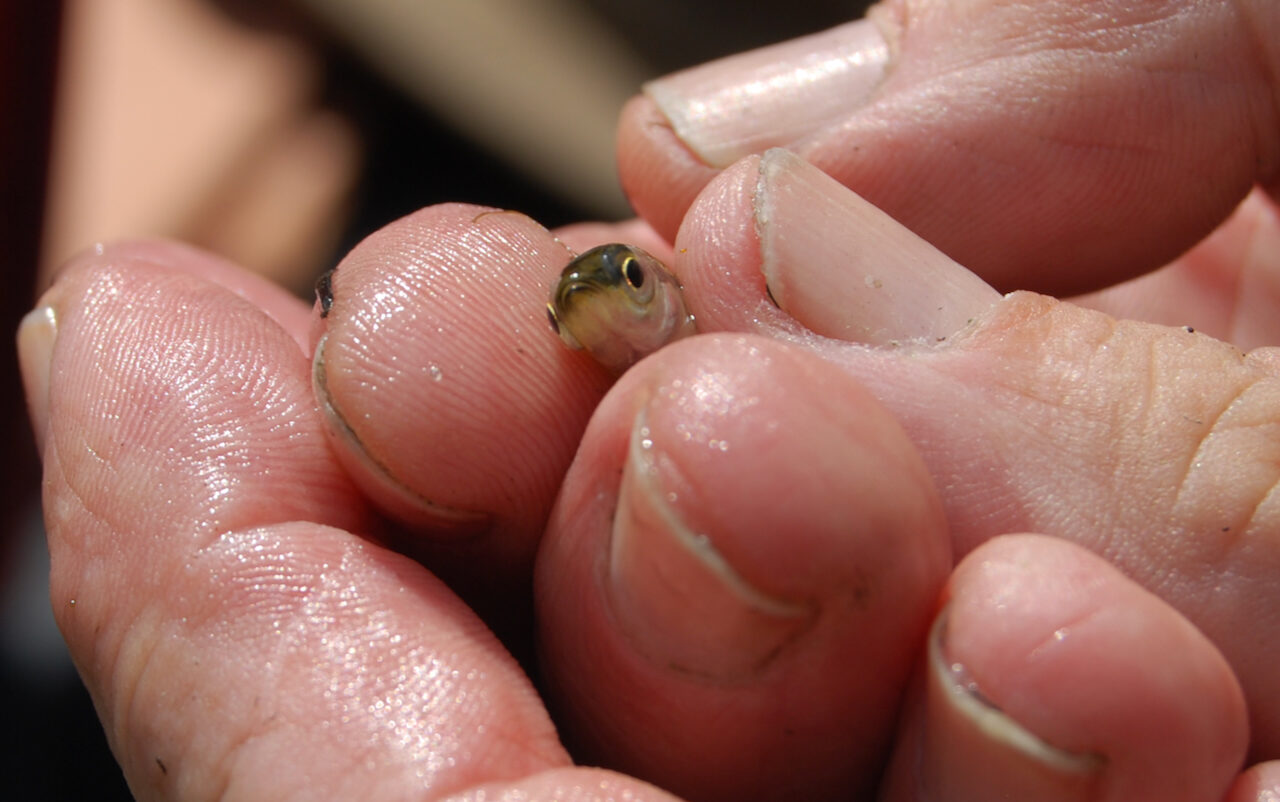
Consider this tiny fish with its large eyes in the gentle fingers of a scientist. It is out of its element. If it stays out of water much longer it will die. If the scientist squeezes too hard, it will not survive. The fate of this fish, one of the works of God’s hands, is completely in the hands of the scientist.

This is not just a picture of a particular fish in the hands of a particular man. It is the picture of a smaller, vulnerable, weaker being at the mercy of a larger, more powerful being. It is a being under the dominion of another being.

Do you know how that feels?

You do.

If you ever have had a parent, boss, neighbor, classmate, coworker, or institution in your life exercise power over you in a way that made you feel vulnerable, weak, threatened, and at their mercy, then you know how that feels.

That is what it is like for every living creature on and in this world. They are, like the fish in the photo, in our hands. They are largely helpless before us our tools, our systems, and our technologies. Whether we speak of whales, rusty patched bumblebees, tigers, bobolinks, baobab trees, pangolins, or sharks, God has given the rest of the life of the world into our hands.

We must decide what kind of rulers we will be.

Rather than looking at human examples of rulers, we should look to Jesus as the best example. In Jesus we see God ready to become one of us, to experience our world, and to be ready, as part of God’s creative and sacrificial mission, to overcome death and evil by teaching, dying, and rising again. We see God as the good shepherd willing to lay down his life for his sheep. This should give us a different idea of what human exceptionalism really means from God’s perspective.

Through Jesus, God wants us to have the most abundant lives possible.  Shouldn’t we want the life under our dominion and power to enjoy the most abundant lives possible as well?

This photo reminds me, and especially my heart, that we need to have mercy and compassion in our rule over God’s earth just as we have desired mercy, compassion, and justice from other people who have had our fates in their hands. When we rule, our decisions have profound ethical weight. To make ethical decisions, we need to bring our hearts and our minds to the matter.

To assert or go along with the thinking that our rule is to be exercised without restraint for our power and convenience is to let our sinfulness dominate us. Dominion as license to exploit, extract, and exterminate is the fruit of sinful, selfish rationalizations.

One of the things that makes that it hard for us to be good rulers is that so much of our life is shaped by systems outside of our direct control. Like the distance created by abstract words, the distance between our values and the realities of what we control is confounding. We get our food from the grocery store which brings together a wide variety of foods and food-like items from farms and factories from all over the world. Our governments, both local and national, do things that it is hard for us to control. We don’t control the companies that make the things we buy for our lives.

What I urge you to do is to not let the confounding nature of the world beyond your direct control numb your heart.

See the world clearly, Think and feel plainly.

Pay attention to the realities of our rule and what they mean for other living creatures in this world. Use your creative imagination, one of God’s gifts, to try to understand how the creatures around us experience the world. What is their umwelt?

Then, where you have power directly, use it with mercy and wisdom. Where you don’t rule directly, do what you can to shape our collective rule in a better direction. Be a voice.


P.S. I took the image of the fish in the hands of scientist here in the Prairie Crossing conservation community in Grayslake, Illinois, where my family has lived for over two decades. It is one of five species of threatened and endangered fish that were introduced into a 2.8-acre manmade pond that was created to mimic a natural pond as closely as possible. The wild idea the scientist and other partners had was this – why not use this high quality pond as a fish nursery that could then be a source for repopulating waterways with those species of fish that had previously been present. You can learn more about this creative idea here. The pond’s name, appropriately enough, is Sanctuary Pond.


There is a striking vision in Isaiah 6:3. The verse reads:

“And they called out to one another: “Holy, holy, holy is the LORD Almighty; the whole earth is full of his glory.””

They are the seraphim, six-winged heavenly creatures. Because of their fantastic nature, our mind’s eye tends to linger on them and not register what they actually say. But isn’t it striking that these fantastic beings direct our attention to the earth, the same earth that is with us and all around us 24/7?

In a sense, this shouldn’t be a surprise. In Genesis 1:31, God declares everything to be very good. That is high praise.

Nevertheless, unless we are attentive and present, it is easy to be as distracted by technology and our human-shaped world as we are by the seraphim. This deprive us of experiences of God’s glory. In doing that, we deprive our hearts and souls of the reverence and awe that are foundational for real, living faith.

In this post, I want to share just one small feature of the earth that is full of God’s glory.

That feature appears in this video of a lecture by Dr. Christine Jone about soil life and function. Dr. Christine Jones is an Australian soils ecologist who has helped farmers around the world better understand how the soil biome works. She has also taught farmers how building the ecology of soil life enables them to grow healthier, more productive plants and make more profit by using fewer (or no) chemicals. Her clear explanations of the wonders of the soil world have (along with the podcast of John Kempf) helped grow my enthusiasm about soil and regenerative agriculture. I hope you will take a look:


If you don’t have time to watch it right now, here is the one nugget that especially struck me. She has a slide that reads:

“There can be up to 9 billion microbes in one single seed!!

In an article on the website of Green Cover Seed, Dr. Jones explains the significance of that:

“Seeds contain hundreds of species of bacteria, archaea, fungi and protists. When a seed germinates the microbes multiply and move into the new roots and the soil surrounding the roots. The plant forms its own microbiome, distinctly different from the microbiome of bulk soil.”

So, in essence, seeds carry luggage with them on their travels. That “luggage” is the microbial community they need to thrive.

That is astounding. It is one more aspect of soil ecology that is being discovered by the rapidly growing science of regenerative agriculture. Through my work for non-profits promoting organic and regenerative agriculture, I’ve had the opportunity to learn how farming that builds soil life can prosper farmers, eaters, communities, and God’s earth. I also have been striving to translate those insights into changes in how farmland is actually stewarded by farmers and landowners.

Undoubtedly, there are particular aspects of Creation you have read about that amaze you. I would love to hear what they are.

But we shouldn’t stop there. What is to be our lived response to God’s glory filling the earth?

I would suggest that one response should be to make time to attune ourselves to that glory by immersing ourselves in the actual experience Creation. Camping. Birding Gardening. Slow walks in natural places. If you’re looking for inspiration (which is not a substitute for actually getting outside!), check out Bill Davison’s excellent substack – Easy by Nature.

We should also act in the world to restore the earth so that God’s glory is not hidden, diminished, or marred.

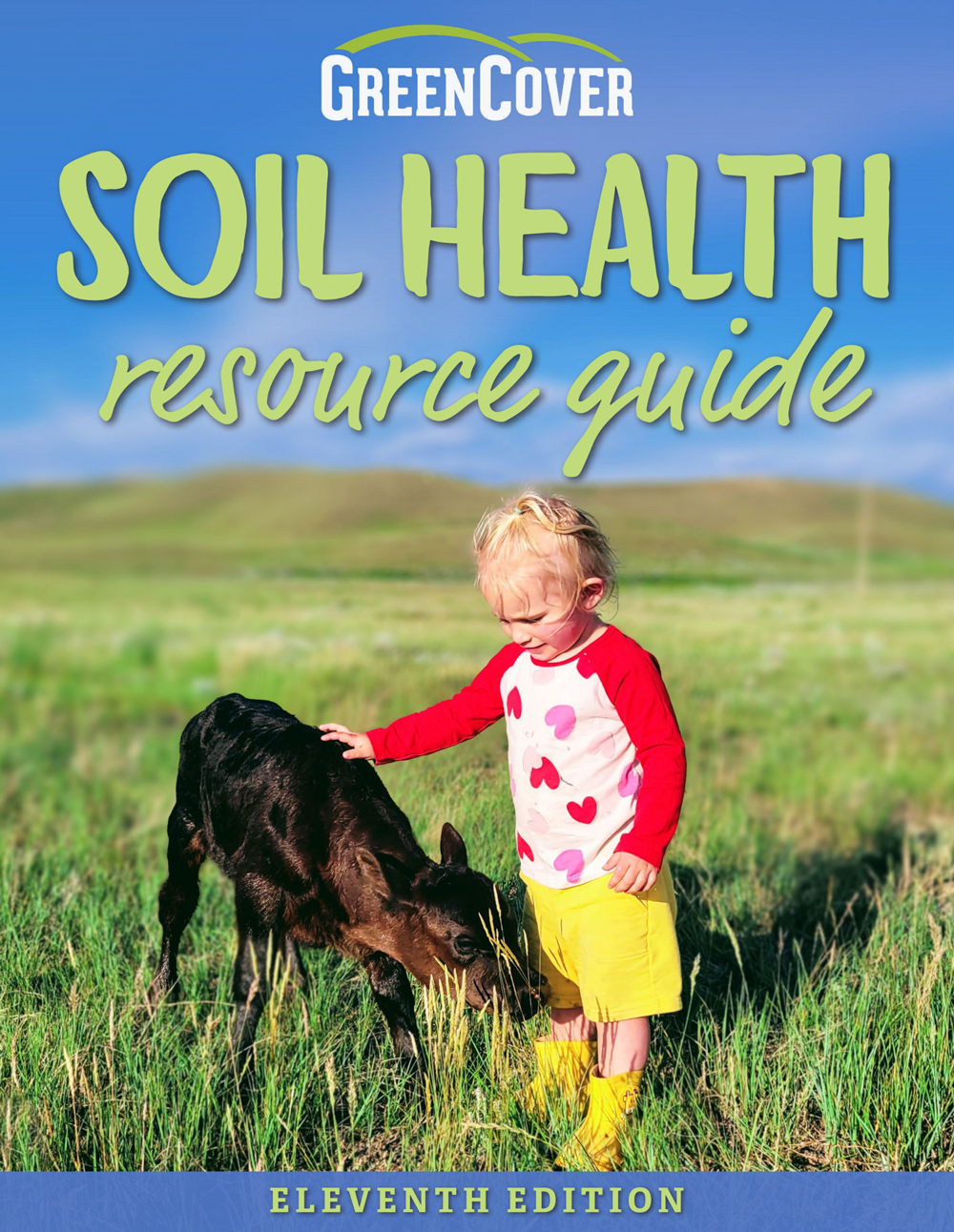
The Green Cover Seed company, which offers a free and wonderfully comprehensive guide to regenerative agriculture on its website, provides a great example.

Founded by brothers Keith and Brian Berns, Green Cover Seed is an energetic, faith-driven company that is helping farmers utilize cover crops to build soil, provide habitat, and produce abundant crops. Here is their mission statement:

To help people regenerate, steward, and share God’s creation for future generations. 

We believe cover crops are key to improving soil health, and healthy soils lead to healthy food and thus healthy people. 

Green Cover strives to honor and glorify God through our business ethics and practices, and to follow the example of Jesus Christ when interacting with customers and team members.

Can I get an amen??

What is your response in your daily use of Creation and the larger arc of your life?

I pay alot of attention to words. I listen to the sound of words. The nuances of their different connotations and associations are meaningful to me.

It’s in that context that I want to share why I’ve become more and more discontented with the two-word term “Creation care” in Christian circles.

In that phrase, I do hear gentleness, compassion, and almost a nursing-like quality. Without question, the attentive care of a nurse for her/his patient is a blessing beyond measure. Gentleness and compassion are indeed essential characteristics of a Christ follower. If more people lived by the fruit of the Spirit towards others and Creation, we would be in a much better place.

But here is what I also hear. I hear an action carried out in a refined, hushed, restrained, genteel atmosphere. My sense from the term is that the recipient of our caring actions is passive, small, and weak.  It is not clear from the term that the person doing the Creation care activity is fundamentally about doing the right things towards Creation as a core part of that person’s core identity. “Creation care” describes a set of actions we do outside of ourselves. The actions are not necessarily central to who we are every moment. They are a choice we can make or not make depending on the circumstances.

Moreover, the word “care” does not contain in it a sense of strong, vigorous, energetic, and even assertive energy to prevent the need for care from ever happening. It does not suggest a willingness to advocate and struggle against harsh forces.

There’s another’s problem with using “Creation care.” The term lacks clear and obvious roots in the Bible.

The term has more in common with modern social programs like MediCare than what we read of in the Old and New Testaments. Where does one read of Creation care in the Bible as an actual term or concept?

The obvious alternative in my mind is “shepherd.”

Shepherds and shepherding are deeply rooted in the whole Bible. Abraham and many of his descendants lived off of flocks and herds. King David was a shepherd. Psalm 23 extols the loving attention of God as a shepherd in a beautiful and moving way. Ezekiel 34 is dense with sheep metaphors and what a good shepherd is like (although the reference to removing wild predators is troubling). Shepherds were directed by angels to where Jesus was born. And, most importantly, Jesus called himself a good shepherd.

Jesus nested the parable of the lost sheep in the world of a shepherd. The shepherd’s search of the lost sheep suggests sweat, aching legs, a keen sense of the land, and determined thought on where the sheep in question would most likely be.

If there is a downside to using the terms shepherd and shepherding it is this – few of us are connected with agriculture anymore, and even fewer have any sense of the reality of what being a shepherd.

Being a shepherd is the antithesis of a modern office job. It is an active, dynamic, earthy, vigorous role that is demanding of your body, mind, and spirit.

The shepherd is immersed in Creation and the life of Creation. If you  meditate on the life of the shepherd, you can almost hear the sounds of sheep and cows, smell their animalness, pick up a whiff of hides and wool, and hear flies buzzing about the gifts of fertility the sheep and cattle leave behind. The shepherd enjoys peaceful moments. Even more often there are challenge and hardship. There is total immersion in Creation and its life and forces.

Psalm 23 gives a clear idea of how thoughtful and attentive to the needs of a sheep’s life a shepherd must be. This means planning and foresight about what places in the landscape will have the right plants at the right time in the right conditions. This means knowing where clean water will be available each day. The shepherd must pay attention to where there might be predators (including hostile humans) and anticipate weather patterns that could bring dangerous storms. There is a strong sense of all-encompassing competence, blue-collar work ethic, and not enjoying any luxuries of life. There is also an attunement to both the animals and to the environment.

Shepherding communicates, too, the paradox of the shepherd. Shepherds give constant protection to their herd that exist to provide humans wool, milk (yes, that’s a thing), and meat. But that doesn’t mean that the care for the sheep is any less dedicated or important.

In fact, life and death is an everyday part of the shepherd’s work. The reality of this (which the video above shows) is something that people working in offices don’t fully understand. Sheep and lambs get sick. They get in trouble. They run off. There are predators. Being a shepherd means dealing with death on a regular basis. A shepherd needs to be compassionate and tough.

Jesus spoke of this in that context in John 10:14-15. Here are the words:

“I am the good shepherd. I know my sheep and my sheep know me – just as the Father knows me and I know the Father – and I lay down my life for the sheep.”

The good shepherd laying down his life for the sheep is not doing so because he signed a contract. A good shepherd (as opposed to a lackluster, lazy, self-focused one) would lay down his life for his sheep because he cares for them. He does not want to see the gentle creatures, who know his voice and trust him, torn apart. Like a good police officer, fireman, or soldier, the shepherd accepts the responsibility the shepherd has been given and is ready to sacrifice all in the process.

I am convinced that there is a strong parallel between the nature of the relationship between God and humanity (as exemplified in Jesus) and the nature of what our relationship should be with God’s earth.

Jesus, as the good shepherd, was ready to lay down his life for his sheep. Are we ready to act as bravely and selflessly for God’s earth which is under our care?

Interestingly, since I began writing this post, I’ve come across other Christians using “shepherd” (like here and here). Perhaps I was unconsciously aware of this already, But none of the uses I have found so far have made clear the more challenging and inspiring implications that “shepherd” actually entails.

This is where we must defend the uniqueness and distinctiveness of words. Words matter.  They communicate to our conscious minds and to our unconscious minds.

So I am going to use “shepherd” and “shepherding” going forward when I refer to what it means as a follower of Jesus to protect and restore God’s earth. I hope you will, too. Let us commit ourselves to being shepherds of Creation. May we make this an essential part of the dedication of our whole lives to God.

Here is my prayer for you and me:

Loving God, guide us to be good shepherds of your earth as you are our good shepherd.  Like good shepherds, help us more deeply and intimately understand your earth and how land, water, and life work together. Equip us to be ready to act and speak for your vulnerable Creation in all circumstances and in all conditions with compassion, wisdom, strength, and grit.  Send your Spirit so we will be more determined to prevent your good world entrusted to us from being stripped of life and breath. We pray, too, for you to be with us when we lament the suffering of people and Creation. May your will be done by us each day.