
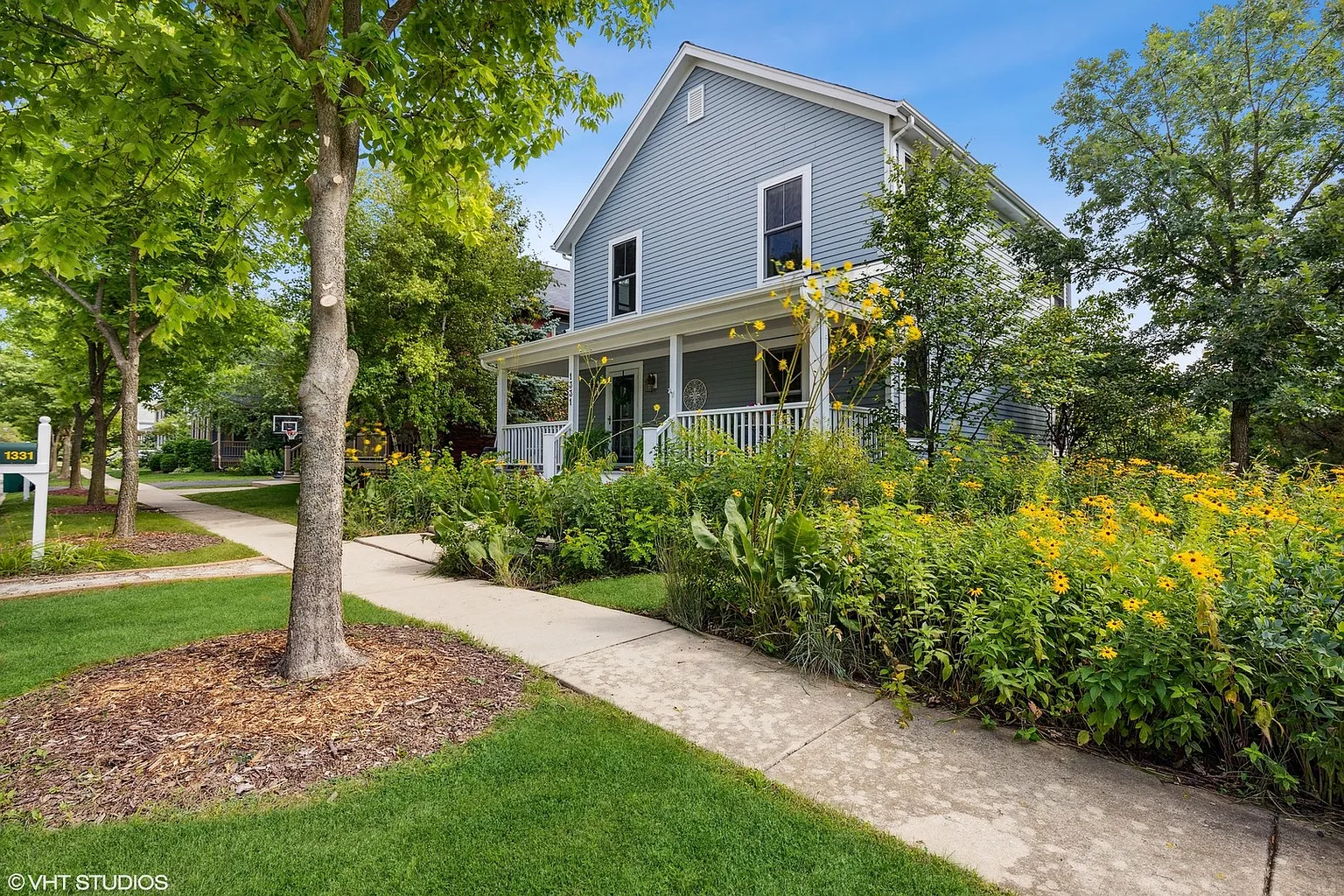
It has been awhile since I shared a message here. This is largely because our family has experienced a great unsettling and reshaping of our lives.
Over the last number of months, we’ve prepared to sell our house in northeast Illinois, found a new house in northwest Illinois (with some woods), bought that new house, sold our former house, mourned my mother’s passing, experienced a friend’s passing, had two wonderful wedding weekends, and moved into just a small portion of our new house so renovations can be done.
I’m looking forward to sharing more about the house and land we now inhabit as well as about the process that brought us here in future posts. In short, we had a very stable and comfortable life in the Prairie Crossing conservation community in Grayslake. Despite that, we felt compelled to move to a new place and, among other things, stretch ourselves in our Creation shepherding. The preparation for the move and the new life we now have stretched our faiths as well. You likely know how that feels.
It’s easy and natural to look ahead in this kind of situation.
Naturally, we’re planning for the renovations. We’ve begun doing some modest work on the landscape while holding off, reluctantly, on any major actions until we can develop a holistic plan for the whole site. How, we are already asking, can we reduce the amount of lawn in order to create more habitat for Creation and reduce the mowing needed? How can we increase health and diversity in the woods?
We’re also figuring out new shopping patterns and how to get along with our new neighbors, both human and our other kin. The deer, for example, are both captivatingly beautiful and seem to feel the apple trees are theirs. A northern flicker, a most handsome and striking bird, has pounded away at the vent on the top of our roof several times, causing our cats great panic.
But how does one’s heart and mind process all one has left behind?
We tried to squeeze in as many conversations with our friends and neighbors as possible before we left. Time ran out before we could do that with all of the people we care about. And, most poignantly, we realized there were relationships that could have been even deeper if we had just realized earlier how much we had in common.
I still remember our neighbor Jane coming over to say hello and goodbye just as we had packed up our two vehicles and were about to drive away. She had just attended a cooking class and insisted we take all of the orange raspberry muffins she had just made. There were both sadness and encouragement in her eyes and voice.
Despite the anticipation of a new life and land, I also found myself experiencing a strong sense of loss for the tiny but precious piece of God’s earth we were leaving behind.
This brought to mind Psalm 103:15-16 which reads:
The life of mortals is like grass,
they flourish like a flower of the field;
the wind blows over it and it is gone,
and its place remembers it no more.
The series of two verses begin with a meditation on the ephemeralness of the human life. It poses an interesting analogy of the human life to the brief existence of a flower. It depicts that flower dissipating to nothingness after a wind.
Doesn’t that seem like the natural place for that meditation to end?
But it doesn’t end there. There is one more line that gives the series of lines a twist that tugs further at the heart. The last verse introduces a new character to the scene – the flower’s place. And that place, the verse explains, remembers (or “knows”) the flower no more.
Isn’t that curious? The last lingering focus of the verses is on the evaporation of the relationship between the flower and the place.
At the very least, that last line deepens the sadness and melancholy of the two verses.
Could it, I sometimes wonder, be more than poetic license but actually a Scriptural clue to a deeper mystery? Could the places we are part of know us?
The emotional toll from moving that usually gets our attention is the heaviness of saying farewell to friends and neighbors.
But if one has invested in the life of the land, there is also a wound to the heart in saying goodbye to the living things one has tended.
Here are some examples of the life of the property I will miss and wonder about:
How will the towering and flourishing pin oak, with its uniquely pin oak silhouette, grow and mature over time?
Will the pasture roses continue to spread throughout the prairie in the interstices between other prairie plants? How far will these single-stemmed and single-flowered native roses be able to spread?
Will the two pawpaws on the east side of the house continue to grow and will they produce fruit and attract zebra swallowtails as their leaves are known to do?
Will the oak sedge areas continue to expand and grow, offering up their unique sedgy greenness? (Carex pennsylvanica is one of my favorite sedges, and it is a wonderful ground cover.)
Will the Bradford pear seedlings that have been springing up under several trees be able to be controlled?
Will the royal catchfly flowers be able to persist and spread further? Will the hummingbirds continue to come to them?
Will the new owners recognize that the thistle near the cedars is not a weed but a native wildflower that happens to be a field thistle and has great value to pollinators?
Will the garter snake that visited us last fall return and will its return be welcomed?
Now that I think about it, I realize I saw an unfolding story in each square foot of that small little place I could walk around in less three minutes.
The patterns of weed pressures. How long the spring ephemerals (like Virginia bluebells and Virginia waterleaf) were in their glory. Where the invasive garlic mustard must be monitored carefully. Where butterfly milkweed has been seen before and where it might be seen again. The once-thick patch of prairie coreopsis (a spreading prairie flower that needs at least a half day of sun) that is now disappearing because of the deepening of the shade brought by the bur oaks that used to be just knee high. The oak on the west side of the house that has been gradually reaching out its western branches out over the prairie to access more sunlight..
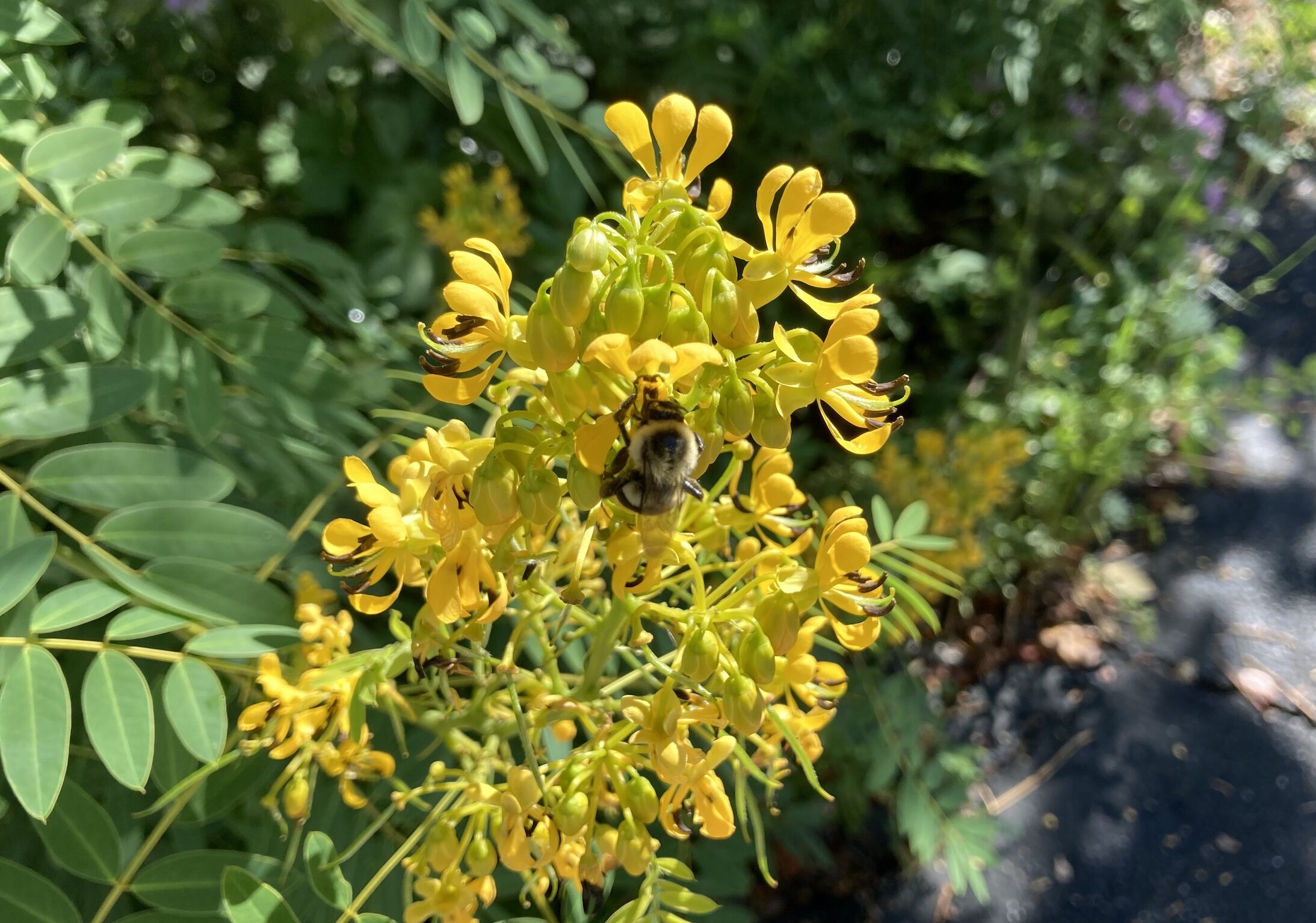
Bumblebees thronged to the flowers of the many wild senna plants we had around the yard of our former house. Will the bees find the flowers (and the sustenance they offered) there in Augusts to come?
We plan to have a house and land blessing later this fall to mark our gratitude to God for our new house, community, and piece of Creation.I would like to be part of a whole faith community that automatically offered that kind of blessing with all of its expectations of land shepherding to all of its members. Our ties to the land, to the living world God has given us, should be a clear and present part of the culture of a whole faith community.
What if every family had such a ritual carried out for them by the community of faith they were part of when they moved to a new house and new land? Perhaps this ritual would be a powerful, inspiring reminder to thoughtfully live out one’s faith not only in relationship with other people but also with one’s place.
The idea of a house blessing is, of course, not original (check out these two interesting links – here and here). The idea of a house and land blessing takes the house blessing idea just a little further.
But why should there only be a ritual for moving to a new house and a new piece of Creation?
In light of the emotional and spiritual significance of leaving behind a house and piece of Creation, what if faith communities also offered some kind of blessing ritual for the places that will know us no more?
Mayumi and I invited friends and neighbors in Prairie Crossing to join us for a last tour of our little ~7,000 square foot lot that we had converted largely into natural habitat and an organic garden. Around 20 people joined us for a wonderful early evening of fellowship and learning. Mayumi and I shared insights and lessons from our natural landscaping efforts over the last two decades. There were learnings from the people who attended as well. Then, at the end of the tour, everyone enjoyed snacks and drinks in our garage and on our driveway.
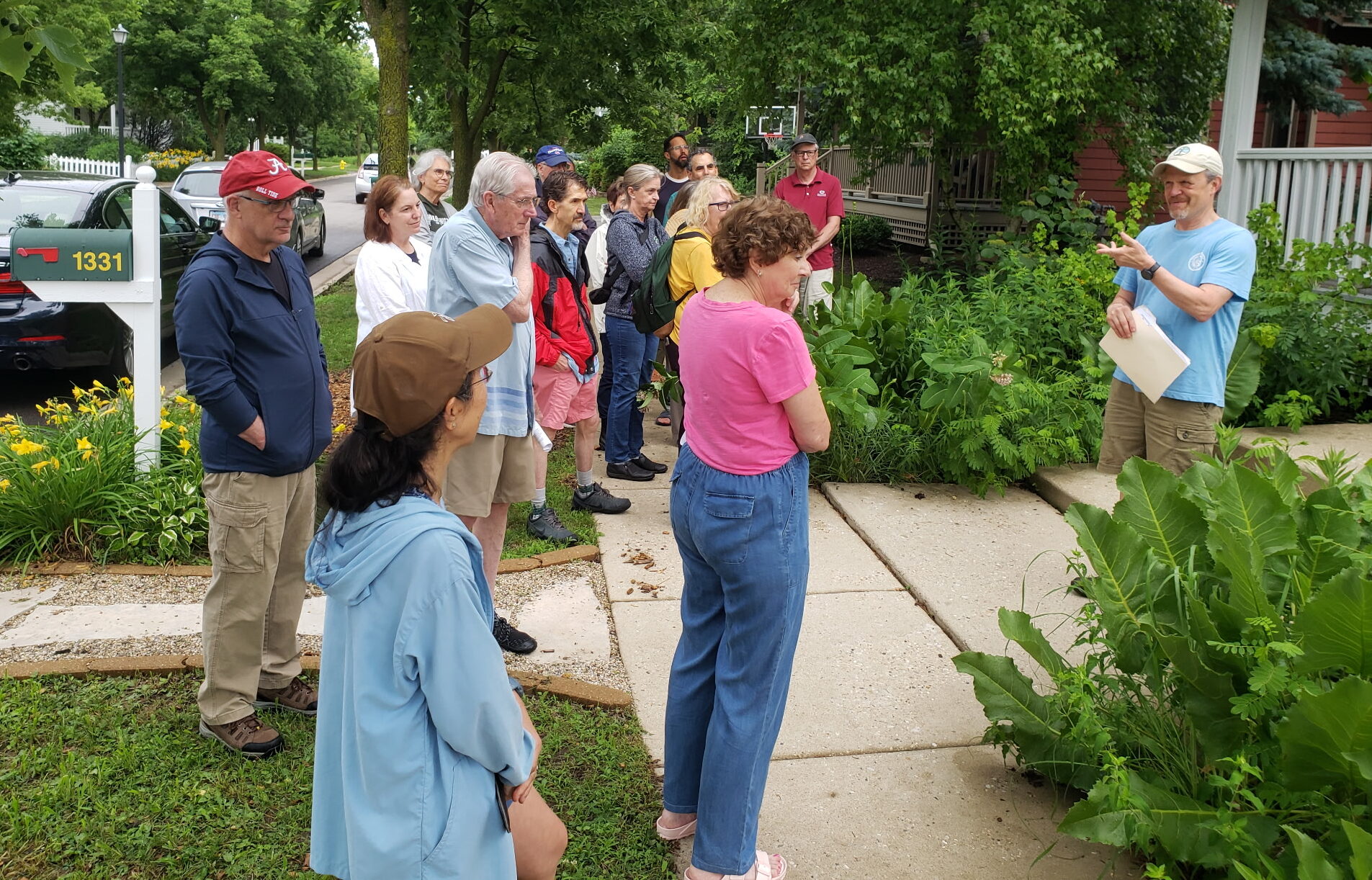
My wife Mayumi (in the foreground with cap) and I gave a tour of our property a few weeks before we moved. During the tour we did our best to explain the how and the why of what we and the many things we learned in the process.
Mayumi and I did thank God for the house and land together. But ultimately, we didn’t have the chance to say goodbye and bless that property in a expressly spiritual way with other believers. And before we knew it, with all of the hustle and bustle of moving and cleaning, we had closed the garage door for the last time, said as many goodbyes as we could, made one last basket on the garage-mounted basketball hoop where our sons and I had played so many game, and were driving away as the sun began to set.
Lurking in our hearts was a sobering realization as well – the life that Mayumi and I brought to that place could be lost in an instant by decisions of the new owners. In fact, I must admit I am reluctant to ever visit our property again. We knew of other new owners in the neighborhood who had torn up the prairies they had inherited to convert them into lawns. Seeing that happen to our yard would be very painful.
Moving, I’ve come to realize, is a kind of dying.
This became more clear as we got closer and closer to leaving our home and starting a new life. We had to let go of things we had accumulated over the years. There were goodbyes. We had regrets. We remembered good moments with our boys. The chip in the basement ceiling paint reminded us of our boys playing Wii with joyful energy …and no caution for their surroundings. The temporariness of life could not be ignored.
A melancholy realization began to permeate my heart and mind – we will have no more memories in that small but cozy house. There are people who we saw every week that we will never see again. We will not see the bright yellow of the spicebush leaves in fall again.
Moving is a kind of dying without the actual dying. It prompts us to remember the wisdom that we should number our days because those days are numbered. Each day on earth is precious.
If faith communities had farewell rituals for the places we are leaving, I wonder if we would be better prepared for death itself.
A farewell ritual would give us a community setting in which to remember the joys and goodness of a place with which we had become bonded. The community could help us come to peace with the sadness of leaving a place, of the place knowing us no more. That, in turn, would compel us to meditate on what our ultimate future is. A New Creation, a new heaven and earth, where, I believe (and other Christians do, too) we will have new life to live as bodies and souls with Jesus. We will be united with God and at peace with one and all. There will, I believe, be opportunities, too, to grow and expand our spirit and skilsl. New understanding and bonds with all of the life God created will stretch out before us.
One of the more uplifting stories I have heard of leaving a dear home place came from good friends who are working to restore over 30 acres of woods in Minnesota. The home and house they left before they came to their new place was also dear to them. Amazingly enough, the new owners understood our friends’ bond with the land and were grateful for their work with it. So the new owners have given our friends an open invitation come back each year to see how the land is doing. And our friends have taken them up on that offer.
Maybe the farewell-to-place ritual of whole faith communities is something that could bring together new homeowners and those moving on? Perhaps that could cause the new owners to see the house and the land in a new way. Perhaps the ritual’s evidence of God’s love for everyone and everything might even move the new owners’ hearts in surprising ways?
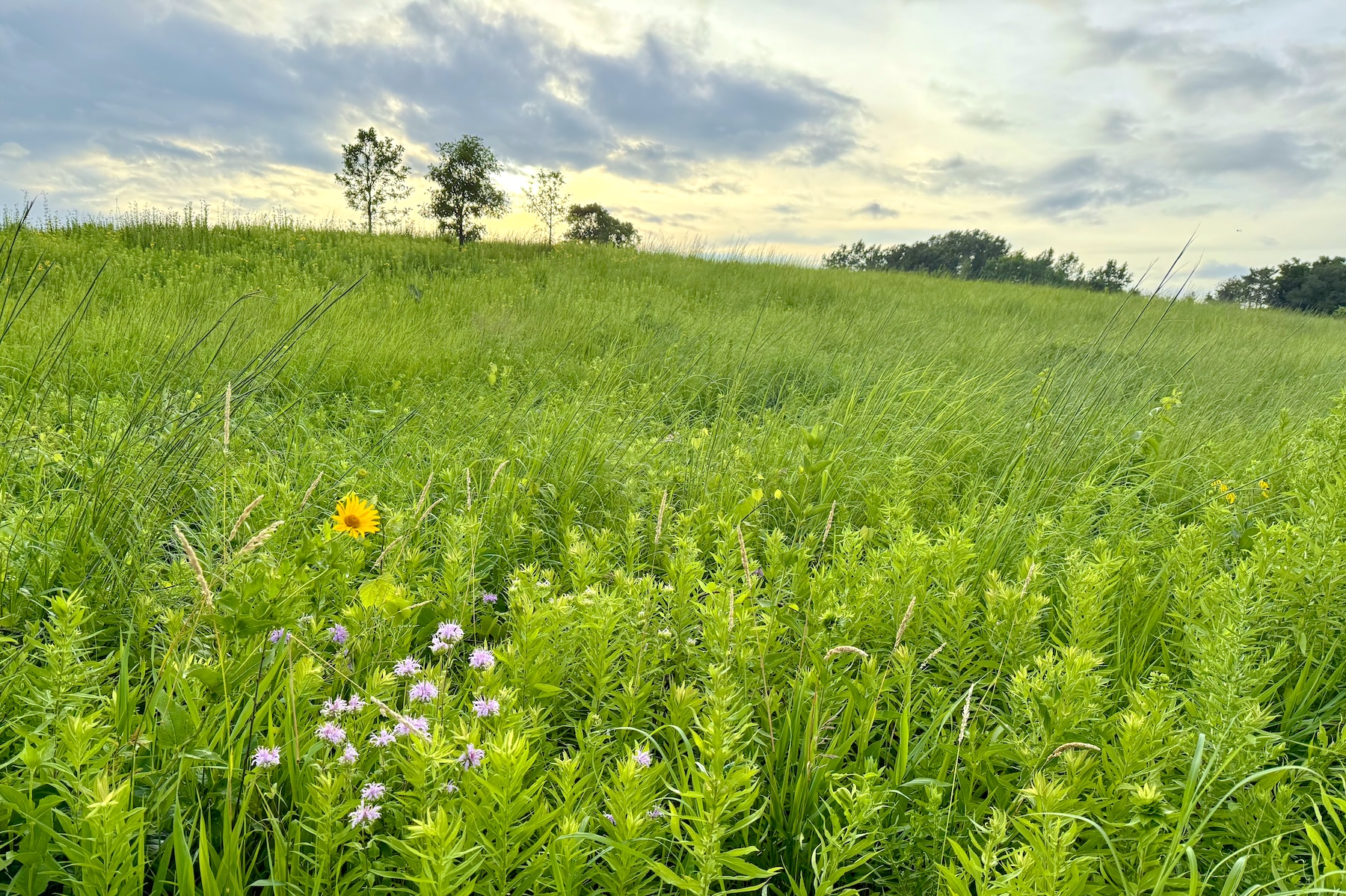
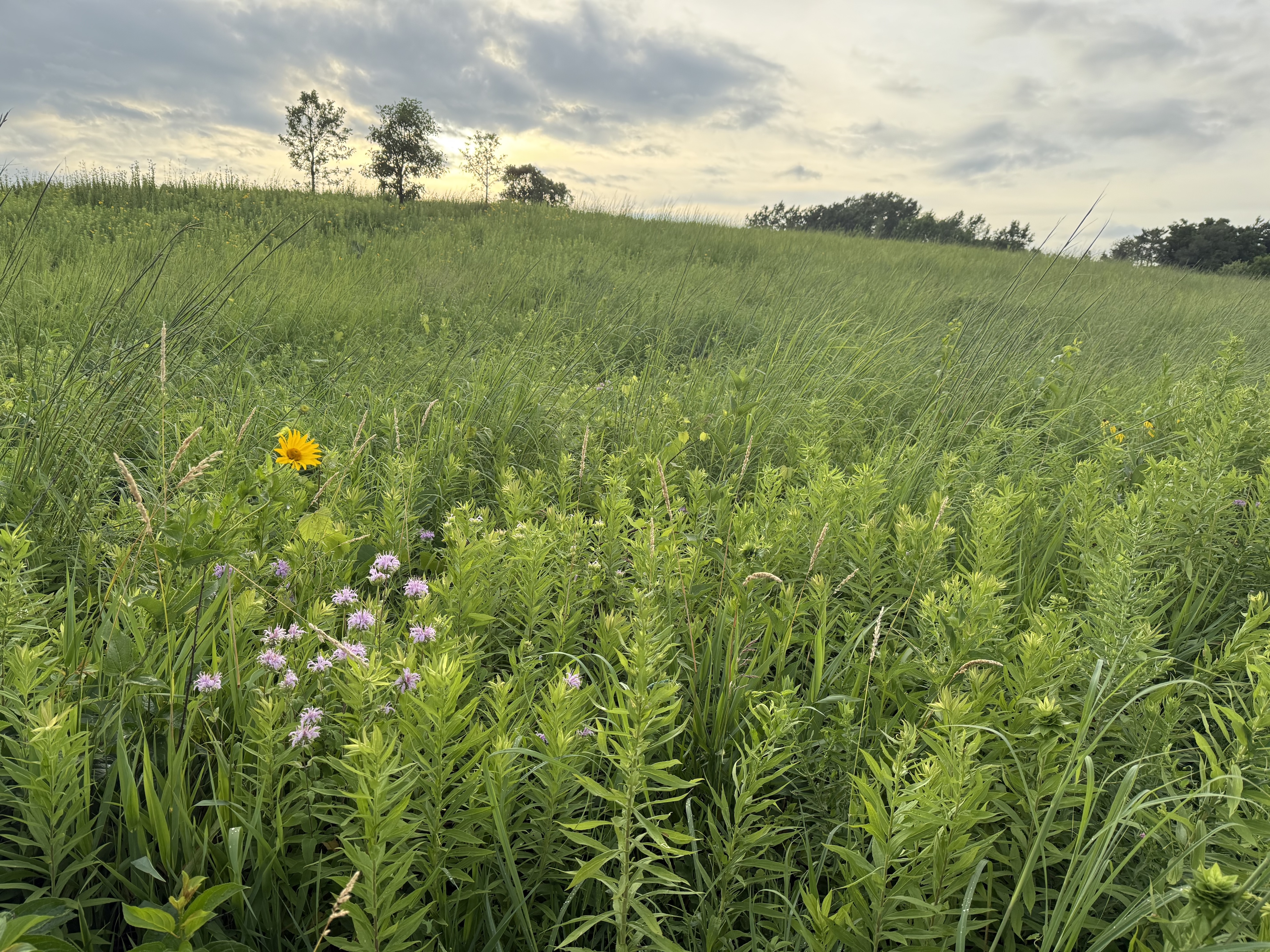
This is the hill just a few hundred yards from our former house in Prairie Crossing. Restoration of the hill to prairie began more than two decades ago. Almost every day for most of the 20 years we lived in the community, I walked by it and watched the diversity of the prairie increase over time.



After I posted this blog post, I heard from several people with stories of their own bonds to their places. Here’s one that moved me from my friend Jim that he gave me permission to share.
“This is a side story, but maybe one to bring hope in the saying goodbye. We were very surprised to hear recently the mom of the young family that bought our home in Wheaton suddenly passed away… just didn’t wake up one day. This was the place we began our own journey into growing food and stewarding our land. We had planted several fruit trees there and had assumed in the years since that the new owners might have just gotten rid of them. But we were also surprised to find out from our friend and former next door neighbor who went to her funeral that there were bowls brimming with peaches set out, and everyone who attended was encouraged to take a peach. As it turned out, the peach trees in particular were one of her favorite things in life and everyone got to partake in that while mourning her loss. Even when home and land is left and out of your hands, you never know how God will use it.”